Key Takeaways
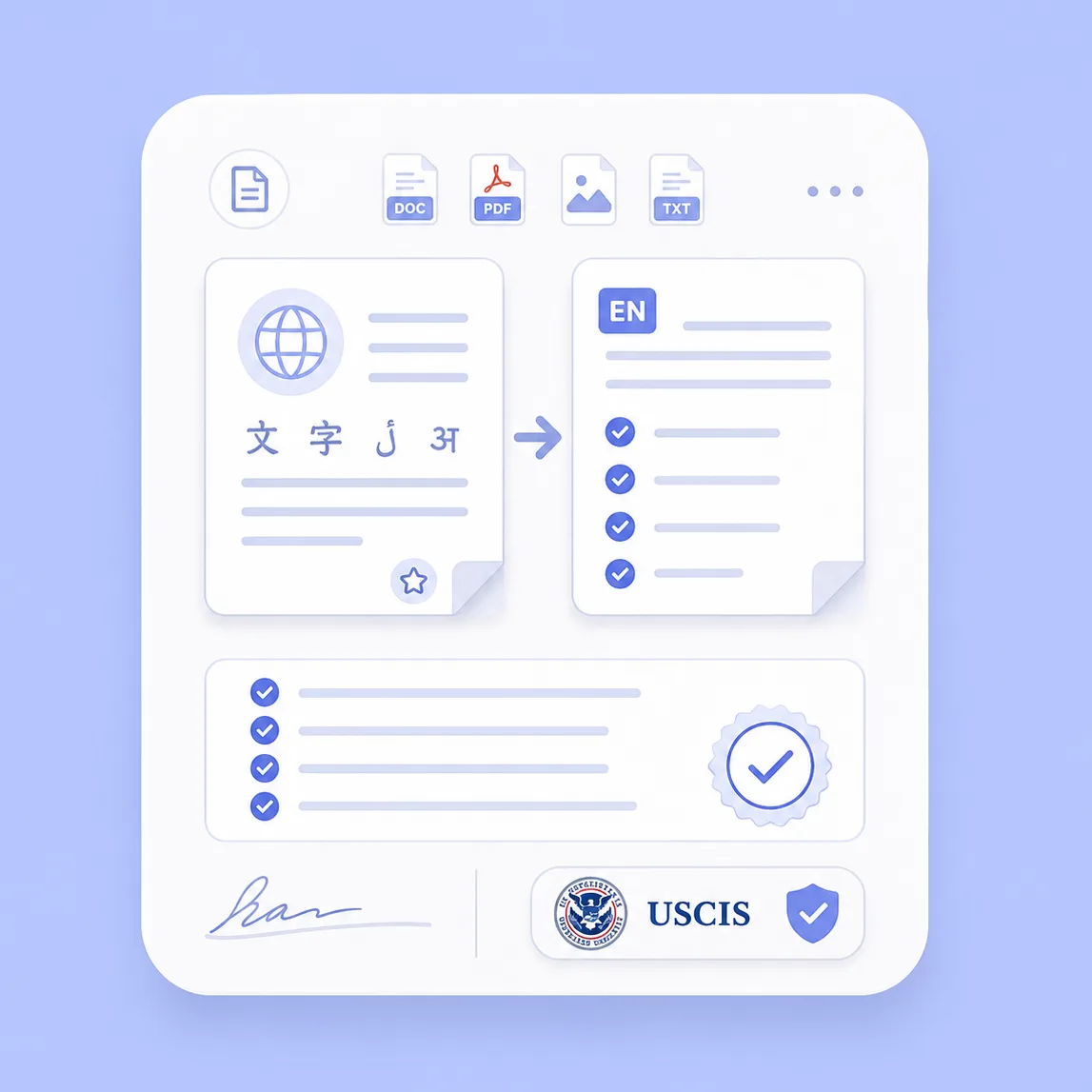
- USCIS requires any foreign-language document submitted with an immigration application to include a complete and accurate English translation.
- A certified translation must include a signed statement confirming that the translator is competent in both English and the source language and that the translation is complete and accurate.
- Applicants should not translate their own documents or use a spouse or close family member, as neutrality and accuracy are important for USCIS acceptance.
- Certified translation is different from notarized translation; USCIS generally requires certification, while notarization only verifies the signer’s identity.
- Common documents requiring certified translation include birth certificates, marriage certificates, I-130 supporting documents, police clearances, and other immigration records.
- Every stamp, seal, signature, marginal note, and illegible section must be translated or clearly marked, without summarizing or omitting information.
- The translated document should follow the original format as closely as possible so USCIS officers can compare both versions easily.
- Using a professional USCIS translation service can reduce the risk of Requests for Evidence, delays, rejected submissions, and costly corrections.
Navigating the U.S. immigration process is complicated enough without getting tripped up by administrative paperwork. If you are submitting evidence in a language other than English, Understanding USCIS Document Translation Requirements is a critical step in your journey. Whether you are applying for a green card, a spousal visa, or naturalization, failing to meet these strict standards can result in frustrating delays or even application denials.
To help you secure a smooth approval, we have compiled a comprehensive guide on everything you need to know about translating your foreign documents for U.S. Citizenship and Immigration Services (USCIS).
What Are the Certified Translation Requirements for Immigration?
When dealing with document translation services uscis guidelines, the foundational rule is simple: any foreign-language document submitted must be accompanied by a full English translation.
According to the foreign language document filing guidelines set by the government, the translation must be complete and exact. You cannot summarize the document or leave out any stamps, seals, or marginal notes. Most importantly, the translation must include a mandatory certification of accuracy statement. This is a signed declaration by the translator affirming that they are competent in both English and the original language, and that the translation is complete and accurate.
If you are wondering about the exact official USCIS translator certificate wording, it generally looks like this: "I, [Translator's Name], certify that I am fluent in English and [Foreign Language], and that the attached document is an accurate translation of the document attached."
Who Can Translate Documents for USCIS?
A highly common question among applicants is, "who can translate documents for USCIS?" Technically, anyone who is fluent in both English and the language of the original document can perform the translation—including a friend or a colleague. However, the self-translation rules for immigration documents are very strict: you cannot translate your own documents, nor can your spouse or close family members.
Because of the high stakes involved, most applicants prefer using professional translation services for USCIS. Utilizing agencies that offer uscis approved translation services (meaning they strictly adhere to the government's certification standards) eliminates the risk of amateur mistakes that could derail your application.
USCIS Certified Translation vs Notarized Translation
It is incredibly easy to confuse a certified translation with a notarized one. Let’s break down USCIS certified translation vs notarized translation:
Certified Translation: This requires the translator to sign a formal letter (the certification of accuracy) stating the translation is a true and accurate representation of the original document. USCIS strictly requires this.
Notarized Translation: This simply means a Notary Public witnessed the translator signing the certification. The notary does not verify the accuracy of the text, only the identity of the signer.
For standard immigration applications, uscis certified translation services are perfectly sufficient. You generally do not need to pay extra for notarization unless specifically requested by an immigration officer.
Translating Specific Immigration Documents
Every application is unique, and you will likely need to translate a variety of personal records. Here is how to handle the most common documents:
Birth Certificates
If you are asking, "how can i translate my birth certificate to english?" the answer is word-for-word precision. Many applicants look for a birth certificate translation template for green card applications online. While templates can give you an idea of the layout, relying on them is risky. Your specific document may have unique local seals or handwritten notes that a template cannot account for. It is always safer to use expert document translation services for immigration.
Marriage Certificates and I-130 Petitions
When figuring out how to translate documents for i-130 petition filings (the Petition for Alien Relative), accuracy is paramount. Translating foreign marriage certificates for visa processing means every date, location, and official signature must precisely match the original. A discrepancy here can make immigration officers question the validity of your marriage.
Police Clearances
Translating police records for residency applications requires absolute exactness. These documents are used for background checks. Any mistranslation of legal jargon regarding your criminal (or clean) history can trigger severe background check issues, making professional uscis document translation essential.
Common Pitfalls and How to Avoid Them
Missing the mark on these rules is one of the most common reasons for RFE translation errors. An RFE (Request for Evidence) pauses your case until you provide corrected documents, adding months to your processing time.
To avoid RFEs, keep these actionable tips in mind:
Do not omit information: Even illegible text should be noted as "[illegible]" by the translator.
Keep the formatting similar: The translated document should visually mirror the original as closely as possible.
Acceptable signatures: Under current policy, an electronic signature on certified translations is generally accepted by USCIS, provided it is legible and attached properly to the certification letter.
Choosing the Right Translation Service
When it is time to hire a professional, how do you compare certified translation services for immigration documents? You want to ensure you are selecting the best translation services for immigration papers official use.
Here are a few factors to consider:
Immigration Expertise: Look for a provider specializing in uscis certified document translation services. They will already know the specific formatting and wording required.
Speed and Turnaround: If you are on a tight deadline, you may need the fastest certified translation company immigration agency acceptance standards allow. Many top-tier companies offer 24-hour turnaround times.
Visa Specificity: If you are applying for a visa abroad, look for uscis certified translation services for visa application processing. Consulates sometimes have slight variations in how they want documents presented.
Pricing Structure: The cost of certified document translation varies. Some charge per page, while others charge per word. Transparent pricing is the hallmark of the best uscis translation service.
Investing in the best uscis certified translation services is one of the smartest decisions you can make during your immigration journey. While immigration translation services come with a fee, getting it right the first time is far cheaper than dealing with rejected applications, attorney fees, and prolonged separation from your family.
Final Thoughts
The key to a successful immigration application is attention to detail. Whether you require standard uscis translation services or specialized document translation services uscis officials will scrutinize, ensuring every word is accurate and properly certified is non-negotiable. By understanding the certified translation requirements for immigration and partnering with reliable professionals, you can submit your paperwork with total confidence.