Key Takeaways
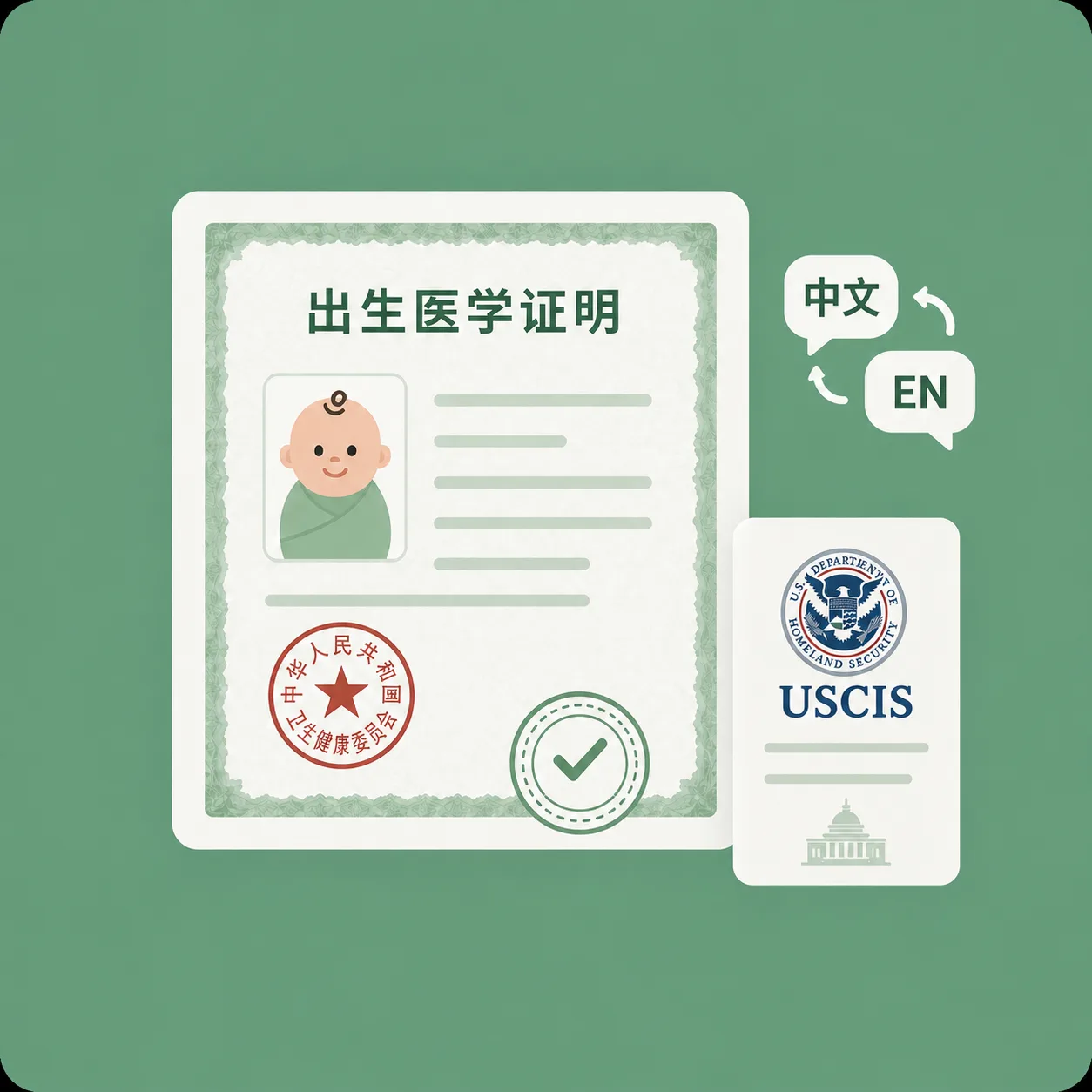
- A certified Chinese birth certificate translation is often required for USCIS applications, including green card, fiance visa, citizenship, and adjustment of status cases.
- USCIS requires foreign-language documents to be translated completely and accurately into English, with a signed certification statement from the translator.
- Certification is different from notarization; USCIS generally requires a certified translation, while notarization only confirms the signer’s identity.
- Chinese birth records can appear in different formats, including Medical Certificates of Birth, notarial birth certificates, and Hukou household registers.
- Names must be transliterated consistently in Pinyin and should match the applicant’s passport, USCIS forms, and other immigration documents.
- Dates, stamps, seals, signatures, hospital names, provincial markings, and illegible elements must be handled carefully and reflected clearly in the translation.
- A proper Certificate of Accuracy should include the translator’s language competence, confirmation of completeness and accuracy, signature, date, and contact information.
- Working with an experienced Chinese-to-English translation provider can help reduce the risk of Requests for Evidence, delays, or rejection.
Navigating the complex landscape of the US immigration system can feel overwhelming, especially when mountains of paperwork are involved. Whether you are applying for a green card, a fiancé visa, or seeking citizenship, providing highly accurate civil documents is a non-negotiable first step. For applicants originating from China, submitting a flawless Certified Chinese Birth Certificate Translation for USCIS is often one of the most critical hurdles to clear.
Let's break down exactly what you need to know about this specific translation for immigration. By understanding the rules, you can ensure your application sails through the review process without triggering stressful delays or Requests for Evidence (RFEs).
Decoding USCIS Rules for Foreign Documents
To avoid application rejections, it is vital to have a firm grasp on the official USCIS translation requirements for foreign documents. Under US immigration law, any supporting document that is not written entirely in English must be accompanied by a complete and accurate English translation.
Specifically, your submission must meet the strict requirements for 8 CFR 103.2(b)(3) compliance. This federal regulation dictates that the individual performing the translation must formally certify that they are competent to translate the foreign language into English, and that the resulting translation is entirely complete and accurate.
Whether you are going through consular processing or translating Chinese birth certificates for I-485 adjustment of status applications within the United States, adhering to this precise legal standard is paramount. Failing to provide a properly formatted certified document translation is one of the most common reasons immigration applications are delayed.
Who is Qualified to Translate Your Documents?
Many applicants understandably have questions about the acceptable translators for immigration paperwork. While the government theoretically allows anyone who is fluent in both English and Chinese to perform the translation—including yourself or a family member—risking your immigration future on an amateur attempt is highly discouraged. Minor formatting errors or mistranslated terms can lead to significant setbacks.
Utilizing an ATA certified translator Chinese to English guarantees a high level of professional competence. These experts have passed rigorous exams and understand the nuanced legal terminology required by the US government.
Another common point of confusion is the debate over notarized vs certified translation for immigration. A frequent question asked by applicants is: do I need a notary for USCIS translations? The definitive answer is no. USCIS specifically requires a certified translation, which means the translator provides a signed statement of accuracy. A notary public simply verifies the identity of the person signing a document; they do not verify the quality or accuracy of the translation itself. While many reputable legal translation services offer notarization as an optional add-on, it is the certification that is the mandatory element for your immigration file.
Navigating the Complexities of Chinese Birth Records
Unlike many Western countries that have a standardized national birth registry, China has utilized several different formats for birth records over the decades. Expert chinese document translation requires a deep understanding of these historical and regional variations:
The Medical Certificate of Birth: If you were born in or after 1996, you likely possess a standard, green-covered medical birth document. Knowing exactly how to translate Chinese medical certificate of birth forms requires careful attention to detail, including accurately rendering hospital names, attending physician signatures, and official provincial stamps.
Notarial Birth Certificates: For applicants born before 1996, hospitals rarely issued standardized birth certificates. Instead, individuals must usually go to a local notary public office (Gongzhengchu) in China with their household register and parents' ID to obtain a white notarial booklet. This booklet serves as the official birth record for immigration purposes.
The Hukou (Household Register): In many cases, a Hukou booklet translation for green card application is submitted as robust secondary evidence of birth, parentage, and family history, especially if original birth records are unavailable, destroyed, or incomplete.
Regardless of the specific document format you possess, obtaining a precise English translation of Chinese birth registration documents is absolutely essential for proving your identity and familial relationships to USCIS officers.
The Translation Process & Best Practices
When you hire an agency for a birth certificate translation, true accuracy goes far beyond simply swapping words from one language to another. Translators face the unique challenge of carefully extracting data from Chinese birth certificates for USCIS and presenting it in a formatted way that aligns perfectly with your other application forms.
It is vital to be proactive in avoiding common errors in official Chinese document translation. Some of the most frequent mistakes include:
Inconsistent Pinyin: Names must be spelled in Pinyin exactly as they appear on your passport and USCIS forms to avoid identity discrepancies.
Date Formats: Translating dates inconsistently can confuse immigration officers. USCIS strongly prefers the standard American MM/DD/YYYY format.
Missing Visual Elements: Translators must not ignore official stamps, seals, or illegible signatures. These visual elements must be explicitly noted in brackets, such as [Official Red Stamp] or [Illegible Signature], directly in the English text.
What is a Certificate of Accuracy?
To ensure full compliance, the translator must attach a signed declaration to the translated document. If you want to know what this looks like, you can easily find a sample certificate of translation accuracy for USCIS online. This certification letter typically includes:
A formal statement affirming the translator's fluency in both English and Chinese.
A statement confirming that the translation is an accurate and complete rendering of the original document.
The translator's typed name, physical signature, date, and contact information.
Choosing the Right Translation Partner
When it comes to official document translation, you want to partner with a trusted provider who understands the high stakes of immigration. So, where to find certified Chinese translators? You can search through directories provided by professional translation associations, consult with your immigration attorney, or use specialized online agencies that focus exclusively on legal and immigration paperwork.
Budgeting is also an important part of the preparation process. You might be wondering about the professional Chinese document translation cost. Generally, pricing is calculated per page or per word. A standard birth certificate usually costs anywhere from $25 to $50 per page. Keep in mind that requesting expedited turnaround times or physical copies mailed to your home will likely increase the final price. However, considering the heavy financial and emotional investment of your immigration journey, investing in reputable certified translation services is a small price to pay for ultimate peace of mind.
Whether you simply need a single birth record translated, or you require comprehensive chinese translation services for a broader array of background documents like marriage certificates and police clearances, always verify that the agency explicitly guarantees USCIS acceptance before handing over your money.
Final Thoughts
Securing a green card or a US visa is a major life milestone that requires time, money, and extreme patience. Do not let a poorly translated document stand in your way. By understanding the rigorous standards of USCIS, recognizing the unique nuances of Chinese civil documents, and choosing expert partners to assist you, you can navigate the paperwork confidently. Investing in a highly accurate, certified chinese birth certificate translation ensures your application moves forward smoothly, bringing you one step closer to achieving your immigration goals.