Key Takeaways
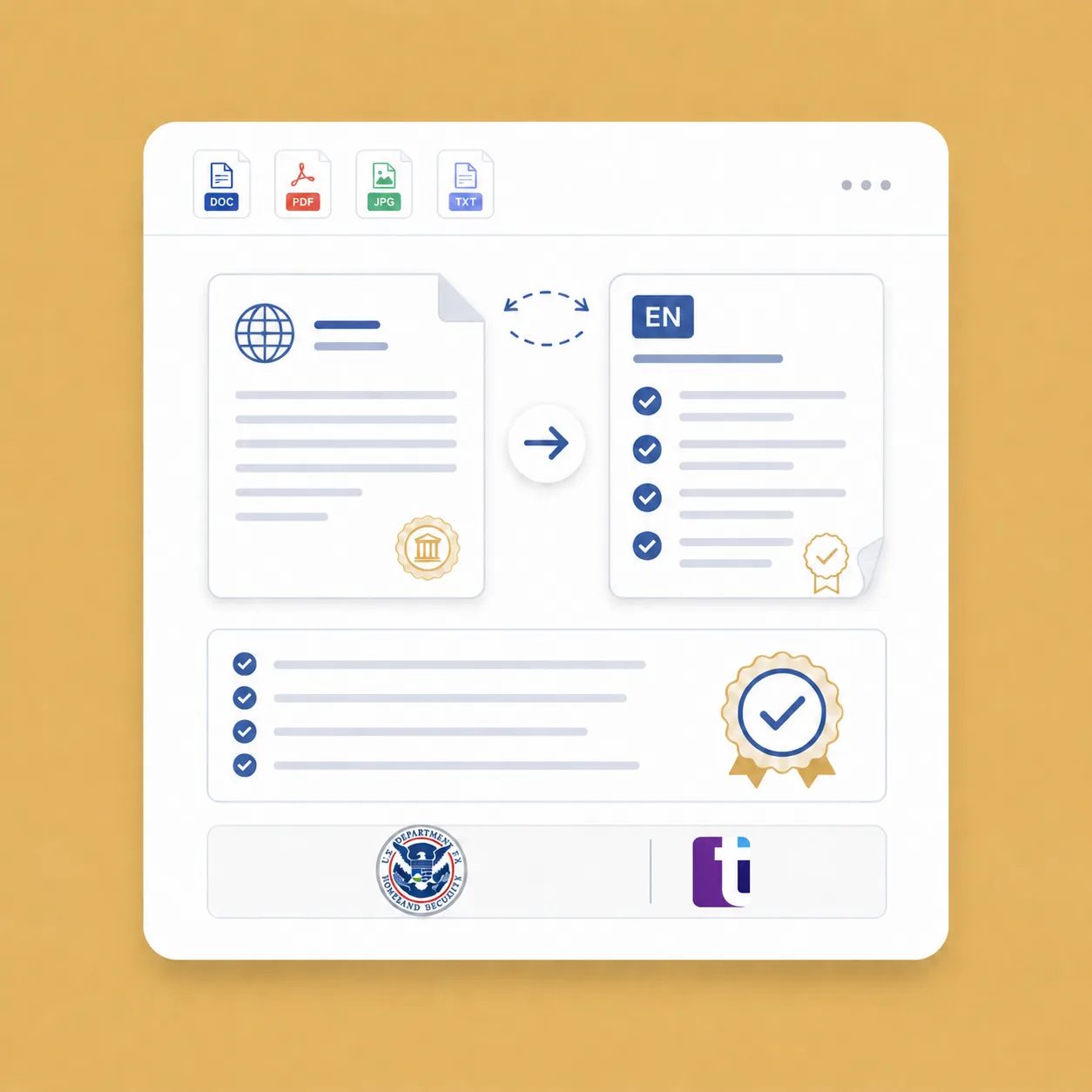
- Certified document translation services help USCIS applicants submit foreign-language records in a format that meets official immigration requirements.
- A certified translation must include a signed statement confirming that the translation is accurate, complete, and prepared by a competent translator.
- USCIS relies on certified translations to review foreign documents clearly and consistently, reducing the risk of misunderstanding or misinterpretation.
- Common USCIS documents requiring certified translation include birth certificates, marriage certificates, divorce decrees, diplomas, academic transcripts, police records, and legal documents.
- A professional translation agency can help ensure that every part of the document is translated, including stamps, seals, signatures, and official notes.
- Certified translation and notarized translation are different; notarization verifies the translator’s identity or signature, while certification confirms translation accuracy and completeness.
- A Certificate of Accuracy should usually include the translator’s name, signature, date, contact information, and statement of accuracy.
- Using uncertified translators, submitting incomplete translations, or omitting stamps and signatures can cause USCIS delays, RFEs, or rejections.
- A reliable certified translation provider should have relevant experience, clear quality processes, strong reviews, secure document handling, and knowledge of USCIS requirements.
- Professional document translation services offer accuracy, efficiency, confidentiality, and better compliance for immigration-related submissions.
Navigating the USCIS document requirements can be daunting. Certified document translation services are crucial for a smooth process. They ensure your documents meet USCIS standards.
Accuracy is key when translating official documents. A small error can lead to delays or rejections. Certified translations provide peace of mind.
These services include a signed statement from the translator. This attests to the accuracy and completeness of the translation. It's a vital part of the USCIS submission process.
Notary certified translation adds another layer of verification. A notary public confirms the translator's identity and witnesses the signing. This step enhances the document's credibility.
Accredited translation services are recognized for their quality. They are often required for official documents. Choosing the right service can impact your application's success.
Professional document translation services employ skilled translators. They ensure your documents are translated accurately and promptly. This expertise is essential for USCIS applications.
Certified translation agencies offer a range of services. From birth certificates to legal documents, they handle it all. Their experience and reliability are invaluable.
Understanding the importance of certified translations is crucial. It can make the difference in your immigration journey. Trust in professional services to guide you through.
What Are Certified Document Translation Services?
Certified document translation services ensure that your documents are translated accurately. These services provide a certification statement. This statement affirms that the translation is a true and complete version of the original document.
These services are essential for official purposes. They are commonly required by organizations like USCIS. The translation must be reliable and adhere to strict standards.
A certified translation includes specific elements. It contains the translator’s statement of accuracy. This statement is signed and dated. Here is a simple breakdown of what these services entail:
Accuracy: Ensures all content is translated correctly.
Certification: A signed statement from the translator.
Compliance: Meets requirements of official bodies like USCIS.
Professional document translation services employ experienced linguists. These translators are fluent in both the source and target languages. They have the skills to translate specialized content, maintaining its original intent and meaning.
Using certified translation services adds legitimacy to your documents. It is crucial for processes that require exact information, such as immigration or legal matters. Certified translation agencies provide these services to guarantee your translations meet official criteria.
Why USCIS Requires Certified Translations
USCIS requires certified translations to ensure accuracy in assessing documents. Immigration decisions rely heavily on the details within these documents. Erroneous translations could lead to delays or, worse, rejections.
The process of immigration can be complex and demanding. Therefore, clarity and accuracy are paramount in every document you submit. Certified translations serve as a guarantee that the information has been conveyed correctly across languages.
USCIS mandates that translations include a certification statement. This statement confirms the translator's qualifications and the completeness of the translation. Key elements of this requirement include:
Accuracy: Prevents misinformation or misinterpretation.
Reliability: Validates the translator's proficiency.
Compliance: Ensures adherence to USCIS standards.
By demanding certified translations, USCIS aims to maintain a standard of trust and uniformity. This standard assures that each application is treated with fairness, using dependable and verified information. Certified translations, thus, play a crucial role in the success of immigration applications.
Types of Documents That Need Certified Translation for USCIS
Numerous documents require certified translations when dealing with USCIS. Each document serves a specific function in your immigration process. Ensuring their accuracy is essential for your application's success.
USCIS commonly requires translations for personal and legal documents. This includes records that verify identity, civil status, and legal matters. An accurate translation helps clarify these crucial aspects.
Here are some of the most common documents needing certified translation:
Birth Certificates: Prove identity and age.
Marriage Certificates: Confirm marital status.
Divorce Decrees: Validate previous marital dissolutions.
Diplomas and Academic Transcripts: Illustrate educational qualifications.
Police Records: Establish criminal history or absence thereof.
Providing USCIS with certified translations of these documents is vital. It ensures all information is correctly understood and assessed. This step helps streamline your application process and alleviates any potential issues with documentation.
The Certified Translation Process: Step-by-Step
Navigating the certified translation process can seem daunting. However, breaking it down into manageable steps can simplify the procedure. Understanding these steps ensures that your documents meet all necessary requirements.
First, select a certified translation agency. Choose a reputable agency with experience in handling USCIS documents. Verify their credentials and previous successes with similar tasks.
Once you choose a service, submit your documents for translation. Provide clear, complete copies to ensure no information is lost. Specific formats or requirements set by USCIS should be communicated to the agency.
The translation agency then begins the process. Their qualified linguists work on translating and verifying each detail. This step ensures accuracy and fidelity to the original content.
Here’s a brief breakdown of the certified translation process:
Choose a certified agency.
Submit clear copies of your documents.
Agency translates and verifies the content.
Receive certified translation with a statement of accuracy.
Upon completion, the agency provides the certified translation. It includes a signed statement attesting to the accuracy and completeness. Store both the translation and the original safely for future reference.
This process ensures compliance with USCIS requirements. A smooth translation process can significantly impact the success of your immigration application.
Notary Certified Translation vs. Notarised Translation Services
Understanding the difference between notary certified translation and notarised translation services is important. These terms are often confused, yet they serve different purposes in the certification process.
A notary certified translation involves a notary public. The notary verifies the identity of the translator and witnesses the signing of the translation's certification statement. This process doesn't validate the translation's accuracy, only the identity and signature of the translator.
In contrast, notarised translation services add another authenticity layer. This service typically involves additional documentation, such as an affidavit from the translator. The affidavit certifies the document's accuracy before a notary public seals it.
Here's a brief comparison:
Notary Certified Translation: Focuses on the translator’s identity and signature.
Notarised Translation Services: Includes an affidavit affirming accuracy, witnessed and sealed by a notary.
Both services provide valid certification, but it's crucial to know which one USCIS or other authorities require. Knowing these distinctions helps ensure that your documents meet the necessary submission standards.
Accredited and Approved Translation Services: What to Look For
Choosing the right translation service is crucial for USCIS submissions. Accredited and approved translation services offer the quality and reliability you need.
An accredited translation service has been recognized for its adherence to industry standards. These services often hold certifications from reputable organizations. This ensures that they meet specific quality benchmarks and guidelines.
Approved translation services comply with USCIS requirements. They provide translations that are accepted by USCIS without issues. This compliance includes a signed statement of accuracy by the translator.
When selecting a service, consider the following:
Certifications and Accreditations: Look for recognized seals or certifications.
Reputation: Check client reviews and testimonials for reliability.
Experience: Ensure the agency has experience with USCIS document types.
Compliance: Verify that they understand and follow USCIS guidelines.
By choosing accredited and approved services, you reduce the risk of application delays. These services provide a layer of assurance that your document submissions will be handled professionally and meet all necessary standards. This careful selection can significantly impact the outcome of your USCIS process.
How to Choose the Best Certified Translation Agency
Selecting the right certified translation agency is vital for official documents. It can directly impact your USCIS application outcome. An informed choice ensures accuracy and compliance.
Start by evaluating the agency's credentials. Look for certifications and memberships in professional bodies. These affirm the agency's commitment to quality standards.
Next, assess the agency's experience with USCIS document types. A proven track record in this area indicates proficiency in handling complex requirements.
Customer reviews and testimonials provide insight into an agency's reliability. Positive feedback can suggest trustworthiness and consistent quality. Analyze these reviews for details on punctuality and customer support.
Consider the following factors when making your decision:
Reputation: Check online reviews and ratings.
Specialization: Ensure they specialize in your document type.
Turnaround Time: Confirm they can meet your deadlines.
Confidentiality Practices: Ensure secure document handling policies are in place.
By focusing on these criteria, you can select a certified translation agency that meets your needs. A good choice will ensure your documents are translated accurately, professionally, and in a timely manner, easing the USCIS application process.
Certified Translation Stamp and Certificate of Accuracy Explained
A certified translation stamp is vital for official documents. It signifies the document's validity and compliance with standards. This stamp assures the document meets requirements for USCIS submissions.
The certificate of accuracy accompanies the translated document. It includes a statement of accuracy, the translator's details, and a signature. This certificate confirms the translation is complete and true.
Understanding these elements is essential for USCIS applications. They attest to the translation's authenticity and reliability. Always ensure your documents include:
Translator's Name: Identification of the translator.
Date: When the translation was completed.
Statement of Accuracy: Affirming the truthfulness of the translation.
Translator's Signature: To validate the document's authenticity.
Using certified translation services that provide these elements will help avoid delays. It ensures your submissions are both compliant and accepted, contributing to a smooth immigration process.
Common Mistakes to Avoid When Submitting Translated Documents to USCIS
Submitting translated documents to USCIS can be tricky. A few common mistakes often lead to delays or rejections. Avoiding these errors is crucial for a smooth application process.
First, incomplete translations are a major problem. All text, stamps, and signatures must be included. Skipping any part can cause issues with your application.
Another frequent mistake is using unofficial translators. USCIS requires certified translations from recognized agencies or professionals. Uncertified translations might lead to application rejection.
To ensure success, keep in mind the following:
Complete Translation: Include all elements of the original document.
Use Certified Translators: Always submit certified translations only.
Review Before Submission: Double-check for errors or omissions.
By addressing these potential pitfalls early on, your USCIS submissions will be more likely to proceed without complications, helping you reach your immigration goals efficiently.
Benefits of Using Professional Document Translation Services
Opting for professional document translation services comes with significant advantages. Accuracy is the most obvious benefit. Professionals ensure every detail in your document is translated precisely, maintaining the integrity of the original content.
Furthermore, these services offer speed and efficiency. With experienced translators, the process is expedited, saving you time. This is crucial when dealing with tight deadlines for USCIS submissions.
Professional services also ensure confidentiality. Your sensitive information is handled with the utmost care, ensuring it remains secure. Using a certified translation agency provides peace of mind, knowing your documents are compliant and accepted by USCIS.
Consider these key benefits:
Precision and Accuracy: Avoid costly errors with meticulous translations.
Efficiency and Speed: Gain quick turnarounds without sacrificing quality.
Confidentiality: Rest easy knowing your documents are secure.
By choosing professional services, you're prioritizing quality and reliability, vital for successful interactions with USCIS and beyond.
Frequently Asked Questions About Certified Document Translation Services
When dealing with certified document translation services, several common queries often arise. Understanding these can help clarify the process and address any concerns you might have.
One frequently asked question is about the difference between certified and notarized translations. Certified translations include a statement of accuracy, while notarized ones involve a notary public witnessing the translator’s signature.
Another question concerns the types of documents that require certification. Typically, documents like birth certificates, marriage licenses, and academic records need certified translations for USCIS.
Many also ask about the cost and timeframe for obtaining a certified translation. Prices vary depending on document complexity, while timeframes can range from a few hours to several days.
Here's a quick overview of FAQs:
What is the difference between certified and notarized translations?
Which documents require a certified translation?
How much does a certified translation cost?
Seeking answers to these questions helps streamline your translation needs efficiently.
Conclusion: Ensuring Success with Certified Document Translation Services for USCIS
Navigating USCIS requirements can be complex, but certified document translation services simplify the process. By ensuring accuracy and compliance, these services play a crucial role in successful applications.
Choosing a reputable translation agency is vital. A reliable service not only guarantees the accuracy of translations but also ensures that they meet all official standards. This helps in avoiding delays and potential rejections from USCIS.
Ultimately, investing in certified translation services ensures peace of mind. It guarantees that your translated documents are precise, complete, and ready for submission. As such, they provide a solid foundation for your journey through the immigration process. Remember to start early, choose wisely, and verify the credentials of your chosen service to secure the best outcome for your USCIS applications.