Key Takeaways
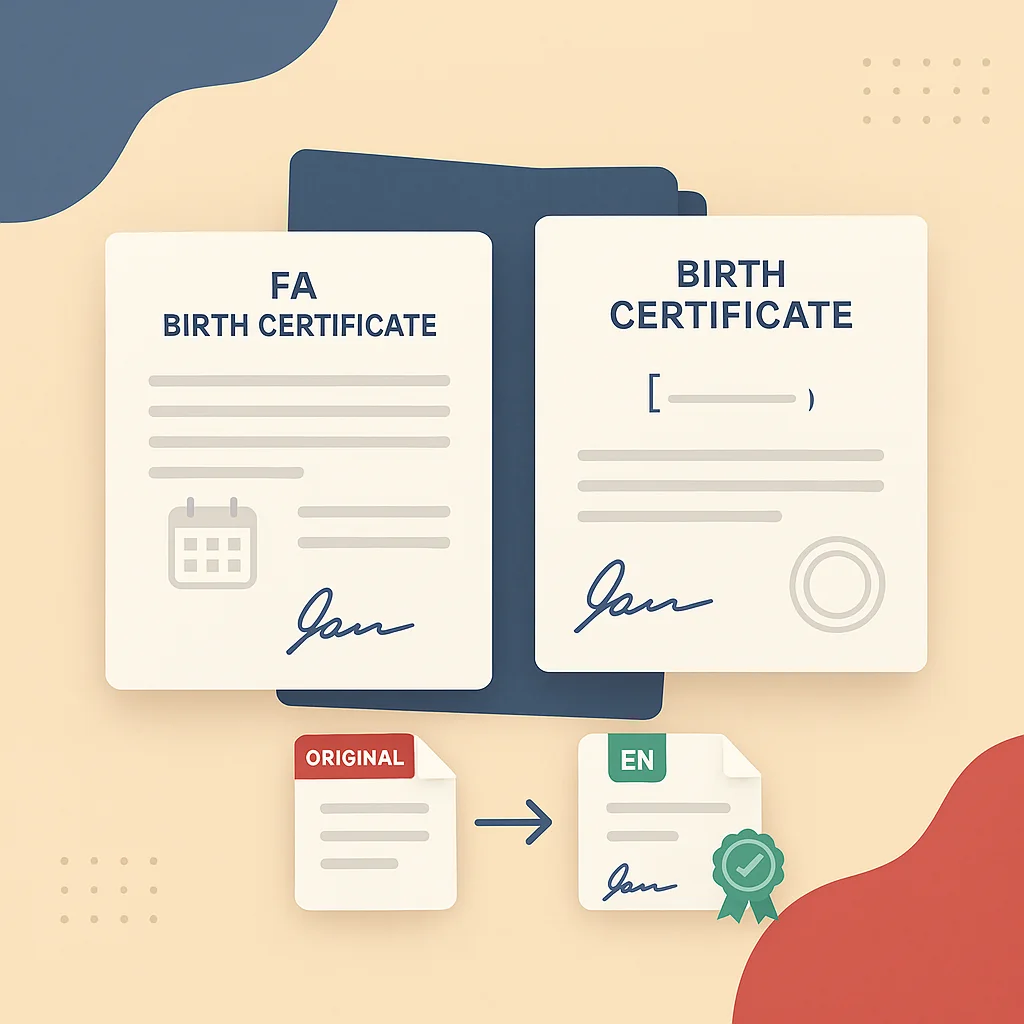
- A certified translation keeps the date as the source writes it and adds the Gregorian equivalent in square brackets, so the officer can compare both with the form.
- A date silently replaced with a converted one is no longer a faithful rendering of the source, and USCIS regulations require a complete translation of everything on the page.
- Numeric dates such as 04/05/1988 are ambiguous between day-first and month-first order, so the translation writes the month as a word to remove the doubt.
- Saudi records often use Hijri dates, and the translation reproduces the Hijri date and any Gregorian date printed beside it exactly as they appear.
- A Solar Hijri year overlaps two Gregorian years, so Iranian and Afghan dates must be converted as full dates and never by changing the year alone.
- Ethiopian, Thai Buddhist era, Republic of China, Japanese era and Hebrew calendar dates each need their own conversion, applied separately to every date on the document.
- Approximate dates such as a bare year or a phrase like about 1950 stay approximate in the translation, and the bracketed Gregorian equivalent is marked approximate as well.
- When two entries give different dates for one event, the translator renders each as written and does not reconcile them, leaving any explanation to the applicant or the attorney.
- A date in the translation that differs from the date on the form can lead USCIS to ask questions or issue a Request for Evidence, so forms should use the bracketed Gregorian values.
A date in a certified translation is written the way the source writes it, with the Gregorian equivalent added in square brackets right after it. The officer sees the original date and the date the form asks for, and can match one to the other without guessing. A translator who silently replaces the source date with a converted one removes the very thing the officer compares against.
USCIS regulations require a complete English translation with the translator's certification, which is what certified document translation for USCIS provides, and a date is part of what must be complete. Dates are also where foreign records most often disagree with the forms that rely on them, because a birth, marriage, or death is entered on a USCIS form in the Gregorian calendar and recorded on the foreign document in another system.
Day-first and month-first dates need the month written out
Most of the world writes the day first, and the United States writes the month first. A record that says 04/05/1988 can mean the fourth of May or the fifth of April, and the translation cannot leave that choice to the reader. The translator reads the date in the order the issuing country uses and writes the month as a word, for example "May 4, 1988".
Where the source itself is unclear, such as a handwritten entry with digits that could be read either way, the translator marks the uncertainty in a bracketed note instead of choosing the more convenient reading. The month name is used for every numeric date on the document, whatever the source format.
Hijri dates on Saudi and Gulf records
The Hijri calendar is a lunar calendar with years counted from the Hijra. Its year is shorter than the Gregorian year, so the two drift apart over time. Saudi Arabia in particular issues civil records with Hijri dates, and some records print both calendars side by side. The translator writes the Hijri date as it appears and adds the Gregorian equivalent in brackets. Where the document prints both, the translation reproduces both exactly.
Names on Arabic records matter here too. A four-part name (given name, father, grandfather, family name) can be spelled several accepted ways in English, and the spelling and the converted birth date both have to agree with the passport. An Arabic birth certificate translation is therefore checked against the passport data before it is finalized.
Solar Hijri dates on Iranian and Afghan records
Iran and Afghanistan use the Solar Hijri calendar on official documents. Its year starts in spring, so one Solar Hijri year overlaps two Gregorian years, and the year number alone does not tell the reader which Gregorian year applies. For a birth in Solar Hijri year 1370, the Gregorian year is 1991 or 1992 depending on the month and day. The full date has to be converted, and the year cannot be changed on its own.
An Iranian shenasnameh, the identity booklet with birth, marriage, children, and death entries, uses these dates on every page, and each entry needs its own conversion. A Farsi birth certificate translation shows the Solar Hijri date as written with the Gregorian date in brackets. Afghan records such as a tazkira follow the same method, and so do Dari and Pashto documents. Texliff handles all of these under its Farsi translation services.
Ethiopian, Thai, Republic of China, Japanese and Hebrew dates
Several other calendars appear on records that applicants file with USCIS. Each has its own year count, and a reader who knows only the Gregorian calendar cannot check the date without help.
- The Ethiopian calendar has 13 months and a new year in September, so its year runs seven or eight years behind the Gregorian year depending on the month, and a single subtraction does not work.
- The Thai Buddhist era is 543 years ahead of the Gregorian year, so the year 2540 is 1997.
- The Republic of China (Minguo) calendar on older Taiwanese records counts from 1912 as year 1, so year 80 is 1991.
- Japanese records use era names, such as Heisei and Reiwa, followed by a year number within the era, so Heisei 5 is 1993.
- Hebrew calendar dates appear on religious records, such as a synagogue marriage record, and fall in a different Gregorian month each year.
An Amharic marriage certificate translation shows how this works in practice. The Ethiopian date stays as printed, the translator adds the Gregorian date in brackets, and the month is spelled out so the order is not in doubt. The same pattern applies to a Thai household record or a Japanese koseki.
Approximate dates stay approximate
Many older records give only a year, a season, or a phrase such as "about 1950". The translation keeps that level of detail and does not turn an approximate date into an exact one. If the source says "around the end of the year 1363", the translation says so, and the bracketed Gregorian equivalent is marked as approximate as well.
Conflicting dates are handled the same way. On a death certificate translation, two entries for the same death may use two different calendars or disagree outright. The translator renders both as written and does not reconcile them, and any explanation comes from the applicant or the attorney.
What happens when a translated date does not match the form
If the date in the translation differs from the date on the I-130, I-485, N-400, or another form, the officer sees a discrepancy and may ask for an explanation. USCIS may issue a Request for Evidence (RFE) for an unclear or inconsistent record. The person completing the form should therefore take the converted date from the translator's bracketed value instead of a separate online converter, so that the form and the translation cannot drift apart.
The Department of State's Visa Reciprocity and Civil Documents by Country schedule lists which civil document each country issues and which version is acceptable. Check it before ordering, because a different version of the same record may carry a different date or none at all. The attorney or accredited representative decides what to file.
Before ordering, confirm that every date on the source is legible, that names match the passport, and that the forms use the converted dates in the same order as the translation. We prepare each certified birth certificate translation with the original date and the Gregorian equivalent shown together.