Key Takeaways
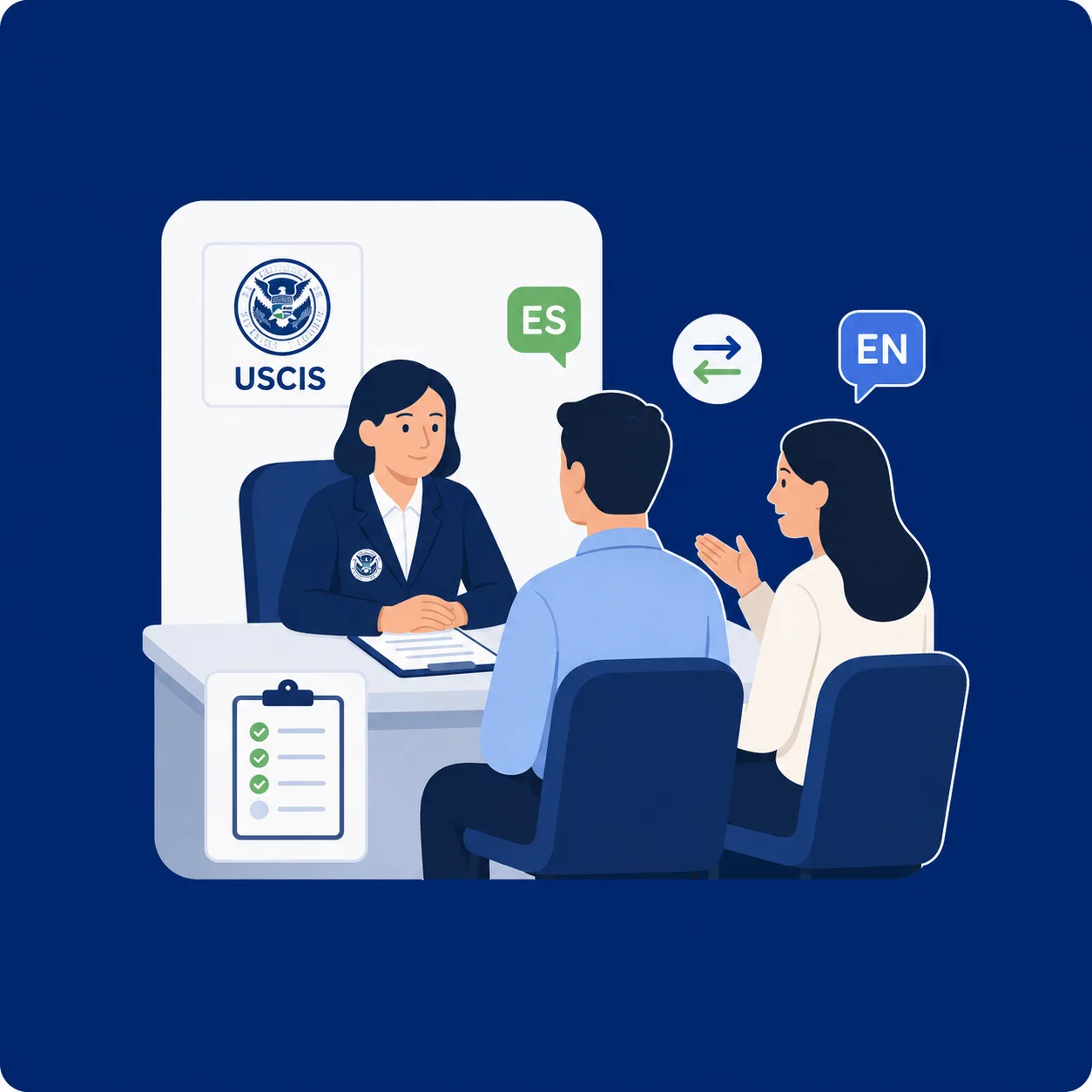
- Interpretation for USCIS interviews is essential when applicants are not fully comfortable communicating in English during high-stakes immigration proceedings.
- A USCIS interpreter must provide accurate, impartial, word-for-word interpretation without explaining, summarizing, coaching, or answering on behalf of the applicant.
- Using a neutral professional interpreter is generally safer than relying on a family member because it reduces the risk of bias, omissions, conflict of interest, or disqualification by the officer.
- USCIS may require the applicant and interpreter to sign Form G-1256, confirming that the interpreter is fluent, impartial, and responsible for accurate interpretation.
- Accuracy is critical because even a small mistranslation can affect testimony, create inconsistencies, or lead to serious immigration consequences.
- Applicants should prepare their interpreter in advance with difficult names, locations, job terms, and case-specific vocabulary, while remembering that the interpreter cannot help with answers.
- During the interview, applicants should speak in short sentences, pause for interpretation, address the officer directly, and clarify any interpretation errors immediately.
- For asylum, naturalization exemptions, sign language needs, or telephonic monitoring, applicants should review the specific USCIS rules and instructions on their interview notice before the appointment.
Preparing for a USCIS Interview can be a nerve-wracking experience. You have spent months—perhaps even years—gathering documents, filling out forms, and waiting for your notice to arrive. But if English is not your first language, the anxiety is often compounded by the fear of a language barrier. This is where securing proper Interpretation for USCIS Interviews becomes one of the most critical steps in your immigration journey.
Whether you are applying for adjustment of status, seeking asylum, or going through naturalization under a language exemption, clear communication is non-negotiable. In a high-stakes immigration interview, the adjudicating officer must understand your answers perfectly, and you must understand their questions without a shadow of a doubt.
Let us dive deep into the rules, requirements, and best practices regarding interpretation for immigration process to ensure your upcoming appointment goes as smoothly as possible.
The Crucial Role of Interpretation for USCIS
When you walk into an interview room, you are not just having a casual conversation; you are providing official testimony under oath. Effective interpretation for USCIS ensures your legal rights are protected, your personal story is heard accurately, and your application is processed without unnecessary delays.
Unlike informal translating you might do at a grocery store or doctor’s office, uscis interview interpretation requires a strict word-for-word rendering of the conversation. The interpreter is not there to explain the officer’s questions, offer legal advice, or summarize your answers. Their sole job is to serve as a neutral language conduit.
Can a Family Member Translate for My Green Card Interview?
One of the most common questions applicants ask is: can a family member translate for my green card interview?
Historically, USCIS has been somewhat flexible, allowing applicants to bring a relative, friend, or community member to assist with interpretation. However, policies are becoming stricter, and officers have broad discretion. While it is technically permitted in standard family-based adjustment of status interviews, it is highly discouraged.
When you weigh professional vs family member translation services, the scales tip heavily in favor of the professionals. Family members are emotionally invested in your case. They might accidentally summarize your answers, omit crucial details, or even try to answer for you to "help." This can raise red flags for the immigration officer.
The interviewing officer has the authority of disqualifying an interpreter for conflict of interest or lack of fluency. If your family member struggles with complex legal terms, the officer will stop the interview, which could severely delay your case.
The Benefits of Using Neutral Third-Party Interpretation
To avoid these pitfalls, many applicants choose to hire an interpreter for USCIS interview. The benefits of using neutral third-party interpretation are vast:
Accuracy: Professionals are trained to interpret consecutively without changing the meaning.
Objectivity: They have no personal stake in your case, preventing any conflict of interest.
Vocabulary: They possess an advanced understanding of legal and immigration terminology in both languages.
Peace of Mind: You can focus entirely on answering the officer’s questions rather than worrying about whether your interpreter is doing a good job.
When searching for the right professional, it helps to understand certified immigration interpreter requirements. While USCIS does not always demand a specific federal certification for everyday interviews, a qualified interpreter should have documented training, membership in professional translation associations, or state court certification. They must easily meet the language competency standards for immigration proceedings, meaning they possess native or near-native fluency in English and your target language.
Navigating USCIS Rules, Forms, and Policies
Using an interpreter involves strict procedural rules designed to maintain the integrity of the interview. You cannot simply walk in with a bilingual friend and start talking.
Form G-1256 Declaration for Interpreted USCIS Interview
At the beginning of your appointment, the officer will require you and your interpreter to sign the Form G-1256 Declaration for Interpreted USCIS Interview. By signing this document, the interpreter legally swears that they are fluent in both languages, that they will interpret accurately and impartially, and that they understand the consequences of providing false translation. You, as the applicant, also sign to confirm you agree to use this specific interpreter.
Asylum Interviews and the Oath of Confidentiality
Asylum cases are uniquely sensitive. Because applicants are often fleeing persecution, the details discussed are highly confidential. In these settings, the interpreter must take an asylum interview interpreter oath of confidentiality. They are legally and ethically bound never to discuss the contents of your interview outside that room.
Furthermore, you must consider the remote vs in-person interpretation for asylum seekers debate. In recent years, USCIS has provided contract interpreters by phone for affirmative asylum interviews to ensure strict neutrality and competence. However, rules change frequently, and you may sometimes be required to bring your own monitor or interpreter. Always check the current policy on your interview notice.
Telephonic and Sign Language Policies
Technology and accessibility play significant roles in modern immigration proceedings. You should be aware of the USCIS telephonic interpretation service policy. Even if you bring your own in-person interpreter, the USCIS officer may use a government-contracted telephonic interpreter to monitor your interpreter’s accuracy. If the monitor catches your interpreter making mistakes or coaching you, the officer will disqualify them.
For applicants who are deaf or hard of hearing, accessibility is a federally protected right. If you are wondering how to request a sign language interpreter from USCIS, the process is straightforward but requires advance notice. You must submit an accommodation request online or call the USCIS Contact Center well before your scheduled interview. USCIS is required to provide a qualified American Sign Language (ASL) interpreter at no cost to you.
The Real Cost of Mistakes: Why Accuracy Matters
It is impossible to overstate the consequences of inaccurate translation in immigration hearings and interviews. A simple mistranslation can drastically alter the meaning of your testimony.
For example, if an officer asks, "Have you ever been arrested?" and the interpreter accidentally translates it as "Have you ever been convicted?" your answer might be "No." If your background check shows an arrest without a conviction, the officer will assume you lied under oath. This miscommunication can lead to accusations of misrepresentation, denial of your application, and even deportation proceedings.
This strict need for accuracy extends to citizenship applications. Most naturalization applicants must pass an English test, but some are exempt based on age and time as a permanent resident (the 50/20 or 55/15 rules) or due to a medical disability (Form N-648). If you qualify for an exemption, hiring a qualified translator for naturalization exams is essential. They must interpret the civics test questions and your answers perfectly. One wrong word could result in a failed exam.
Preparing for Specific Interview Scenarios
Preparation is the key to success. Proper uscis interview interpretation requires teamwork between you and your linguist.
Preparing for a Marriage-Based Green Card Interview with an Interpreter
Marriage-based interviews are famously detailed. Officers are looking for proof that your relationship is bona fide, which means they will ask intimate, everyday questions. They might ask what you ate for dinner last night, what side of the bed your spouse sleeps on, or details about your first date.
When preparing for a marriage-based green card interview with an interpreter, practice is crucial. Sit down with your spouse and your interpreter beforehand to conduct a mock interview. This allows the interpreter to get used to your accent, your pacing, and the specific names of your family members or hometowns. Remember, the interpreter cannot help you remember an answer; they can only translate exactly what you say.
What to Do If Your Interpreter Arrives Late
Life is unpredictable, and traffic jams happen. But in the strict environment of a USCIS field office, punctuality is paramount. So, what to do if your interpreter arrives late?
First, do not panic. Approach the check-in window immediately and explain the situation respectfully. Ask if the officer can wait a few minutes or if they can utilize the USCIS telephonic interpretation service in the interim. In some cases, if the interpreter is severely delayed, you may be forced to reschedule the interview. This is why one of the most critical uscis interview tips is to tell your interpreter to arrive at least 30 to 45 minutes early.
Top USCIS Interview Tips When Using an Interpreter
To ensure your Interpretation for USCIS Interviews goes flawlessly, follow these actionable tips:
Speak in Short Sentences: Do not talk for five minutes straight. Speak one or two sentences, pause, and let the interpreter translate. This ensures no details are lost.
Speak Directly to the Officer: Look at the USCIS officer when you answer, not at the interpreter. Treat the interpreter as a transparent bridge.
Do Not Let the Interpreter Answer for You: Even if the interpreter knows the answer to a question (like your address), they must wait for you to say it.
Brief Your Interpreter: Before the interview, provide your interpreter with a list of difficult names, foreign locations, or technical terms related to your job or case.
Clarify Errors Immediately: If you understand a little bit of English and realize the interpreter made a mistake, politely stop and correct the record immediately. Say, "Excuse me, I need to clarify my answer."
Dress Professionally: Both you and your interpreter should dress in business attire to show respect for the immigration process.
Conclusion
Navigating the complexities of an immigration interview is challenging enough without the added stress of a language barrier. Securing professional interpretation for your case is an investment in your future. While it may be tempting to bring a friend or relative to save money, the risks of bias, inaccuracies, and disqualification are simply too high.
By understanding the rules surrounding Form G-1256, respecting the ethical boundaries of interpretation, and choosing a qualified professional who meets high competency standards, you take control of your immigration destiny. Follow the guidelines and uscis interview tips outlined above, practice thoroughly, and walk into your USCIS interview with confidence, knowing your voice will be heard exactly as you intend.