Key Takeaways
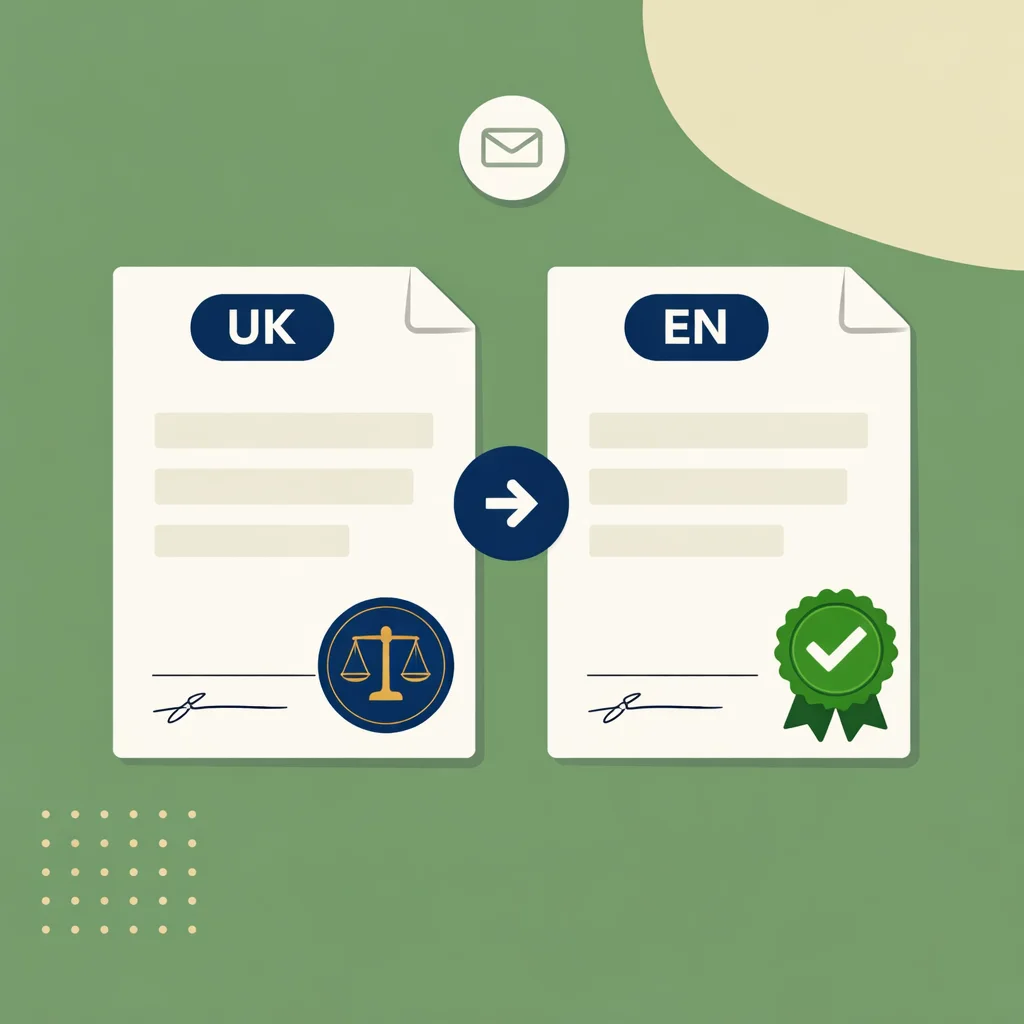
- A Ukrainian birth certificate filed with USCIS or an immigration court needs a complete English translation with the translator's signed certification, whichever generation of form it is.
- Certificates issued before 1991 are in Russian and later ones are in Ukrainian, and both languages are translated line by line when a document mixes them.
- A place of birth printed as the Ukrainian SSR is translated as written, and the translator does not replace it with a modern place name.
- A duplicate certificate carries both the original registration date and its own issue date, and the translation reports the two dates separately along with the record number.
- When an original and a duplicate are both in the file, each gets its own translation and certification so the officer can match every translated page to its source.
- Names are romanized by the Ukrainian passport standard, so a Russian-language certificate can produce a different Latin spelling than a Ukrainian-language one, and the translation follows the page.
- Applicants should read the Department of State Reciprocity Schedule entry for Ukraine before ordering, because translating the wrong version of a civil document wastes the fee.
- When a passport has expired, its data page, stamps and renewal notes in Ukrainian still need a certified translation, and the birth certificate is translated alongside them.
- Records from Crimea and occupied regions are translated exactly as the page reads, including the issuing authority and seals, while acceptance is decided by the officer or judge.
A Ukrainian birth certificate goes into a USCIS or immigration court filing with a complete English translation and the translator's signed certification, and the translation follows whichever form the certificate takes: a Soviet-era Russian form, a Ukrainian form issued after 1991, or a recent certificate issued from the state register. Each generation words and lays out the page differently, so every line, stamp and note is reported as the page shows it.
Many Ukrainians who arrived in the United States on parole now need the certificate for a different kind of filing. It supports an asylum application on Form I-589, a family petition on Form I-130, an adjustment of status on Form I-485, or a work permit renewal on Form I-765, and each of those filings needs the document in English. USCIS regulations require a full English translation of any foreign-language document, together with a certification that the translation is complete and accurate and that the translator is competent to translate from the original language into English. The page on certified document translation for USCIS describes how the certification is attached. The attorney or accredited representative decides which documents go into each filing.
Ukrainian birth certificate forms from the Soviet era to today
Records issued before 1991 are in Russian, and records issued later are in Ukrainian. A person born in the 1980s may therefore hold a Russian original from the Soviet period and a Ukrainian replacement issued decades afterward, and some documents mix the two languages. Both languages are translated line by line. The Russian title свидетельство о рождении and the Ukrainian title свідоцтво про народження both mean birth certificate, and the translation renders either one the same way in English.
The fields are the same in every generation: the child's name, date and place of birth, the parents' names, the registration date, the number of the civil status record, the issuing office and its seal. A place of birth printed as the Ukrainian SSR is translated as written, and the translator does not replace it with a modern name. A translation company that offers certified Ukrainian to English translation needs linguists who read the Russian forms as well, because the two languages are separate and the older certificates depend on the second. The article on Ukrainian document translation for USCIS covers the other civil records that come in both languages.
Duplicate Ukrainian birth certificate versus the original record
A civil registry office issues a duplicate when the original is lost, damaged or needs replacing. The offices that issue them today are often called DRACS offices, and the Soviet-era office was the ZAGS. A duplicate is a new document with its own issue date, but it repeats the data of the original birth registration. Two dates therefore appear on it: the date the birth was registered and the date the duplicate was issued. The translation reports both, keeps them separate, and carries over the record number, the name of the issuing office and any notation that marks the document as a repeat issue.
When a file contains both the original and a duplicate, each one gets its own translation and its own certification, so the officer can match every translated page to its source. The Department of State's Visa Reciprocity and Civil Documents by Country schedule lists which civil documents Ukraine issues and which version is acceptable. Applicants should read that entry before ordering, because translating the wrong version wastes the fee.
Romanizing names on a Ukrainian birth certificate
Names are romanized by the Ukrainian passport standard, the same scheme that produces the Latin spelling in a Ukrainian international passport. The standard works from the Cyrillic letters on the page, so Олександр becomes Oleksandr. A Russian-language certificate may spell the same given name Александр, and the English spelling then comes out as Aleksandr. The difference lies in the source, not in the translation, and the translation does not smooth it over.
Applicants should give the translation company the spelling on the passport and on earlier filings before the work starts. Where the certificate says something else, the translation follows the certificate, and the applicant's attorney decides how to present the variant. Patronymics, which Ukrainian and Russian names take from the father's given name, stay with the name in the translation. The article on transliteration of names for USCIS explains how one spelling is kept across a whole file.
Birth certificate as identity evidence when the passport has expired
A Ukrainian passport or national ID card may have expired by the time of an asylum or family filing, and it may not have been renewed. The birth certificate then stands as the record that ties a name and date of birth to the parents. It does not replace the passport pages already in the file. Those pages carry Ukrainian text of their own, so a Ukrainian passport translation covers the data page, the visa and entry stamps, and any renewal notes in the same way.
The certificate also feeds the family side of the filing. A parent who petitions for a child on Form I-130 relies on the parent's name in the child's certificate, and a mother's surname there often differs from the one she uses now. A marriage certificate translation documents the change, so the two records read as one family.
Records issued in Crimea and the occupied regions
A birth certificate may have been issued in Crimea, or in a region under occupation, after the occupation began. Such a record can be in Russian, can name an issuing authority different from the Ukrainian state registry, and can carry different seals and a different layout. The translator translates what the page says: the names, the issuing authority, the seals and the registration data are reported in the words printed, and place names appear as the document gives them.
The translator adds no comment about the issuing authority and corrects nothing. Whether USCIS or the immigration court accepts the record is a decision for the officer or the judge. The translation only makes the content readable so that the decision can be made on the actual page.
What to prepare before ordering a Ukrainian birth certificate translation
The order goes more smoothly when the file is gathered in one place before upload. Four items cover most Ukrainian cases:
- A full color scan of the certificate, front and back, with every stamp and handwritten entry readable.
- The original and any duplicate as separate files, each with its own scan.
- The spelling of the name on the passport and on earlier filings, in Latin letters.
- The marriage or name change record that explains a surname that differs from the one on the certificate.
Texliff translates Ukrainian birth certificates and passport pages into English, including the Soviet-era Russian forms, with a signed certification attached to each document, and the same process covers 82 languages. Certified translations start at $24.95; the price is calculated from the uploaded file and the total shows before payment, so there is no email exchange to get a quote, which is how many traditional agencies still work. The project starts as soon as the order is placed, and delivery is quick for single documents. A Ukrainian birth certificate can go straight to Ukrainian birth certificate translation as a single upload.
Before ordering, lay the certificate, any duplicate and the passport pages side by side and compare the names and dates across them. Each certificate and duplicate can then be ordered as its own certified birth certificate translation, so every document carries its own certification.