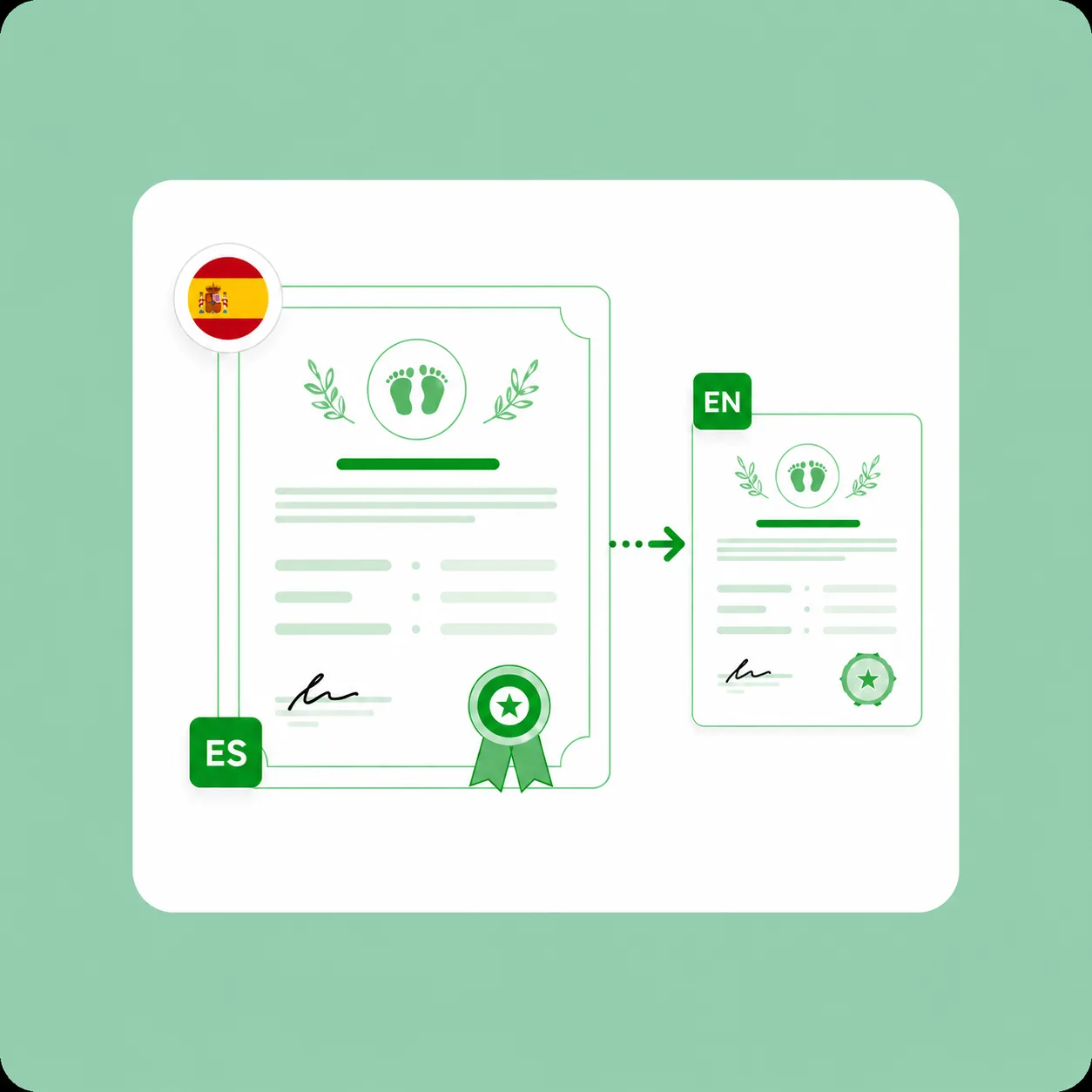
Key Takeaways
- A Spanish birth certificate often needs certified translation for immigration, legal, academic, employment, and personal documentation purposes.
- A certified translation must be complete, accurate, and accompanied by a signed statement confirming that the translation faithfully represents the original document.
- Every detail matters, including names, dates, places, seals, stamps, handwritten notes, and official markings, because small errors can lead to delays or rejection.
- The translation should follow the original document’s format as closely as possible so authorities can easily compare it with the source document.
- Choosing an experienced translation service is important, especially for birth certificates used in immigration or legal procedures.
- Turnaround time, notarization, apostille requirements, and delivery options should be confirmed before placing an order.
- Planning ahead helps avoid last-minute issues, especially when the translated birth certificate is needed for visa applications, residency, citizenship, court matters, or school enrollment.
Understanding Spanish Birth CertificateTranslating a Spanish birth certificate is a crucial task for many. It often serves as a key document for legal and immigration purposes.
Understanding the translation process can save time and prevent potential issues. Certified translations are essential for official use, ensuring accuracy and authenticity.
A professional translator or certified service is necessary to meet these standards. They provide a signed statement attesting to the translation's accuracy.
This process involves translating names, dates, places, and official stamps. Errors can lead to delays or rejections in legal or immigration processes.
Choosing the right translation service is vital. It ensures the document is accepted by authorities without issues. This guide will help you navigate the Spanish birth certificate translation process effectively.
Why Translate a Spanish Birth Certificate?
Translating a Spanish birth certificate is often necessary for several reasons. These documents serve as vital records establishing identity and nationality. They are frequently required in a variety of contexts.
One common need for translation arises in immigration. Many countries require a certified translation of a birth certificate for visa applications or residency processes. Without this, the application might face delays or rejection.
Legal purposes also demand translated birth certificates. For example, during marriage registration or for court proceedings, an accurate translation ensures the document's acceptability. Not meeting these requirements can cause significant legal complications.
Personal reasons may include using the document for employment or educational enrollment. In each scenario, the translated certificate simplifies the process and ensures compliance.
Reasons to translate a Spanish birth certificate include:
Immigration applications
Legal proceedings like marriage registrations
Employment and educational enrollment
Each situation requires a precise and certified translation for smooth procedures. This makes understanding the need for translation crucial for anyone with a Spanish birth certificate.
Certified Translation: What Does It Mean?
A certified translation is more than just converting text from one language to another. It involves a detailed process that guarantees accuracy and authenticity. The translator must meet specific criteria to certify a translation officially.
The translation is usually done by a professional translator who is fluent in both the source and target languages. Additionally, they should understand the cultural contexts. This expertise ensures the document is translated correctly.
Once translated, a certified translation includes a signed statement from the translator. This statement attests to the accuracy and completeness of the translation. It verifies that the document is a true and faithful representation of the original text.
Key components of a certified translation are:
Performed by a professional translator
Accompanied by a signed statement of accuracy
A faithful representation of the original document
Certified translations are crucial for legal and official purposes. This guarantees the document will be accepted by authorities without complications. It removes any doubts about the document's reliability and validity.
When Is a Certified Translation Required?
A certified translation is essential when handling legal and immigration matters. It ensures that translated documents are legally recognized. This requirement arises in various scenarios.
Authorities often need certified translations for immigration processes, such as visa applications. This applies to residency and citizenship requests as well. Without a certified translation, applications might face delays or rejection.
Legal proceedings commonly require certified translations too. This ensures all parties involved understand the document's contents accurately. A judge may request certified translations for documents presented in court.
Common instances necessitating certified translations include:
Immigration applications and procedures
Court-related documents and proceedings
Academic enrollments and scholarship applications
Thus, certified translations are crucial in maintaining integrity and clarity. They support the proper handling of official documents. It's important to verify if your specific situation requires a certified translation to avoid complications.
Step-by-Step: Spanish Birth Certificate Translation Process
Translating a Spanish birth certificate involves multiple detailed steps. Each one contributes to creating an accurate and certified document. Let's walk through the process thoroughly.
First, choose a reputable translation service with experience. Experienced translators ensure quality and precision in their work. They understand the legal requirements and nuances involved.
Next, submit the birth certificate and any specific instructions. You should provide clear guidelines for formatting. Some countries have unique layout preferences and requirements.
The translator then begins the actual translation. This involves converting all the text, including names, dates, and official marks, into the target language. Accuracy is vital in this step to prevent errors.
Proofreading is an essential subsequent step. Here, another professional reviews the translation for mistakes. This ensures clarity and consistency across the entire document.
Certification follows proofreading. The translator signs a statement verifying the translation's accuracy and completeness. This statement adds legal validity to the document.
Finally, the translated and certified document is delivered to you. Many services offer digital and printed copies. Delivery method depends on your preference and urgency.
Key stages in the translation process include:
Selecting an experienced translator or service
Submitting the document with specific instructions
Completing translation and proofreading
Certifying with a signed statement
Receiving the final document
Throughout the process, communication is crucial. Keep in touch with your translator for updates and clarifications. This helps to meet deadlines and ensures the translation meets all specified requirements.
Choosing the Right Spanish Translation Service
Selecting the right translation service is critical for success. It's not only about accuracy but also ensuring official acceptance of the document. Here are some tips for finding the perfect fit.
First, verify the credentials and experience of the translators. They should specialize in Spanish legal translation services. Expertise in legal documents is vital for ensuring quality and adherence to standards.
Customer reviews provide valuable insight. Read feedback and testimonials from past clients. It helps gauge the reputation and reliability of the service.
Consider the service offerings beyond basic translation. Some services include notarization and apostille certification. These additional services might be necessary for your specific requirements.
Evaluate the service's ability to meet deadlines and provide quick turnaround times. Time-sensitive documents require fast yet precise handling. Confirm their capacity to accommodate urgent requests.
Key factors to evaluate when choosing a service:
Translator's credentials and specialization
Customer testimonials and reviews
Additional services like notarization
Turnaround time capabilities
Selecting a trusted service can prevent potential issues. This choice greatly impacts the acceptance of your translated documents. The right service combines expertise, reliability, and tailored solutions to meet your unique needs.
Key Elements of a Proper Birth Certificate Translation
A proper translation of a birth certificate includes several critical elements. These elements ensure that the translation is both accurate and legally acceptable. Understanding these can help ensure the translation meets necessary standards.
Firstly, the translation must fully capture the original document's information. This includes names, dates, locations, and any official stamps or seals. Accuracy in these details is crucial to maintain the integrity of the document.
The translation should closely match the format and layout of the original document. This aspect helps authorities easily compare and verify the translated document against the original. Consistency in structure enhances credibility and acceptance.
Finally, a certified statement should accompany the translation. This statement attests to the accuracy and completeness of the translation. It typically includes the translator's details and signature.
Essential elements of a proper translation:
Complete and accurate translation of all details
Consistent format and layout with the original
Certified statement confirming accuracy
Common Mistakes and How to Avoid Them
Translating a Spanish birth certificate often presents challenges. Avoiding common mistakes ensures the translation process is smooth and hassle-free. Recognizing these pitfalls can save time and prevent complications.
One frequent error involves inaccuracies in translating names and dates. Even slight discrepancies can render the translation invalid. Verifying details thoroughly helps avoid such issues.
Additionally, overlooking official seals and stamps is a common mistake. These elements are vital and must be accurately translated and included. Ignoring them can result in the document's rejection by authorities.
To avoid these mistakes:
Double-check all translated names, dates, and places.
Ensure all stamps and seals are clearly translated.
Use a professional service familiar with legal documents.
Being mindful of these factors guarantees a successful translation outcome.
Costs, Turnaround, and Additional Services
When considering the translation of a Spanish birth certificate, costs vary based on several factors. These include the document's length and complexity. Additionally, the translator's experience can influence pricing.
Turnaround times for translations also differ. Some services may complete the process within a few days. However, it's essential to confirm timelines when placing an order.
Many translation services offer additional options. These can include expedited services for urgent needs or document notarization. Such extras often come at an additional fee.
When selecting a service, consider the following:
Request a detailed quote upfront.
Inquire about standard and rush delivery options.
Ask about supplementary services like notarization.
Understanding these factors helps in choosing the right service. It ensures you receive a cost-effective and timely translation.
Frequently Asked Questions
What is a certified translation?
A certified translation is a translation accompanied by a signed statement. This statement attests to the accuracy and completeness of the translation.
Why is certification important for immigration?
Certification provides authenticity, which immigration authorities require. It ensures translated documents meet the necessary legal standards.
How can I find a trustworthy translation service?
Look for services with positive reviews and verified credentials. Professional memberships can also indicate reliable expertise.
What should I expect to pay for translation services?
Prices vary, but you can request a detailed quote upfront. Services often provide estimates based on document specifics and required turnaround times.
Consider these common concerns when seeking translation for official purposes. Awareness of these factors aids in a successful translation process.
Conclusion: Ensuring a Smooth Translation Experience
Embarking on the process of translating a Spanish birth certificate can seem daunting. With proper planning and understanding, it becomes manageable. The key is choosing a translation service with proven expertise in legal and immigration documents.
Ensure that the service you choose can meet legal requirements and deliver a certified translation. Verify their credentials and experience to avoid common pitfalls. Remember that a reputable service will provide guidance throughout the process.
Timing and clear communication are crucial. Start early to allow for any unexpected delays, and make sure to convey all necessary requirements. This proactive approach helps in avoiding last-minute issues.
In conclusion, a successful translation experience lies in careful planning and choosing the right professionals. By doing so, you ensure the translated document is accurate, authentic, and accepted by relevant authorities.