Key Takeaways
- Certified document translation is required when foreign-language records need to be accepted by government agencies, universities, courts, or other official institutions.
- A certified translation must include a Certificate of Accuracy confirming that the translation is complete, accurate, and prepared by a competent translator.
- USCIS generally requires a full English translation of foreign-language documents, including every word, seal, stamp, handwritten note, and signature.
- Certified translation and notarized translation are different; certification confirms translation accuracy, while notarization verifies the identity of the person signing the certificate.
- Some international or legal submissions may require sworn translation, notarization, or an apostille depending on the destination country or receiving institution.
- Using ATA member translators or experienced professional providers can add credibility and reduce the risk of rejection, delays, or Requests for Evidence.
- Clear scans, accurate names and dates, similar formatting, transparent pricing, and human review are important parts of a reliable certified translation process.
- Applicants should confirm the receiving authority’s exact requirements before ordering translation to avoid unnecessary costs or missing verification steps.
You have spent months gathering paperwork for your green card application, only to receive a rejection notice because of a simple error on your translated birth certificate. According to immigration experts, submitting uncertified paperwork is a leading cause of costly government delays and denied applications.
While a bilingual friend might perfectly convert a restaurant menu into English, they lack the legal authority to translate official documents. Everyday situations allow for casual interpretation, but high-stakes legal matters demand absolute certainty and verifiable accountability from the person doing the work.
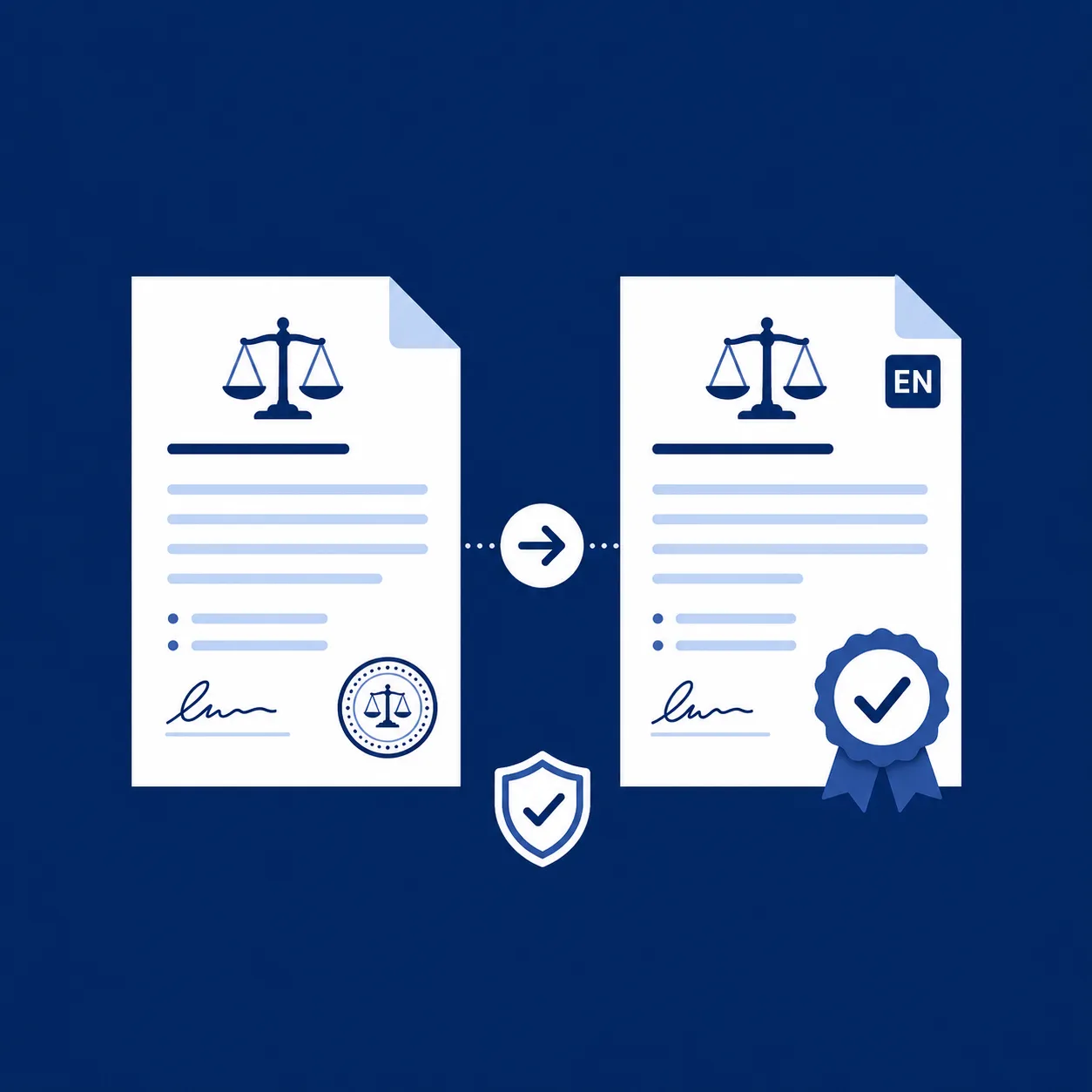
To guarantee your paperwork holds legal weight in another country, you must use certified document translation services. This specialized process acts as a formal bridge, transforming your foreign-language personal records into accepted, legally recognized proof.
Government bodies like U.S. Citizenship and Immigration Services (USCIS) strictly require a "Certificate of Accuracy" with your submission. In practice, approved translation services attach this signed formal statement to swear their work is an exact match of the original, ensuring your important milestones are accepted on the first try.
What Exactly Is a Certified Translation?
Using a certified translation agency ensures your paperwork is converted from the original text (the Source Language) to the new language (the Target Language) by a neutral third party. Official bodies require this strict separation to prevent fraud and guarantee the original intent remains intact.
The secret to this official status is a separate, attached document called a Certificate of Accuracy. This formal statement acts as a legal guarantee from the translator, proving they possess the necessary skills to handle your important documents. Without this physical certificate, even perfect professional document translation services hold no legal weight.
For a certification statement to be legally binding, it must include four essential elements:
A statement affirming the translation's completeness and accuracy
The date the translation was completed
The translator or agency representative's signature
Full contact information for the translation provider
Relying on casual fluency often leads to frustrating delays, whereas relying on professional linguist credentials for court proceedings or immigration guarantees your paperwork is treated seriously.
Meeting USCIS Translation Requirements Without Stress
Navigating the United States Citizenship and Immigration Services process is stressful enough without language errors holding you back. Falling short of their exact standards often triggers a Request for Evidence (RFE), a formal government notice that completely pauses your visa or green card application until corrected paperwork is submitted.
To prevent these frustrating delays, immigration officials demand a verbatim translation of your vital records. Instead of summarizing the content, the professional translator must convert every single word, official seal, and handwritten signature exactly as it appears on the page, keeping the original meaning completely unchanged.
Beyond just the text, visual presentation plays a massive role in meeting strict USCIS translation requirements for birth certificate submissions. Quality translation agencies format the new document to visually mirror the original layout, allowing reviewing officers to easily compare the pages side-by-side alongside an official accuracy certificate for immigration paperwork.
Securing this high level of detail results in guaranteed acceptance by government agencies, preventing unnecessary processing delays.
Clearing the Confusion: Certified vs. Notarized Translations
Understanding the exact difference between certified and notarized translation can feel overwhelming. Many applicants mistakenly assume these terms are interchangeable, leading to wasted money on extra fees or rejected paperwork when the wrong format is submitted.
The core distinction comes down to what is actually being verified. While a certified translation guarantees text accuracy, notarization adds a separate layer of identity verification. A government-authorized Notary Public simply watches the translator sign the accuracy certificate, legally confirming that the person signing is exactly who they claim to be.
Knowing your receiving agency's specific rules is the easiest way to avoid overpaying. While immigration officials typically only require standard certification, overseas court proceedings often demand a notary certified translation. Similarly, strict university admissions offices might mandate a notary public signature for official transcripts before evaluating your academic records.
To decide if you need standard or notarised translation services, use this quick checklist:
Check the guidelines: Government immigration applications usually skip the notary requirement.
Identify the destination: Legal courts, financial institutions, and foreign embassies almost always require both.
Ask the institution: When in doubt, contact the receiving clerk directly before paying for extra stamps.
Getting the correct verification ensures your paperwork is accepted on the first try. However, even a perfectly notarized document can be rejected if the translator themselves is unqualified, which is exactly why ATA Member Translators are the gold standard for high-stakes submissions.
Why ATA Member Translators Are the Gold Standard
Entrusting your personal records to a stranger requires immense trust. That is why immigration offices and universities prefer professionals backed by the American Translators Association (ATA). When an expert follows American Translators Association certification standards, they commit to strict ethical guidelines. This protects you through rigorous confidentiality protocols for sensitive legal papers.
Anyone can claim to be bilingual, but proving professional standing is entirely different. Before hiring a service, verify their credentials to avoid stressful application delays. You can confirm their official status using these three simple methods:
Search the online directory to learn where to find ATA member translators.
Ask the agency to provide their verifiable membership number.
Check your completed document for an official seal or stamp.
This quick verification gives you total peace of mind before submission. While this domestic standard covers most local needs, submitting documents overseas introduces entirely new verification rules.
Using Sworn and Accredited Translations for International Recognition
Taking your paperwork across borders completely changes how governments verify authenticity. For those translating marriage license for visa application purposes overseas, a standard American certification often falls short. Foreign agencies expect a specific, localized guarantee that your records are entirely genuine.
Unlike the United States, many foreign nations maintain strict government registries of approved linguists. Learning how to get a sworn translation for legal documents requires hiring one of these court-appointed professionals. Because they take a formal oath before a judge, their signature carries direct legal weight within that specific country's court system.
Your paperwork might still require one final layer of international proof before it can be accepted. You may need apostille services for international document recognition, which provide a special authentication certificate recognized by the Hague Convention. This unique government seal acts as a global handshake, proving to the destination country that the original signatures are real.
Utilizing accredited translation services ensures your paperwork meets the exact legal standards of your destination country, saving time and money during international transitions.
5 Steps to Securing an Approved Translation Fast
When you are ready to translate official documents, starting with a flawless foundation prevents frustrating delays. Government agencies cannot process what they cannot read, making strict legibility requirements your very first hurdle. Follow this simple five-step checklist to secure your paperwork:
Scan clearly: Provide flat, well-lit copies without cut-off edges.
Request a quote: Submit your files to the agency for accurate pricing.
Verify requirements: Confirm specific institutional rules before work begins.
Review the draft: Check all names and dates carefully.
Receive the final: Obtain your digital and physical copies.
Managing expectations around delivery reduces the stress of tight deadlines. While a simple birth certificate might be completed in 24 hours, the standard processing time for academic credential evaluation or lengthy legal files usually takes several days. Always communicate your required turnaround time upfront so the agency can properly accommodate your schedule.
Once approved, your completed paperwork arrives bearing the mandatory certified translation stamp and a signed certificate of accuracy. Because these essential documents unlock major life milestones, setting an accurate budget for this service is crucial.
How to Budget for Official Translation Costs and Avoid Red Flags
Figuring out your paperwork budget does not have to be a guessing game. Providers generally calculate the cost of official document translation per page, usually defined as up to 250 words. This flat-rate model makes estimating expenses for standard birth certificates or diplomas incredibly straightforward before you ever submit a file.
It is always tempting to search for the absolute lowest price online. However, relying on professional document translation services ensures your paperwork perfectly matches strict government guidelines on the first try. This essential investment prevents frustrating, costly rejections when dealing with rigid immigration or university deadlines.
Watch out for obvious red flags when selecting your certified translation agency. You should avoid providers offering prices that seem unusually low, promising instant delivery without human review, or refusing to guarantee institutional acceptance. Legitimate companies will proudly stand behind their credentials and offer transparent contact information on their certificates of accuracy.
A trustworthy partner protects both your wallet and your high-stakes applications by minimizing the risk of denial.
Your Roadmap to a Hassle-Free Document Submission
You no longer have to guess what makes a translation legally valid when facing tight deadlines and complex paperwork. Professional certification is the essential bridge connecting your past milestones to your future opportunities.
Before submitting your application, review your files to ensure they meet your target institution's exact requirements. Gather your clear, legible originals and reach out to reputable certified document translation services. Taking this simple step prevents costly delays and moves you confidently toward official approval.
Investing in the right professionals ensures acceptance by government agencies, universities, and courts on your first try. Partner with a qualified expert today to secure your documentation and keep your international goals on track.