Key Takeaways
- Interpreter services are used for spoken communication in real time, while translation services are used for written documents.
- Being bilingual is not the same as being a professional interpreter because interpretation requires specialized skills, neutrality, speed, and accuracy.
- Consecutive interpretation works best for one-on-one meetings, medical appointments, legal interviews, and smaller conversations where speakers can pause.
- Simultaneous interpretation is better for conferences, large events, and presentations where the audience needs real-time language support.
- Remote interpretation can provide fast access to qualified interpreters by phone or video, reducing travel costs and improving availability.
- Video remote interpreting is especially useful when visual cues matter, including American Sign Language and sensitive conversations where facial expressions support understanding.
- Using family members or children as interpreters in healthcare can create serious risks, including medication errors, privacy issues, emotional burden, and legal liability.
- Professional medical interpreters help protect patient safety by accurately conveying symptoms, diagnoses, treatment instructions, and consent information.
- Specialized settings such as courts, hospitals, sports events, schools, and ASL-accessible events require interpreters with the right training, credentials, and subject-matter knowledge.
- Effective communication with an interpreter depends on speaking in the first person, looking directly at the person you are addressing, and pausing often.
- Hiring the right interpreter means checking whether they are qualified or certified, what service modes they offer, how they are vetted, and how rates are structured.
- Professional interpreter services help ensure that language barriers do not prevent safety, access, fairness, or meaningful human connection.
Imagine you are sitting in a hospital room in a foreign country, in pain while a doctor speaks rapidly. You might grasp their tone, but the life-saving details are completely lost in the communication gap. According to healthcare industry data, situations like this make professional interpreter services not just a convenience, but a critical lifeline.
Many people assume that anyone who speaks two languages can automatically step in to help. However, being bilingual is simply like having two hands, whereas acting as a professional interpreter is like being a concert pianist. It requires a highly specific skill set to process complex information and relay it instantly.
There is a vital distinction between translation and interpretation. Translators work exclusively with written text, carefully converting documents at their own pace. Interpreters deal with the spoken word in real-time, capturing both the accurate meaning and the underlying emotion of the speaker. When you need documents handled, look to translation services, whereas live conversations require interpreter services and specialized language interpretation skills.
Effective language interpretation doesn't just mechanically swap vocabulary words. Instead, the professional builds a cognitive bridge, allowing two people from entirely different backgrounds to walk across and safely meet in the middle.
Choosing the Right Mode: When to Use Consecutive vs. Simultaneous Interpretation
Whether sharing critical medical symptoms with a doctor or addressing a crowded school meeting, the delivery of spoken words changes based on the situation. The difference usually comes down to wait time. Think of consecutive interpretation like a standard conversation: you speak, pause, and the professional relays your message. Alternatively, simultaneous interpretation works like a shadow. The interpreter listens and speaks at the exact same time you do, providing seamless, real-time conference language support.
Choosing the right fit depends on the specifics of your gathering:
Group Size: Consecutive works best for intimate, one-on-one interactions, while simultaneous fits large presentations.
Session Length: Consecutive doubles the length of a meeting since everything is said twice, requiring you to plan for extra time.
Equipment Needs: Consecutive requires no special gear, whereas simultaneous relies on specialized headsets and soundproof booths to block background noise.
Planning your schedule around these logistical details ensures the message lands clearly without frustrating delays. If you choose the consecutive method for a small business meeting, simply remember to budget extra time for those conversational pauses. Modern technology has made both of these professional methods increasingly flexible, solving instant communication gaps through remote interpretation and on-demand interpreting.
How Remote Interpretation Solves Instant Communication Gaps
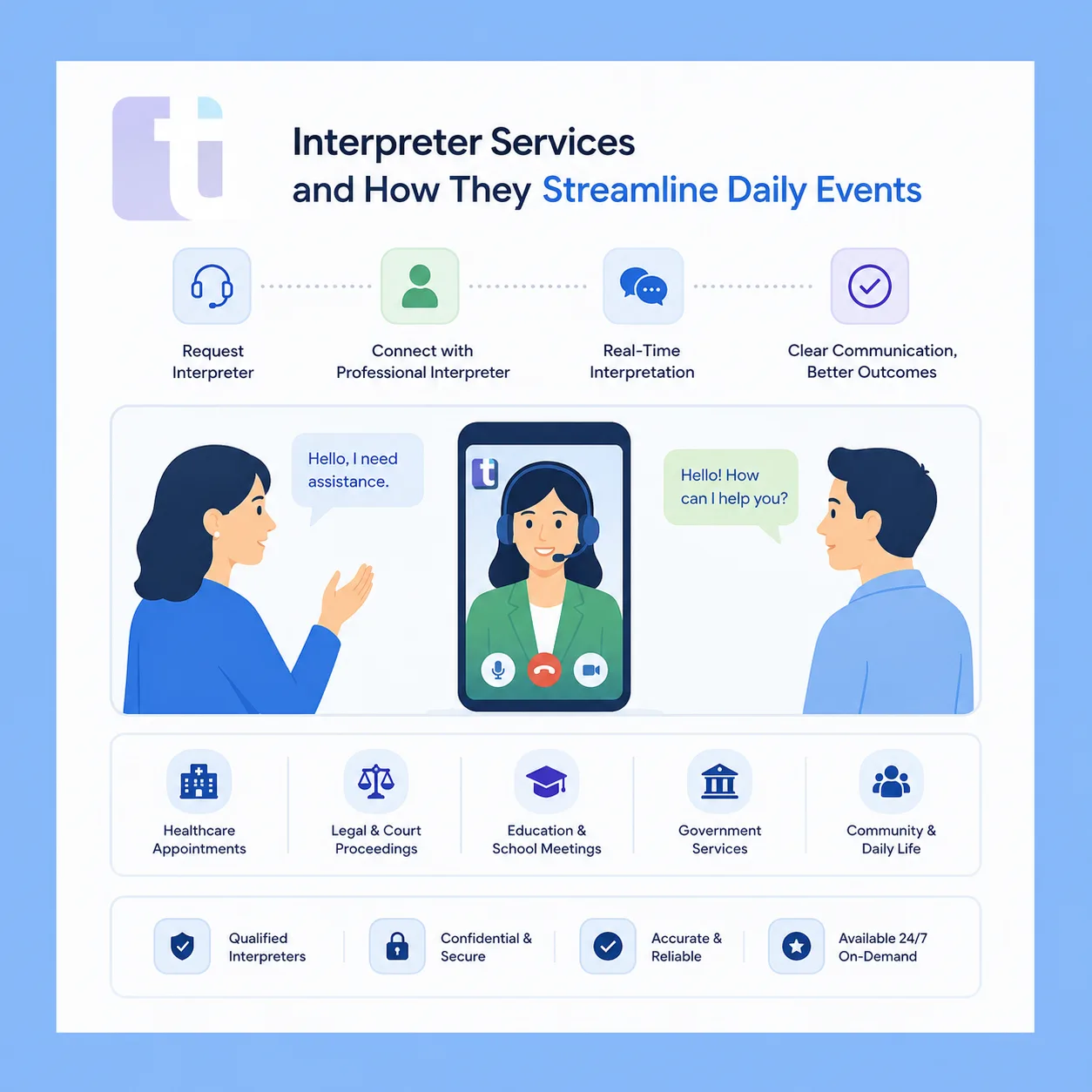
Sometimes, waiting for an in-person professional simply isn't an option when a sudden language barrier appears. Modern technology has introduced remote interpretation as a highly accessible alternative for everyday situations. By connecting digitally, you completely avoid the travel fees and minimum hour requirements associated with traditional on-site meetings. This makes the service incredibly cost-effective for a quick client update or a brief parent-teacher conference.
A simple phone call often provides the fastest access to help. One of the greatest on-demand over-the-phone interpretation benefits is the sheer speed of connection. Within a single minute, you can reach professionals speaking over 200 languages directly through your smartphone or office line. Whether you are handling an urgent customer service issue or require immediate Vietnamese interpreter services, this audio connection acts as an instant bridge.
Many interpretation agency platforms now bundle on-demand interpreting with remote interpretation, offering scalable interpreter solutions for organizations and families.
Visual cues are sometimes just as important as the spoken word, which is where cameras step in. When implementing video remote interpreting, you bring a crucial human element back into the room via a tablet or laptop screen. This visual link is absolutely essential for American Sign Language (ASL), where facial expressions and physical gestures are the language itself. It also complements translation services for families and sign language, ensuring written notices and ASL-accessible materials are aligned.
Having these flexible digital tools available means you never have to guess your way through important conversations. Accessibility is a strong starting point, but the accuracy of the message is what truly matters when the stakes are high, demonstrating why trained experts are vital in healthcare environments.
Why Professional Interpreters Save Lives in Healthcare: Beyond the 'Bilingual Nephew'
Bringing a sick family member to the ER and asking a ten-year-old relative to interpret fast-paced instructions is a dangerous approach to overcoming language barriers. Relying on well-meaning family creates serious hazards:
Medication errors caused by misunderstood dosages or allergy warnings.
Privacy violations when sensitive medical history is shared with relatives.
Legal liability for medical facilities if miscommunication leads to patient injury.
Under Title VI language access requirements, any US hospital or clinic receiving federal funds must provide a qualified professional at no cost to the patient. You have a legal right to fully understand your treatment plan without putting a heavy emotional burden onto a loved one's shoulders.
To guarantee safety, hospitals usually partner with a reputable interpretation agency that enforces strict certified medical interpreting standards. These professionals operate under the ethical "Invisible Pipe" model. They do not add their own opinions, omit bad news, or try to soften scary statements. Whatever the doctor says goes into one end and comes out the other exactly the same, ensuring absolute neutrality and clinical accuracy.
Securing this level of precision protects patients during their most vulnerable moments. Trained experts are equally vital in other complex environments, from athletic arenas to Deaf community events.
Navigating Specialized Needs: From Sports to American Sign Language (ASL)
Moving beyond the hospital room, specialized environments demand a completely different kind of language bridge. When providing sports interpreter services during a high-stakes press conference, a professional doesn't just swap vocabulary; they must capture the athlete's raw emotion and energy. By utilizing culturally responsive communication strategies, these experts seamlessly adapt slang and local idioms so fans feel the exact impact of the player's original statement.
While athletic events rely heavily on matching vocal tone, working with the Deaf community requires an entirely visual approach. American Sign Language (ASL) is not simply English converted into hand gestures; it is a rich, independent language with its own distinct grammar and culture. Hosting an inclusive public event means following established American Sign Language accessibility guidelines to ensure participants can fully engage without barriers.
To guarantee visual clarity for Deaf attendees, event organizers must prioritize practical environmental setups:
Lighting: Keep the professional well-lit, avoiding harsh backlighting that creates shadows.
Line-of-Sight: Ensure entirely unobstructed views from the audience seating area.
Placement: Position them immediately next to the main speaker so attendees can easily watch both.
Once your physical space is prepared, successful interaction requires following clear communication rules.
Three Rules for Working with an Interpreter Successfully
Stepping into a conversation with a language professional can feel awkward at first, but mastering the dynamic is incredibly simple. The most effective interactions rely on the "communication triangle."
By positioning the interpreter slightly to the side, you can look directly at the person you are actually talking to, building genuine trust across the language gap.
To get the most out of modern interpreter solutions, follow these three golden rules:
Speak in the First Person: Say, "I have a question," instead of, "Tell her I have a question." Because professional ethics for spoken language experts require them to act as your exact voice, they will always interpret your "I" as "I."
Maintain Eye Contact: Look directly at your doctor, teacher, or client—not the linguist bridging the gap.
Pause Frequently: Speak in short, complete thoughts so the professional can deliver your message accurately in a consecutive rhythm.
Practicing these habits transforms a clunky exchange into a seamless human connection. Finding a certified expert to facilitate these connections requires understanding procurement basics.
How to Hire a Certified Professional Without the Stress
Finding the right expert means choosing between an independent freelancer and an interpretation agency. Always ask three crucial questions before booking: which remote or on-site modes do they offer, how do they vet their staff, and what are the factors influencing language agency rates? Typically, your hourly costs and industry-standard two-hour minimums will depend heavily on language rarity and how much advance notice you provide.
Verifying credentials is just as important as budget, which requires understanding the difference between "qualified" and "certified." Qualified individuals have passed basic fluency assessments, whereas certified interpreters have conquered rigorous state or national exams proving specialized ethical competence. In high-stakes environments, like hiring qualified court interpreters for legal cases, accepting uncertified help can jeopardize the entire proceeding.
Spotting genuine professionals ensures your message acts like water flowing through a clear pipe—delivered perfectly intact without added opinions or missing facts. Demanding proper credentials removes the guesswork from securing reliable language support.
Your Roadmap to Breaking Language Barriers Every Day
You no longer have to cross the language gap alone or rely on well-meaning but untrained helpers. By understanding the distinction between written translation services and professional interpreter services, you are equipped to advocate for clarity in any critical situation. When you face your next multilingual encounter, use this readiness checklist to secure proper interpretation support:
Advocate: Request professional help immediately, especially in healthcare or legal settings where it is often your right.
Decline politely: Confidently say no to using a bilingual family member or child for high-stakes conversations.
Speak directly: Look at the person you are conversing with, applying the first-person rule rather than addressing the interpreter.
Language should never be a barrier to safety or human connection. You now possess the practical tools to build a sturdy bridge across any conversation, ensuring every word is heard, respected, and perfectly understood.
Q&A
Question: What’s the difference between translation and interpretation, and which do I need?
Short answer: Translation deals with written text, allowing time to carefully convert documents. Interpretation handles spoken language in real time, conveying both accurate meaning and the speaker’s emotion. Choose translation services for documents; choose interpreter services for live conversations. Being bilingual isn’t the same as being a professional interpreter—interpreting requires specialized, concert‑pianist‑level skills to process and relay complex information instantly.
Question: When should I choose consecutive vs. simultaneous interpretation?
Short answer: Pick based on your event’s size, timing, and logistics:
Consecutive: Best for one-on-one or small groups. You speak, pause, then the interpreter speaks. It roughly doubles session length but requires no special equipment.
Simultaneous: Ideal for large presentations and conferences. The interpreter speaks while you speak, providing seamless flow, but it typically requires headsets and soundproof booths.
Planning for these factors ensures clarity without delays, and modern tools also enable remote options for either mode.
Question: How does remote interpretation work, and when do I use phone vs. video?
Short answer: Remote interpretation connects you to professionals digitally, avoiding travel fees and minimum on-site hours—great for quick updates or brief meetings.
Over-the-phone interpreting (OPI): Fastest access—often in under a minute—to professionals in 200+ languages for urgent customer or client needs.
Video remote interpreting (VRI): Adds essential visual cues. It’s crucial for American Sign Language (ASL), where facial expressions and gestures carry meaning, and it complements written materials to keep everything aligned.
Question: Why is using a family member in healthcare risky, and what are my rights?
Short answer: Untrained helpers can cause medication errors, breach privacy, and create legal liability if miscommunication harms a patient. Under Title VI, any U.S. hospital or clinic receiving federal funds must provide a qualified interpreter at no cost to the patient. Professionals follow the “Invisible Pipe” model—no adding opinions, softening bad news, or omitting details—so the doctor’s words pass through accurately and neutrally, which can be lifesaving.
Question: How do I hire a certified interpreter and collaborate effectively?
Short answer: Start by deciding between a freelancer and an agency, then ask:
Modes: Do they offer on-site, phone, and video options to match your needs?
Vetting: How are interpreters screened and trained?
Rates: What affects pricing (language rarity, notice) and are there two-hour minimums?
Verify credentials: “Qualified” means basic fluency assessments passed; “Certified” means rigorous state or national exams and ethical competence—often required in high-stakes settings like courts.
For a smooth session, use the communication triangle (interpreter slightly to the side), speak in the first person, maintain eye contact with the other party, and pause frequently so messages are conveyed accurately.