Key Takeaways
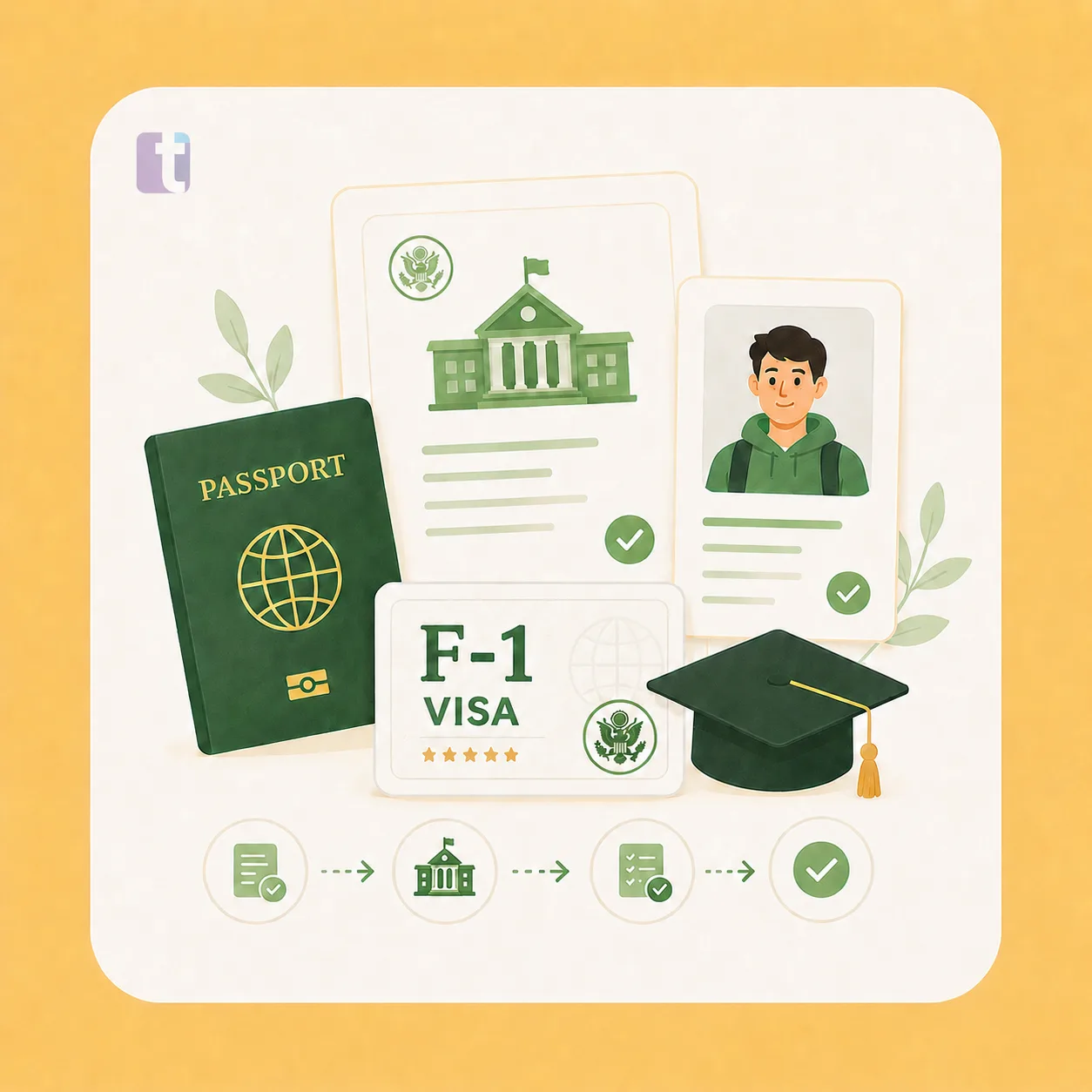
- The F1 student visa is used by international students who plan to study at a SEVP-approved school in the United States.
- Before applying for the visa, students must first be accepted by an eligible school and receive Form I-20.
- Financial documentation is a major part of the process because students must show they can cover tuition, fees, and living expenses for at least the first year.
- Academic records, diplomas, financial documents, and other non-English materials may need certified translation before they are submitted to schools or immigration authorities.
- The F1 visa application generally involves paying the SEVIS I-901 fee, completing the DS-160 form, scheduling the embassy interview, and preparing all required documents.
- During the visa interview, students must clearly explain their study plans, financial situation, university choice, and intent to return home after completing their program.
- Maintaining F1 status requires full-time enrollment, a valid passport, a current Form I-20, and DSO approval before making major academic or employment-related changes.
- F1 students may work on campus within allowed limits, but off-campus work requires authorization through CPT, OPT, or STEM OPT.
- After graduation, students may use OPT or STEM OPT to gain work experience, and some may later transition to H-1B or other immigration pathways.
Embarking on a journey to study in USA is a thrilling milestone, but before you can pack your bags and step onto an American university campus, there is one crucial hurdle you must clear: securing your international student visa. Navigating the complex world of immigration regulations can feel overwhelming, but with the right preparation and knowledge, you can approach the system with confidence.
Whether you are aiming for an undergraduate degree, a master’s program, or a specialized certification, understanding the exact steps to acquire and maintain your visa is paramount. This comprehensive F1 visa guide is designed to demystify the entire journey, from gathering your initial paperwork to thriving as an international student and beyond.
What is the F1 Student Visa?
The F1 student visa is the most common usa student visa issued to international students who wish to pursue academic studies or language training programs in the United States. To qualify, your program of study must culminate in a degree, diploma, or certificate, and your school must be authorized by the U.S. government to accept international students.
You might be wondering about the difference between F1 and J1 visas, as both are frequently discussed in academic circles. The primary distinction lies in the nature of your visit and your funding source. The F1 visa is strictly for degree-seeking academic students who are primarily self-funded or funded by their university. In contrast, the J1 visa is intended for cultural exchange programs, researchers, and students funded by government or corporate sponsorships. Furthermore, J1 visas often come with a two-year home-country physical presence requirement, which is not applicable to the F1 category.
The Initial Preparations: Admissions and Financials
Before you can even begin the F1 visa application, you must first be accepted into a Student and Exchange Visitor Program (SEVP)-approved school.
The Form I-20 Issuance Process
Once you receive your acceptance letter, the school will initiate the Form I-20 issuance process. The Form I-20, officially titled the "Certificate of Eligibility for Nonimmigrant Student Status," is a vital document. It records your personal information, the details of your study program, the program's start and end dates, and an estimate of your educational and living expenses for one academic year. You will need the physical copy of this document for your visa interview and every time you enter the United States.
Securing Your Funding
To issue your Form I-20, your university will require comprehensive financial documentation for international students. The U.S. government mandates that you prove you have sufficient liquid funds to cover your tuition, fees, and living expenses for at least your first year of study.
Acceptable financial documents typically include:
Personal or family bank statements
Sponsorship letters with accompanying bank statements
Scholarship award letters
Approved educational loan documents
The Importance of Accurate Document Translation
If you are an international student hailing from a non-English-speaking country, your application materials—from academic records to financial statements—will likely be in your native language. This is where professional document translation becomes a critical component of your visa journey.
When dealing with U.S. educational institutions and government bodies like USCIS (United States Citizenship and Immigration Services), you cannot simply translate your documents yourself. You must provide a certified translation. A certified translation includes a formal statement signed by the translator or translation agency attesting to the accuracy and completeness of the translation, as well as the translator's competence in both languages.
Here are the primary documents you will likely need translated:
Academic Transcripts: Accurate transcript translation is non-negotiable. Universities and immigration officials need to evaluate your academic history precisely as it equates to the U.S. grading system.
Degrees and Certificates: Proper diploma translation ensures your previous educational milestones are legally recognized.
Financial Records: Bank statements and tax documents used to prove your funding must clearly communicate your financial standing in English.
When preparing documents that may eventually be submitted to the government, it is highly recommended to follow USCIS Translation Guidelines. These guidelines dictate that any foreign language document must be accompanied by a full English translation that the translator has certified as complete and accurate. Failing to provide a proper translation can result in your application being delayed or denied. Always partner with a reputable agency specializing in immigration translations to avoid unnecessary setbacks.
The F1 Visa Application: Step-by-Step
With your Form I-20 in hand and your documents expertly translated, you are ready to begin the formal F1 visa application.
1. Pay the SEVIS I-901 Fee
The Student and Exchange Visitor Information System (SEVIS) is a database used to track international students. Every new student must pay the SEVIS fee before applying for a visa. It is highly advised to review a SEVIS I-901 fee payment guide online to ensure you input your SEVIS ID (found on your I-20) correctly. Print and save the payment receipt, as it is a mandatory document for your interview.
2. Complete the DS-160 Form
Next, you must submit the DS-160, the Online Nonimmigrant Visa Application. Follow the DS-160 online application instructions very carefully. You will be asked about your personal background, travel history, family, and educational plans. Be incredibly thorough and entirely truthful; any discrepancies between your DS-160 and your interview answers will raise red flags.
3. Schedule Your Visa Interview
Once your DS-160 is submitted, you need to know how to schedule embassy appointment dates. You will log into your local U.S. Embassy or Consulate's scheduling portal, pay the MRV (Machine Readable Visa) application fee, and select an interview slot.
Keep in mind that processing times for US study permits can fluctuate wildly depending on the time of year and the specific embassy. Summer months are peak season for student visas. Book your appointment as early as possible—up to 365 days before your program’s start date—to ensure you receive your visa in time.
Acing the F1 Visa Interview
The F1 visa interview is arguably the most daunting part of the process. However, understanding what the consular officer is looking for can significantly reduce your anxiety.
The most critical aspect of the interview is proving nonimmigrant intent during interview questioning. By U.S. law, consular officers must presume that every nonimmigrant visa applicant secretly intends to immigrate to the U.S. permanently. It is your burden to prove otherwise. You must demonstrate strong ties to your home country—such as family, future career prospects, or property—that will compel you to return home after your studies.
Essential Student Visa Tips for the Interview:
Be Concise and Direct: Consular officers interview dozens of people a day. Keep your answers brief, honest, and directly related to the question.
Know Your Program: Be ready to explain why you chose your specific university, what your major is, and how this degree fits into your long-term career goals in your home country.
Prepare Your Documents: Bring your passport, I-20, DS-160 confirmation, SEVIS fee receipt, financial documents, translated academic records, and a passport-sized photo.
Stay Calm: Confidence speaks volumes. Maintain eye contact and a polite demeanor.
If your visa is denied, it is usually under Section 214(b) of the Immigration and Nationality Act. The most common 214b visa refusal reasons include failing to prove sufficient financial support, failing to establish strong ties to your home country, or failing to convince the officer of the academic legitimacy of your study plans. If denied, you can reapply, but you should only do so if your circumstances have changed or you can present compelling new evidence.
Arrival: Port of Entry Admission Procedures
Securing the visa is a massive victory, but your visa does not guarantee entry into the United States; it only allows you to travel to a U.S. port of entry and request permission to enter.
Familiarize yourself with standard port of entry admission procedures. When you land at a U.S. airport, you will speak with a Customs and Border Protection (CBP) officer. You must have your passport (with the valid visa) and your original Form I-20 on hand—do not pack these in your checked luggage! The officer will likely ask you a few questions about where you are going and what you are studying. Once cleared, they will stamp your passport and generate an electronic I-94 arrival record, officially admitting you into the country in F-1 status.
Maintaining Your Visa Status During Your Studies
Once you arrive on campus, adhering to all ongoing f1 visa requirements is your most important responsibility. A minor administrative slip-up can jeopardize your legal standing in the country.
The most vital rule is maintaining full-time enrollment status during the academic year (usually Fall and Spring semesters). For undergraduates, this typically means a minimum of 12 credit hours per semester; for graduate students, it varies by program but is usually around 9 credit hours. You cannot drop below a full course of study without prior authorization from your university's Designated School Official (DSO), and this authorization is only granted under very strict medical or academic circumstances.
Additionally, always ensure your passport remains valid for at least six months into the future, and never let your I-20 expire. If you need more time to complete your degree, you must request a program extension from your DSO before the end date listed on your current I-20.
Employment and Practical Training Opportunities
One of the most frequent questions from incoming scholars is: "Can international students work off-campus?" The short answer is no, not without specific authorization. Unauthorized employment is a serious violation of immigration law and can lead to immediate deportation.
However, there are legal pathways to gain valuable work experience while on an F-1 visa.
On-Campus Employment
F-1 students are generally permitted to work on their university campus for up to 20 hours per week while school is in session, and up to 40 hours per week during official school breaks. This does not require USCIS authorization, but you will need to coordinate with your DSO and apply for a Social Security Number.
Curricular Practical Training (CPT)
If an internship or practicum is an integral part of your academic curriculum, you may be eligible for CPT. Under curricular practical training guidelines, employment must be directly related to your major field of study and authorized by your DSO before you begin working. You can work full-time or part-time on CPT, but be cautious: accumulating 12 months or more of full-time CPT will render you ineligible for Optional Practical Training after graduation.
Optional Practical Training (OPT)
OPT is temporary employment authorization that allows you to gain practical experience in your field of study. Most students utilize this after graduation. The standard post-completion optional practical training rules allow you to work anywhere in the U.S. for up to 12 months, provided the job is directly related to your major. You must apply for OPT through USCIS, and it can take several months to process, so early application is vital.
The STEM OPT Extension
If you are earning a degree in Science, Technology, Engineering, or Mathematics (STEM), you may qualify for an extended work period. The STEM OPT extension eligibility requirements state that if you have earned a degree on the approved STEM list and are employed by an employer enrolled in the E-Verify program, you can apply to extend your OPT for an additional 24 months. This gives STEM graduates a total of three years of U.S. work experience.
Life After Graduation: Transitioning Your Status
For many international students, the F-1 visa is just the beginning. While the visa is strictly for temporary stays, many graduates eventually seek permanent residency.
The journey from an f1 student visa to green card usually involves transitional visas. The most common route is securing employment through OPT or STEM OPT, and subsequently having your employer sponsor you for an H-1B specialty occupation visa. From the H-1B, an employer can sponsor you for an employment-based Green Card (such as EB-2 or EB-3 categories). Other pathways include marriage to a U.S. citizen, investing in the U.S. economy (EB-5), or demonstrating extraordinary ability in your field (EB-1).
Conclusion
Navigating the F1 student visa process demands meticulous attention to detail, from mastering the initial paperwork and securing a certified translation of your academic history, to conquering the consular interview and strictly maintaining your status upon arrival. While the rules are stringent, they are navigable. By understanding the intricacies of the U.S. immigration system, utilizing campus resources, and staying proactive regarding deadlines, you can successfully launch your academic journey. Study hard, follow the rules, and make the absolute most of your educational experience in the United States.