Key Takeaways
- USCIS requires an English translation of every foreign-language part of a document, so a page that is mostly English still needs its other languages translated and certified.
- A single stamp, line, or column in another language is enough to require translation, because the rule looks at what is printed on the page.
- The English text on a bilingual page does not need translation, and the translation states which parts were left as they appear so the officer can match each line.
- Canadian, Belgian, and Swiss records can carry two or three official languages, and the certification names every source language the translator handled.
- Philippine school and PSA records that mix English with Filipino need a linguist for each non-English language on the page, while the English passages are marked as already in English.
- Passports with English labels still need their local-language entries, endorsements, and any visa or border stamps in a third language translated wherever the text can be read.
- When languages are interleaved line by line, translating the whole document reads more clearly, and illegible text is marked as illegible rather than guessed.
- The certification identifies the document, states the translator's competence in English and each source language, and confirms the translation is complete and accurate, with a separate certification per document being safer.
- A missing, incomplete, or uncertified translation can lead to a Request for Evidence or a Notice of Intent to Deny, and the official-language exception applies only at the NVC and consulates.
- Checking the Department of State reciprocity schedule before ordering confirms which version of a civil document is acceptable, so the translation fee is not spent on the wrong one.
USCIS requires an English translation of every part of a document that is not in English, even when most of the page is already in English. A birth certificate printed in English and French, a transcript with English headings and Filipino remarks, and a passport with English labels and local-language entries all fall under the same rule, and the translation has to account for each foreign-language element.
Bilingual document translation for USCIS: what the rule covers
USCIS regulations require that any document containing a foreign language be accompanied by a full English translation. The translator certifies that the translation is complete and accurate and states that the translator is competent to translate from that language into English. The rule looks at what is printed on the page. A document that is mostly English but carries one line, one stamp, or one column in another language still contains a foreign language.
The English already on the page does not need to be translated, but it gives the reader fixed points. An officer reads the original and the translation side by side, and the English text lets the officer match each translated line to its place on the source. The translation therefore follows the original layout and says which parts were translated and which were left as they appear. The same layout rule applies across certified document translation for USCIS.
Records in two or more official languages: Canada, Belgium, Switzerland
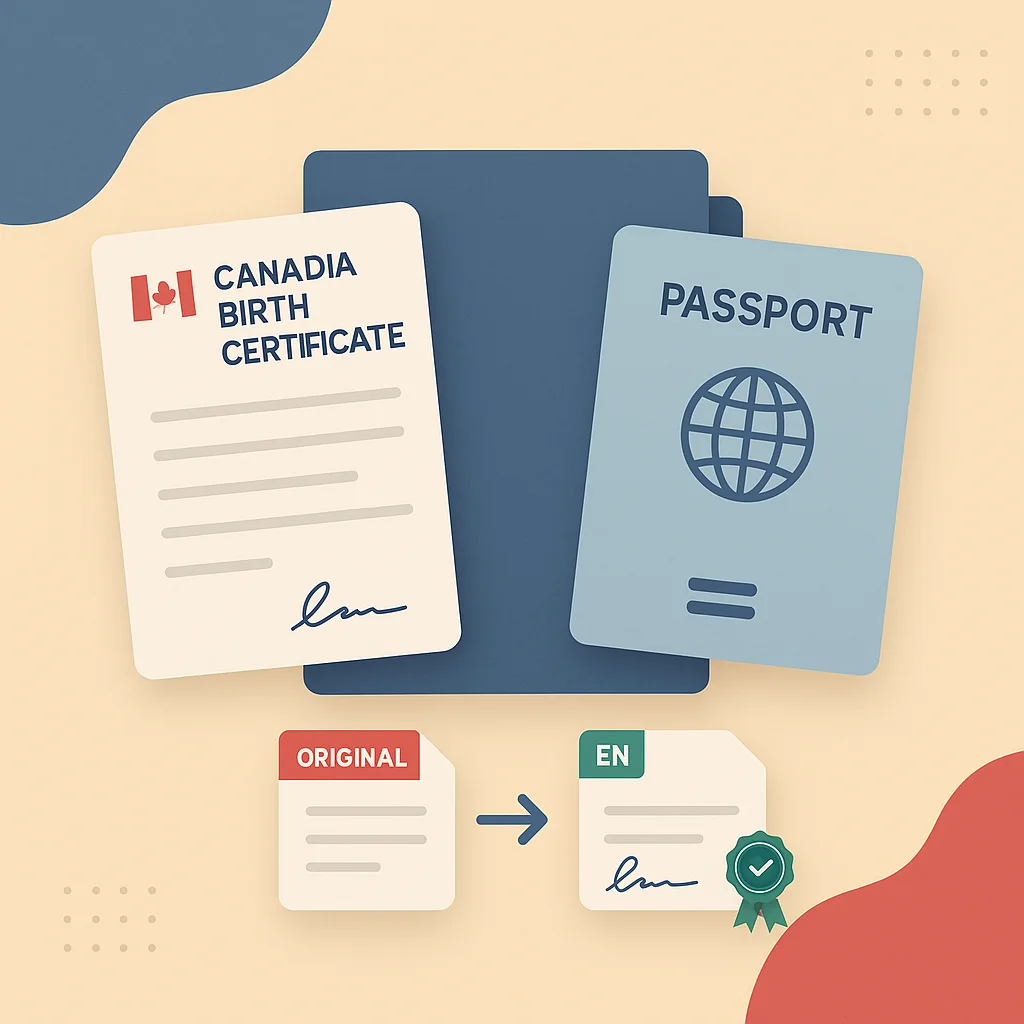
Some Canadian civil records carry the same fields in English and French. The French wording is still foreign-language content, so a French birth certificate translation covers it. If the French side holds a remark or an added entry that the English side lacks, the translation includes that entry too.
Records from Belgium and Switzerland can carry two or three official languages, depending on the region or office that issued them. Each language other than English is translated, and a page with more than one source language may need a linguist for each. The certification names every source language involved. Applicants whose records contain French can read more about certified French to English translation.
Some countries issue multilingual civil status extracts on a standard form. The field labels are printed in several languages, and the entries are filled in, usually in the local language. Labels are foreign-language text just as the entries are, so the translation covers both.
Philippine school and PSA records that mix English with Filipino
Philippine records often put English beside Filipino. School records may have English column headings while remarks, a registrar's note, or a handwritten annotation in the margin is in Filipino or Tagalog. PSA civil records can mix the two languages in the same way. A Tagalog academic transcript translation covers the Filipino portions, and the English passages are marked as already in English.
Other countries produce the same situation. A record from Puerto Rico that was issued in Spanish needs a full translation even though Puerto Rico is part of the United States. An Israeli record with Hebrew entries beside English needs the Hebrew translated in the same way.
Passport translation when labels are English and entries are not
Many passports print field labels in English and a second language, while the holder's name, place of birth, and issuing authority appear in the local language or script. The local-language entries, endorsements, and observations all need translation. A passport translation also covers visa stamps and entry or exit stamps, including those in a third language, wherever the text can be read.
The same applies to an English document that was stamped or annotated in another language. The stamp is part of the page, so it is translated and shown where it appears, for example as "[round stamp]" followed by the translated text. Text that cannot be read is marked "[illegible]" rather than guessed.
Partly English documents are translated in two ways
When the foreign-language content is separate from the English, such as a stamp, a block of remarks, or one column, the translator translates those parts and marks the English passages as already in English. When the languages are interleaved line by line, translating the whole document is clearer, because the English then reads as one continuous piece. Whichever approach is used, the finished translation holds the following elements.
- Every foreign-language heading, field, entry, stamp, seal, and handwritten note is translated in the position where it appears.
- The English passages are either reproduced or marked as English in the original, so nothing looks missing.
- The back of each page and any marginal notes are translated when they carry text.
- Signatures and seals are described in brackets, such as "[signature]" or "[round seal]".
Summaries and extracts do not meet the requirement. Translating only the part the applicant considers relevant can leave an officer unable to match the translation to the source.
Certification wording for a document in more than one language
The certification identifies the document, states that the translator is competent in English and in each foreign language on the document, and states that the translation is complete and accurate. For a partly English document, it should also say that the English portions were left as they appear in the original. The certification carries the translator's typed name, signature, date, and contact information, and a separate certification for each document is the safer practice.
USCIS does not keep a list of approved translators and does not certify translation companies, so "USCIS-certified translation" only means a translation with the certification USCIS asks for. When an applicant or a close relative signs the certification, that person is certifying evidence in their own case, and an officer may give it less weight. A translation company provides a certification that is independent of the case. Machine translation alone carries no human certification and mishandles names, dates, and abbreviations.
A missing, incomplete, or uncertified translation can bring a Request for Evidence or a Notice of Intent to Deny, and USCIS may deny a filing without first asking for more when the initial evidence is insufficient. The exception for documents in the official language of the country where the visa is processed belongs to the National Visa Center and consulates only. Once a case is with USCIS, everything must be in English.
Check the civil document version before ordering a translation
The Department of State publishes a Visa Reciprocity and Civil Documents by Country schedule that lists which civil documents each country issues and which version is acceptable. A long-form record is often preferred to an abridged extract, so checking the schedule first avoids paying to translate the wrong version. The attorney or accredited representative on the case decides which documents to submit.
Before ordering, scan every page of each document, including the back, and list every language visible, stamps included. We translate the whole page and prepare a separate certification for each document, for example a birth certificate translation that carries both English and a second language.