Key Takeaways
- A Form I-730 petition for a spouse and unmarried children relies on foreign records, and each one needs a complete English translation with the translator's certification when filed with USCIS.
- The petition has to show the relationship and that it existed when status was granted, so marriage, birth, adoption, custody, and identity records are the usual translation targets.
- A separate certification for each document is the safer practice, and every stamp, seal, handwritten entry, and reverse side is translated along with the printed text.
- Relatives' names should be checked against the passport and asylum paperwork of the principal before transliteration, so that spellings are settled once across the whole family file.
- When a relative's records disagree on a spelling, the translator renders each document as written and adds a bracketed note instead of silently correcting either record.
- Hijri and Solar Hijri dates are kept as they appear, with the calendar named, so an officer can convert them and compare them with the date status was granted.
- A religious marriage certificate and its later civil registration are separate documents, each translated in full with its own certification and its own dates kept apart.
- Handwritten, reissued, and late-registered birth records from damaged registries are translated as they are, and unreadable text is marked as illegible rather than guessed.
- The Reciprocity Schedule on travel.state.gov shows which version of a civil record exists in each country, and checking it before ordering prevents translating the wrong version.
- Secondary evidence and relatives' affidavits that are not in English need certified translation, and affidavits stay in the writer's own voice without added formality.
A Form I-730 petition rests mostly on foreign records, and every record that is not in English needs a full English translation with the translator's certification when it goes to USCIS. A refugee or asylee files the Form I-730 for a spouse and unmarried children who were part of the family when status was granted. The attorney or accredited representative decides which evidence to send; the translation company then translates whatever that selection includes.
I-730 documents that need translation
The petition has to show that the relationship exists and that it existed on the date asylum or refugee status was granted. The evidence for that is rarely in English, so a family usually needs certified document translation for USCIS for several record types at once.
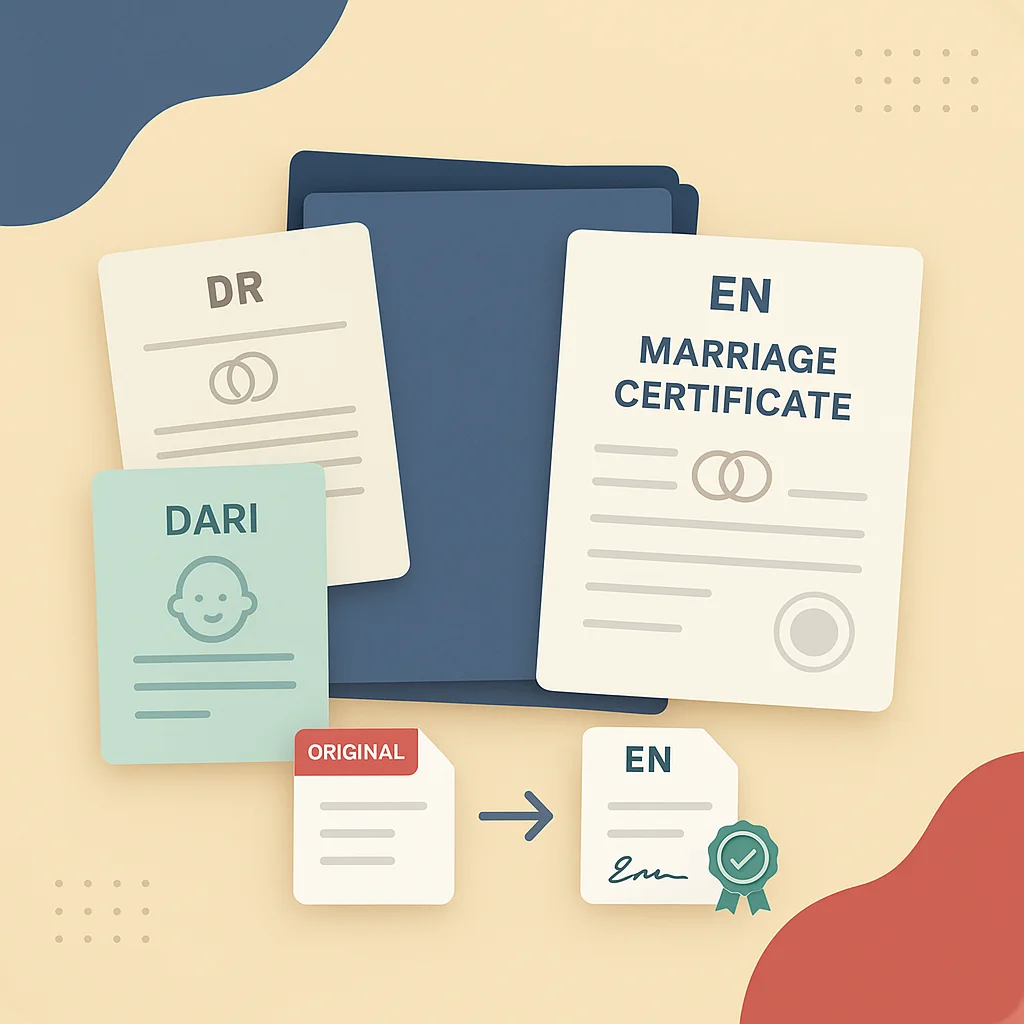
- The marriage certificate translation for the spouse, whether the original is a civil or a religious document.
- A birth certificate translation for each child that names the principal as a parent.
- Adoption or custody records when a child is not the biological child of the couple.
- Identity documents of each relative, such as passports, national ID cards, and family booklets.
- Photographs, when captions or handwriting on the back carry dates or names.
Each item is a separate document, and a separate certification for each one is the safer practice. USCIS does not accept a partial translation, so stamps, seals, handwritten entries, and the back of a page are translated along with the printed text.
Name spellings across the principal's asylum file and the relatives' records
The principal's name was fixed at some point in the asylum or refugee case, and every relative's document gets read against it. Before transliterating anything, the translation company checks the spelling on the principal's passport and on the asylum documents already in the file.
Arabic, Dari, and Farsi names do not have one fixed English spelling, and a four-part name chain of given name, father, grandfather, and family name may appear in a shortened form on another record. When a relative's records disagree among themselves, the translator renders each document as written and adds a bracketed note, so the officer sees the difference instead of a silent correction. Dates need the same care. Hijri and Solar Hijri dates are kept as they appear on the document, with the calendar named, so the officer can convert them and compare a marriage or birth date with the date status was granted.
Religious marriage records and later civil registration
Many couples married in a religious ceremony and received a certificate from a mosque, a religious court, or a clergy member. The civil registration of that marriage came later, sometimes years later, sometimes after the family had already left. Both documents may be in the file, and each one is translated in full with its own certification.
The ceremony date and the registration date are not the same fact, and the translation keeps them apart. A late-registration entry shows its own date, its own office, and often a statement explaining why registration was delayed. An Arabic marriage certificate translation also reproduces the clauses about the contract, the witnesses, and any marginal notes, because an officer matches each translated element to the source.
Birth records from countries with damaged registries
Children's records often come from places where registry offices were closed, damaged, or moved, as in parts of Afghanistan, Syria, Sudan, Haiti, and Venezuela. What arrives can be a handwritten copy, a record reissued years after the birth with a new stamp, or a late registration supported by an affidavit. All of these are translated as they are, and any text that cannot be read is marked "[illegible]" instead of guessed.
A Dari birth certificate translation follows the same rule, as does any other language. Families can also read about Dari translation services in general. Before ordering, the family should check the Reciprocity Schedule for the country, since it states which version of a birth record exists and which one is acceptable. Translating the wrong version wastes the fee.
Secondary evidence and affidavits when records were lost
Families who fled often carry no original certificates at all. When a primary record is unavailable, the petitioner shows that it is unavailable, through a statement from the issuing authority or a Reciprocity Schedule entry saying the record is generally unavailable, and then submits secondary evidence. Typical pieces are baptismal or religious records, school records, medical records, and statements from people with personal knowledge of the event.
Every foreign-language piece of that evidence needs a certified translation. A relative's written statement is translated in the first person, in the words of the writer, without making it more formal or more persuasive. Signatures are described, dates are kept as written, and contact details stay in place. A translated affidavit should also show who signed it and where, so the officer can see the relationship between the signer and the family.
Machine translation does not replace this work. It carries no human certification, and it mishandles names, dates, abbreviations, and legal terms, which are exactly the parts of a family record that decide whether the documents agree with one another.
What to prepare before the petition is filed
Gather every page of each record, including the reverse side, and scan them at a readable size. Put the principal's passport and asylum paperwork next to the relatives' documents, so each spelling is settled once. If a record is a copy, an extract, or a reissue, say so when the order is placed, because the translation has to describe it accurately.
We translate the full family file, from marriage and birth records to affidavits, with one certification per document and names matched to the principal's file. Sending the asylum documents translation and the relatives' records in one batch keeps the spellings consistent.