Key Takeaways
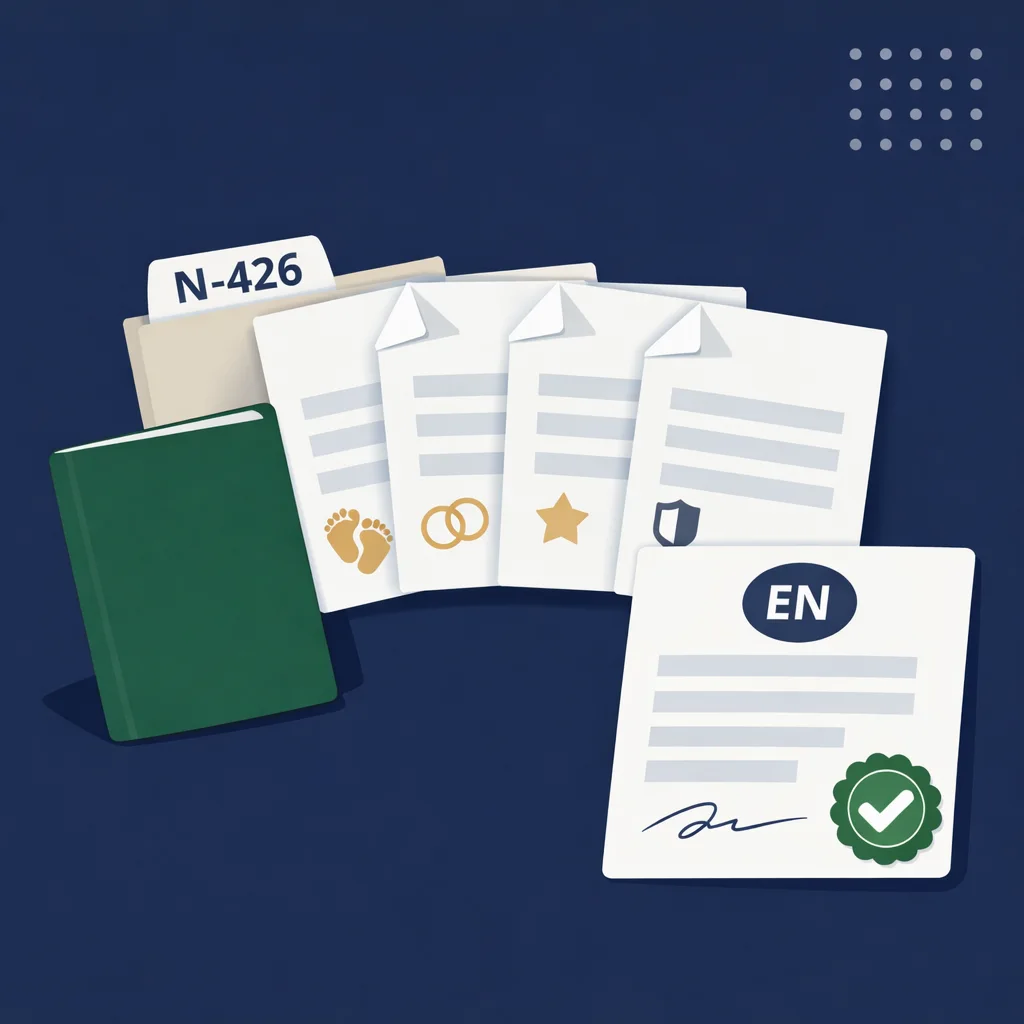
- A service member naturalizing with Form N-400 and Form N-426 needs certified translations only for the applicant's own foreign-language civil records, because the military completes Form N-426 in English.
- USCIS regulations require a full English translation with the translator's certification of completeness, accuracy, and competence, and the rule applies to a service member exactly as it does to a civilian.
- Form N-426 is completed by the military, so the translation work begins with the birth, marriage, and divorce records the applicant brought from before enlistment.
- A foreign birth certificate is translated in full, including registry entries, stamps, seals, and marginal notes, with signatures described and unreadable words marked as illegible rather than guessed.
- The Department of State Reciprocity Schedule shows which version of a civil record each country issues, so checking it first avoids paying to translate the wrong version, such as an abridged Polish copy.
- A marriage certificate issued abroad is translated line by line so an officer can match each translated element to the source, including the officiant or registry and every stamp.
- A divorce decree, annulment order, or death certificate that ended an earlier marriage is a foreign-language record too and needs its own complete certified translation.
- Spouses and children of service members can reuse one certified translation across their separate filings if it covers the whole document and keeps its signed certification page.
- A request for parole in place for a military family member rests on the marriage and birth certificates, and both need certified translations when they were issued in another language.
A service member who applies for naturalization files Form N-400 together with Form N-426, and the foreign-language papers that need a certified translation are the applicant's own civil records. The military completes and certifies Form N-426 in English, so the form itself never goes to a translation company. The documents that do go are the foreign birth certificate, a marriage certificate issued abroad, and the divorce decree that ended an earlier marriage.
USCIS regulations require a full English translation of any foreign-language document, with the translator's certification that the translation is complete and accurate and that the translator is competent to translate from that language into English. The rule applies the same way to a service member as to a civilian applicant. A certified document translation for USCIS is a separate piece of paper from anything the military issues.
Form N-426 comes from the military, not from the applicant
Form N-426, Request for Certification of Military or Naval Service, is the form on which the military confirms the applicant's service. The applicant takes it to the military for completion and files it with Form N-400. Military eligibility rules are outside this article, and the applicant's attorney or accredited representative decides which forms and evidence belong in the filing.
Because the military supplies its certification in English, the translation work starts with the applicant's life before service. Many service members were born abroad, enlisted as permanent residents, and still hold the original civil records from their home country. An officer reads those records to check identity, date of birth, and family history against the answers on the N-400.
Foreign birth certificate translation for identity and date of birth
The birth certificate is usually the first record an N-400 packet needs in English. The birth certificate translation covers every part of the page: the registry entries, the parents' names, stamps, seals, handwritten notes, and marginal annotations. A signature is described as "[signature]" and an unreadable word is marked "[illegible]" instead of guessed.
The Department of State publishes a Visa Reciprocity and Civil Documents by Country schedule that lists, country by country, which civil documents exist and which version is acceptable. A Polish applicant, for example, checks whether the full copy (odpis zupełny) or only the abridged copy (odpis skrócony) is the record to translate, so the fee is not spent on the wrong version.
Language decides how the page is read. A Mexican acta de nacimiento is a line-by-line Spanish document with its own registry layout. A Philippine PSA certificate printed in English needs no translation, while a local civil registry record or a church record written in Tagalog does. The page on certified Tagalog to English translation covers that language in more detail.
Marriage certificates and divorce decrees from abroad
A service member who married abroad, or whose spouse still lives abroad, usually holds a foreign marriage certificate. The marriage certificate translation shows both spouses' names, the date and place, the officiant or registry, and every stamp, so an officer can match each translated line to the source.
Earlier marriages leave their own paper trail. When the applicant or the spouse was married before, the divorce decree, annulment order, or death certificate that closed the first marriage is a foreign-language record too. A translated divorce decree covers the name of the court, the case number, the date of the judgment, and any handwritten clerk's notes.
Names need consistent treatment across these records. A four-part Arabic name chain, two surnames from a Mexican or Central American record, and a Korean name romanized differently in the passport all turn up in military families. The translation follows each document as written, and the applicant lists the other spellings where the form asks for other names used. The earlier Texliff post on which N-400 documents need certified translation goes through the full list.
Spouses and children of service members use the same records
The spouse or child of a service member often files a petition of their own, and that petition draws on the same marriage certificate and the same birth certificates. A certified translation prepared once can be copied into each family member's packet when it covers the document in full and carries its signed certification page. A translation that left out the back of the page or the margin notes is made again, not patched.
Each family member's filing is a separate case, so the packet for the spouse and the packet for each child need a complete set. Keeping one translation per document, with its own certification, makes it simple to attach the same pages to every filing without mixing versions.
Parole in place for a military family member
A request for parole in place for the spouse, parent, or child of an active-duty member or veteran is built on relationship documents. The proof of military service comes from the military. The proof of the relationship is the marriage certificate or the child's birth certificate, and both need certified translations when they were issued in another language.
The request also carries the family member's identity evidence, such as a foreign passport. The Texliff post on documents for Form I-131 filings goes through the supporting papers for travel and parole requests. A missing or uncertified translation can lead USCIS to issue a Request for Evidence or a Notice of Intent to Deny, and USCIS policy also allows an officer to deny a filing without first asking for more when the initial evidence is insufficient.
What to check before ordering translations
Start with a list of the foreign-language pages going into each filing: the birth certificate, the marriage certificate, any divorce decree, and any foreign passport or ID. Check the Reciprocity Schedule entry for the country so that the right version of each record is the one translated, and confirm that every page, including the reverse side, has been copied.
Machine translation carries no human certification and mishandles names, dates, and abbreviations, so it does not meet the requirement. We prepare a separate signed certification for each document, starting with a Spanish birth certificate translation or the equivalent in the applicant's language.