Key Takeaways
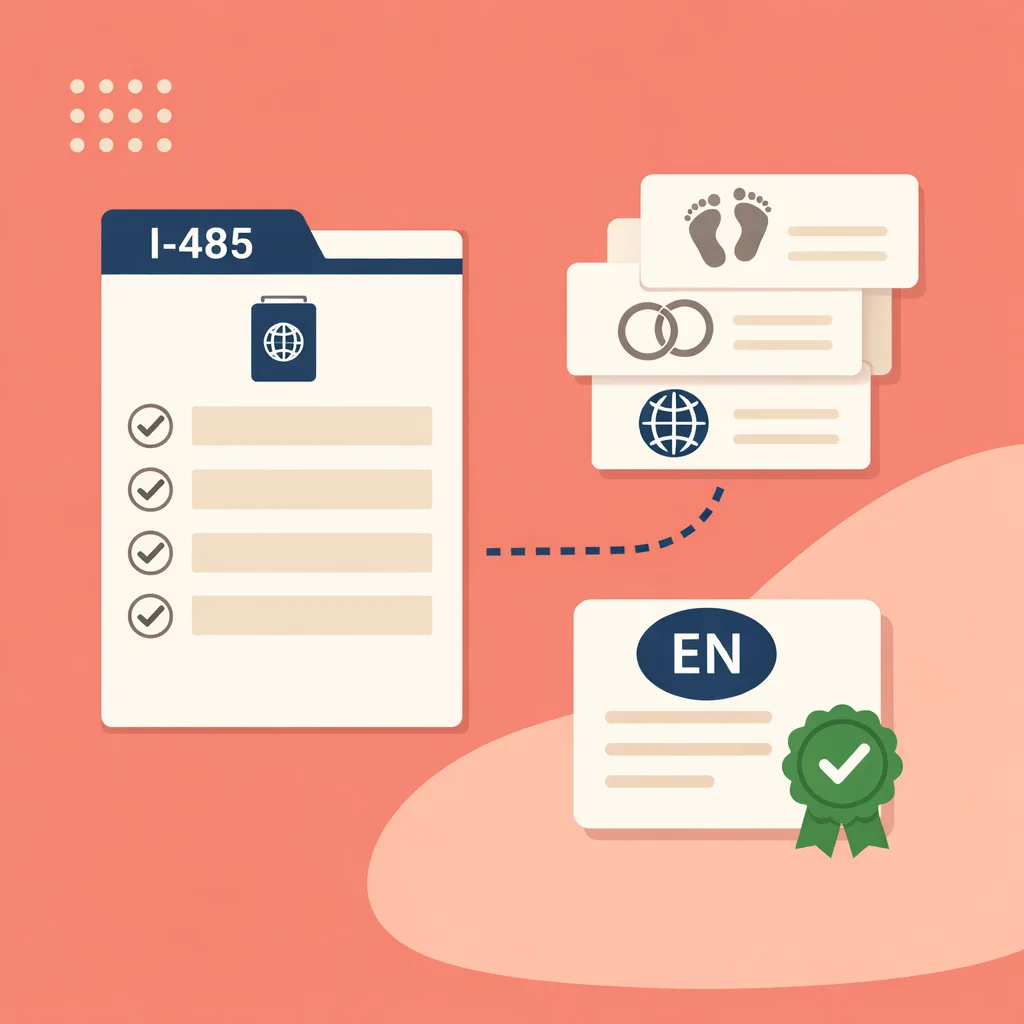
- Asylees and refugees filing Form I-485 need certified English translations of every foreign-language record in the packet, mainly identity documents, later marriage records, children's birth certificates, and secondary evidence.
- USCIS requires a full English translation with a certification of completeness, accuracy, and competence, and it does not keep an approved list of translation companies.
- A passport or national ID card is translated in full, including stamps, endorsements, handwritten entries, and visa pages, without commentary about the issuing country or government.
- Blank pages are marked as blank and unreadable stamps are marked illegible, so an officer can match each translated element to the source page.
- Each translation should be checked against the name spelling in the asylum grant and the I-94, and any difference in the source should be reported rather than quietly corrected.
- A marriage certificate issued abroad after the grant is translated with the registry details, witnesses, registration number, and stamps, and religious marriage contracts are translated in full.
- Before ordering a birth certificate translation, applicants should check the Department of State Reciprocity Schedule to confirm which version of the record is acceptable, since translating the wrong version wastes the fee.
- When a record cannot be obtained, the applicant shows it is unavailable and submits secondary evidence, such as school records or affidavits, and each foreign-language item also needs a certified translation.
- Machine translation carries no human certification and mishandles names, dates, and abbreviations, so it does not meet the USCIS translation requirement.
An asylee or refugee who files Form I-485 needs a certified English translation of every foreign-language record in the packet. In practice that means the passport or national ID card, any marriage record issued abroad after the grant, the birth certificates of children born abroad, and any secondary evidence that stands in for a record the applicant cannot obtain. Asylees and refugees become eligible to apply for a green card after one year in status, and the USCIS Form I-485 page links the instructions that list the supporting documents. The attorney or accredited representative decides what goes into the filing; the translation work starts once that list exists.
Which I-485 documents for asylees and refugees need translation
USCIS requires that any document in a foreign language be accompanied by a full English translation, and that the translator certify it as complete and accurate and state that the translator is competent to translate from that language into English. A translation company that provides certified document translation for USCIS supplies that certification. USCIS does not keep an approved list of translation companies, so "USCIS-certified translation" only means a translation that carries the certification USCIS asks for.
The records that most often need translation in an asylee or refugee adjustment packet are these:
- The biographic page and the visa, entry, and endorsement pages of a passport, or a national ID card when the applicant holds one.
- Refugee registration papers or other identity records issued outside the United States, if the applicant has them.
- A marriage certificate for a marriage that took place after the grant, when the spouse is part of the case.
- Birth certificates for children, including children born abroad after the grant.
- Letters, affidavits, and other secondary evidence written in another language.
The earlier asylum case is a useful place to start, because the same passport or birth certificate often appears in both files. The new packet should use the same names and the same reading of each document, so the translations from the asylum case should be pulled out and compared before anything new is ordered.
Passport and national ID translation without commentary
A passport or national ID card issued by the country the applicant left is translated like any other identity document. The translator renders every printed field, the issuing authority, stamps, endorsements, machine-readable lines, and handwritten entries, and describes signatures and seals in brackets. The translation records what the document says. It adds no notes about the country, the government, or the reasons the applicant left.
Many passports print the biographic page in English, but the entry and exit stamps, visa pages, and extension endorsements are often in the local language. An officer can match a translated stamp to the source only when each one appears with its date and place. A passport translation for USCIS that covers only the photo page leaves those pages unexplained. A blank page is marked as blank, and a stamp that cannot be read is marked "[illegible]" rather than guessed. An expired passport is still translated when it is part of the filing, and its dates are copied as they appear on the page.
Name spellings must match the asylum grant and the I-94
Asylees and refugees usually have a spelling of their name on record already: the asylum grant or refugee admission, the I-94, and often an employment authorization card. Each translation should be checked against that spelling before it is finalized. A name written three different ways across the passport, the marriage record, and the children's birth certificates gives an officer a reason to ask questions.
Names in non-Latin scripts have several acceptable English spellings, so the transliteration of names for USCIS should follow one spelling across the whole file. When the existing record carries a spelling the applicant now considers wrong, the translator does not quietly correct it. The translation reports what the source document shows, and the applicant and attorney decide how to handle the difference. Four-part Arabic name chains, with given name, father, grandfather, and family name, are a common source of mismatch, because the order and number of names in the source rarely match the fields on a US form.
Marriage certificate translation for marriages after the grant
An applicant who married after receiving asylum or refugee status may hold a marriage record from the country of origin, from a third country, or from the United States. A US record needs no translation. A record from abroad does, and the marriage certificate translation includes the registry details, the names of both spouses and any witnesses, the date, the registration number, and every stamp.
Some countries issue marriage records by hand, which makes a Dari marriage certificate translation a task for someone who reads the handwriting as well as the language. Where the record uses a different calendar, the translation shows the date as written in the source, so the officer can compare it with the converted date. A religious marriage contract is translated in full, including clauses that look routine.
Children's birth certificates issued abroad
A child born after the grant may have a birth certificate from the country where the family lived at the time, which is not always the country of origin. The certificate is translated in full, with the parents' names spelled the way their own records spell them. If a parent's name appears differently on the child's certificate than on the passport, the translator reports the source spelling, and the family and attorney decide how to explain the difference.
The Department of State publishes a Visa Reciprocity and Civil Documents by Country schedule that lists which civil documents each country issues and which version is acceptable. Applicants should check it before ordering a translation, because a long-form certificate and an abridged extract are different documents, and translating the wrong one wastes the fee. Some Arabic-speaking countries, Saudi Arabia in particular, issue records with Hijri dates, so an Arabic birth certificate translation has to handle that calendar. Families who need Arabic translation services often bring several such records at once.
Secondary evidence when home-country records cannot be obtained
Some applicants cannot get a birth, marriage, or identity record from the authority that issued it. The applicant then shows that the record is unavailable, usually with a written statement from the issuing authority or a Reciprocity Schedule entry saying the record is generally unavailable, and submits secondary evidence instead. Secondary evidence can include church or baptismal records, school records, medical records, and affidavits from people with personal knowledge of the event, commonly two.
Every foreign-language item among them needs its own certified translation. Machine translation does not meet the requirement, because it carries no human certification and tends to mishandle names, dates, and abbreviations.
Before ordering translations, the applicant should collect each foreign-language record, check it against the Reciprocity Schedule, and compare the name spelling with the asylum grant and the I-94. We prepare a separate certification for each document, which is the safer practice, and the original asylum documents translation is a good reference for matching spellings across the new packet.