Key Takeaways
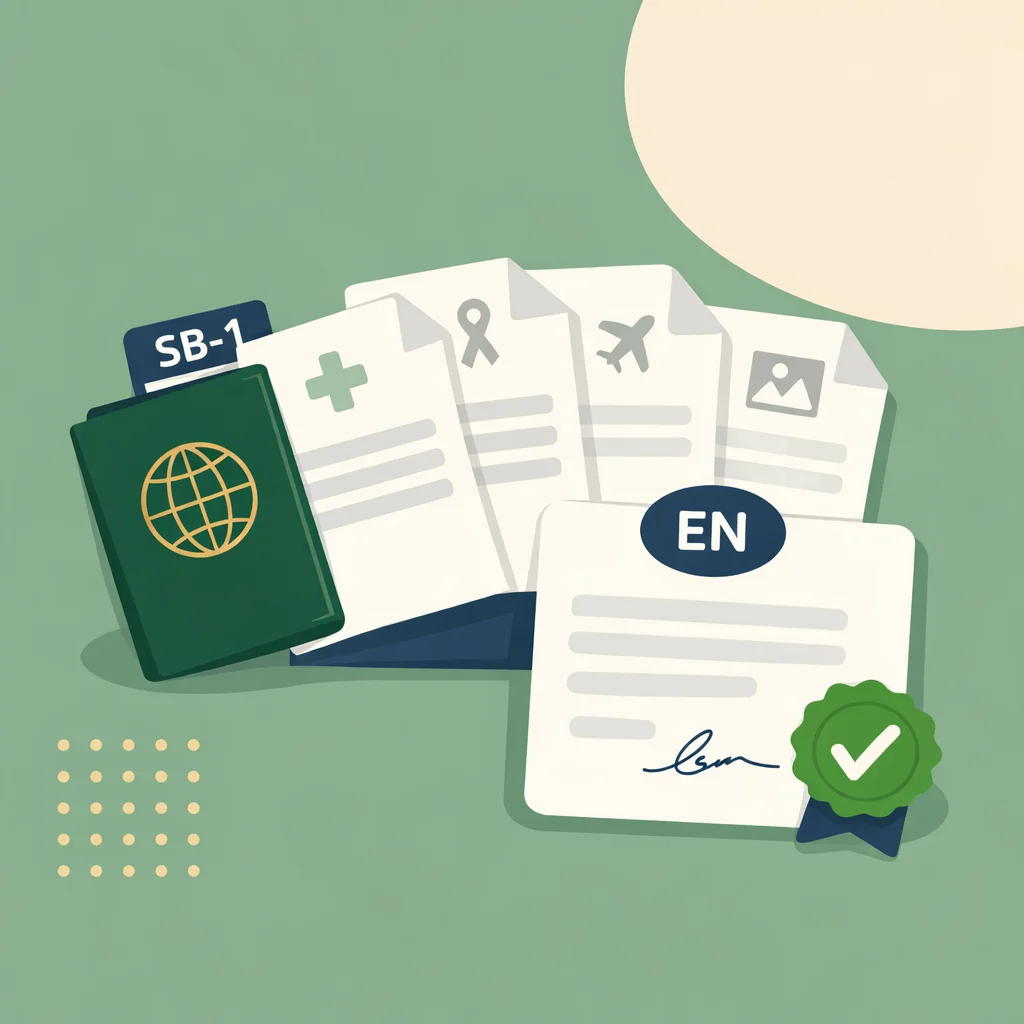
- An SB-1 returning resident visa application on Form DS-117 is decided by a US consulate for the Department of State, not by USCIS.
- Foreign records not in English, or not in the official language of the country where the applicant applies, need a complete certified English translation.
- US records such as leases, tax returns, and employer letters are usually already in English and need no translation for the SB-1 file.
- Medical records are translated with diagnoses, drug names, dosages, and dates exactly as written, and unreadable handwriting is marked illegible instead of guessed.
- Stamps, hospital seals, and signatures are described in the translation, and the reverse side of a page is translated whenever it carries a note or stamp.
- A death certificate translation gives each date in a form the officer reads easily, and names must match across every document about the relative.
- Court orders and government notices that prevented departure are translated in full, including the issuing body, reference number, stamps, and each date.
- Each translated document is safest with its own certification showing the translator's name, signature, date, and contact information.
- The translated set is easiest to review when each translation sits behind its original, the pages are numbered, and a cover sheet lists them.
An SB-1 returning resident visa application on Form DS-117 is decided by the Department of State at a US consulate, not by USCIS. Any foreign-language record in the file that is not in the official language of the country where the applicant applies needs a certified English translation. Those records are the ones that explain why a permanent resident stayed abroad longer than planned and that show continuing ties to the United States.
Which SB-1 records come from abroad
A permanent resident whose green card no longer works for reentry after a long stay abroad may apply for a returning resident visa at a consulate. The consular officer looks at whether the stay was beyond the applicant's control and whether the applicant kept a life in the United States. The consulate and the applicant's attorney decide what the file should contain; the translation company translates what it is given, in full.
The US side of the file, such as a lease, tax returns, bank accounts, and employer records, is usually already in English and needs no translation. The foreign side is where translation work arises. It typically includes hospital and medical records, documents about a sick or dying relative, letters from a foreign employer, court or government orders, and records showing the trip was meant to be temporary.
Consulate translation standard for SB-1 documents
Each document needs a complete English translation and a statement signed by the translator that the translation is accurate and that the translator is competent to translate from the source language. A separate certification for each document is the safer practice, with the translator's name, signature, date, and contact information.
USCIS rules do not govern this application, but the practical standard is the same, and a consular officer can read a set prepared to it without questions. The differences between the two systems are covered in the post on NVC translation requirements compared with USCIS rules. For the general process, see Texliff's certified document translation for USCIS and consulates.
Medical records that explain a long stay
Illness of the applicant or of a close relative is a frequent reason given for a stay that ran longer than intended. The supporting file may contain admission and discharge summaries, doctor's letters, test results, prescriptions, and appointment records. A Spanish medical records translation is a typical case, because such records often come as stamped forms with handwritten entries.
In a medical translation the diagnosis is rendered as written. The translator does not substitute a different term, add an explanation, or correct what a doctor wrote. Drug names, dosages, dates of admission and discharge, and the names of physicians and hospitals are carried over exactly. An abbreviation the source uses is kept and, where its meaning is certain, expanded in brackets. Handwriting that cannot be read is marked "[illegible]" rather than guessed, which matters because the officer may compare the translation against the original at the interview.
Stamps, hospital seals, and signatures are described in the translation, for example "[stamp: Regional Hospital, round, blue ink]" and "[signature]". Every page counts, including the reverse side when it carries a note or a stamp.
Death certificates and care records for a relative
When the reason for the stay was the illness or death of a parent, spouse, or child, the file often contains more than one document about the relative. A death certificate shows the date and place of death and the cause as recorded by the registry. A Chinese death certificate translation has to deal with the year-first date order of Chinese records, and the translation gives each date in a form an English-speaking officer reads without effort.
Care records, such as hospital bills, a nursing facility's attendance record, or a letter from a clinic, are translated like any other medical document. The relationship between the applicant and the relative is usually shown by a birth or marriage certificate, and each of those needs its own certified translation. Names must be spelled the same way across all of them, because an officer who sees two spellings of one person will ask whether they are two people. For readers working from Chinese documents, Texliff also offers certified Chinese to English translation.
Employer letters, orders, and affidavits
Some applicants were kept abroad by a work assignment, a court case, a travel restriction, or a government order. An employer's letter confirming a temporary assignment is translated with its letterhead, stamps, signatory, and date. A court summons or a government notice that prevented departure is translated in full, with the issuing body, the reference number, every stamp, and every date as the document gives it, followed by the US-format date in brackets where that removes doubt.
When records do not exist or cannot be obtained, applicants sometimes rely on written statements from people with personal knowledge of what happened. An affidavit translation follows the same rules as any other document: the whole text, the signature described, and the date and place of signing as written.
Organizing the translated set for the interview
A translated set is easiest to review when it is grouped by the question each document answers. One group covers the reason for the stay, such as medical or court records. Another covers the dates of departure and the planned return. A third covers ties to the United States. Within the set:
- Place each translation directly behind the copy of the original it translates.
- Keep one certification per document, attached to its own translation.
- Use the same spelling of every name in every document.
- Number the pages and list them on a cover sheet.
- Bring the original documents to the interview, since the officer may ask to see them.
Check the Department of State's Visa Reciprocity and Civil Documents by Country schedule before ordering translations of civil documents. It shows which version of a record the consulate accepts, and translating the wrong version wastes the translation fee.
Before ordering, gather the foreign records, including every page and both sides of each page, and decide with the attorney which belong in the file. We translate each one with its own certification. Start with the hospital and clinic papers, since they tend to be the longest, and send them as certified medical records translation.