Key Takeaways
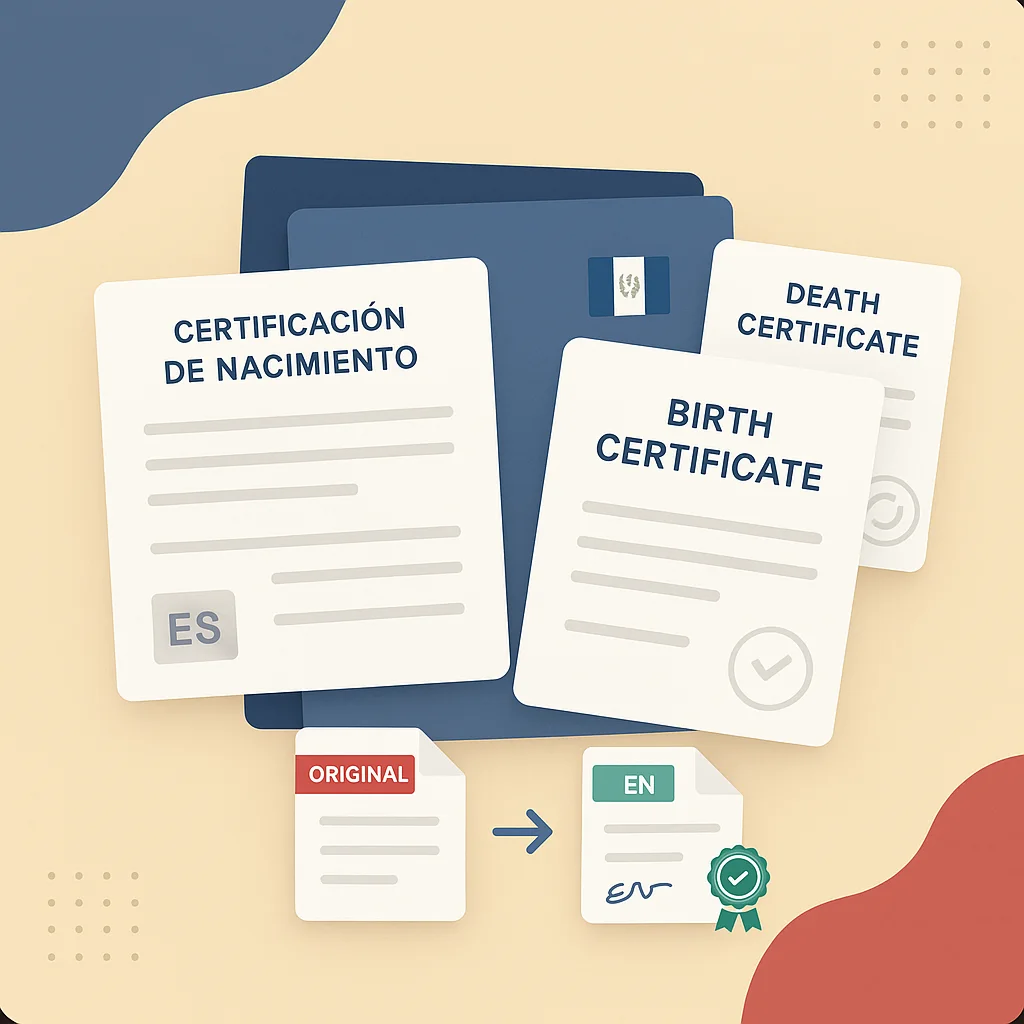
- A Special Immigrant Juvenile petition needs every foreign-language record translated in full into English, and each translation carries its own certification from the translator.
- The child's birth certificate often supplies both the child's age and the parents' names, so an error in a name or date carries into every other document in the file.
- Before ordering a translation, the family should check the Reciprocity Schedule to learn which version of the birth record, full copy or abridged extract, the country's records allow.
- A translated birth certificate includes printed field labels, stamps, described signatures, margin notes and the back of the page, and unreadable parts are marked as illegible.
- Late-registered records from Central American registries can show a date of birth and a date of registration, and the translation keeps both dates and all names exactly as printed.
- When a child holds an older and a newer certificate, each is translated as printed, and the differences between them stay visible to the officer.
- Police reports, custody papers, medical notes and school letters are translated as complete documents and are never reduced to the paragraph describing the event.
- A letter from a relative abroad is translated in the first person, keeping the writer's order, repetitions and uncertainty without correcting grammar or adding detail.
- School transcripts keep the original grade names and grading scale, because converting grades to United States equivalents is a separate task from certified translation.
- One set of translations, with names spelled the same way everywhere, can serve both the state court file and the Form I-360 packet, while the attorney decides which documents to submit.
A Special Immigrant Juvenile petition needs every foreign-language record in the file translated into English in full, and each translation needs its own certification. The child's birth certificate is the record the others are checked against, because it often supplies both the child's age and the names of the parents.
Form I-360 is the petition used for this classification, and the USCIS page for Form I-360 describes the filing. The petition depends on an order from a state juvenile court, which makes findings about the child's circumstances. USCIS regulations require that any foreign-language document be accompanied by a full English translation, with the translator's certification that it is complete and accurate and that the translator is competent in both languages. A certified document translation for USCIS therefore covers the whole packet, and the same translations can be used in the state court case.
Birth certificate translation for Form I-360 and proof of age
Officers and judges read the birth certificate to confirm the child's age and to match the parents' names against everything else in the file. A mistake in a name or a date carries into every other document that refers to the same person. Many Latin American records give two surnames for each parent, and the translation keeps both, in the order the record prints them.
The version of the record matters before translation begins. Many countries issue both a full copy and an abridged extract, and the Department of State's Visa Reciprocity and Civil Documents by Country schedule lists which version is accepted for each country. Checking the schedule first avoids paying for the translation of an extract that later has to be replaced. A Spanish birth certificate translation carries every printed field label, the registry stamps, the signatures (described in brackets, such as "[signature]"), the margin notes and anything written on the back. Parts that cannot be read are marked "[illegible]" and are never guessed.
Late-registered and re-issued records from Central America
Birth records in Guatemala, Honduras and El Salvador are held by national civil registries (RENAP, RNP and RNPN), and a birth can be registered some time after it happened. A late-registered record can show two dates, the date of birth and the date of registration, and it may name the people who declared the birth. The translation keeps both dates and every name exactly as printed, and it does not merge or tidy them.
Re-issued certificates raise a similar point. A family may hold an older certificate and a newer one for the same child, and the two can differ in layout, in the wording of a parent's name or in how the place of birth is written. Each document is translated as printed, and the differences stay visible so that the officer sees what the registry actually issued. A translation company that provides Spanish translation services should also spell each name the same way in every document of the family, following the passport or the birth certificate where one exists.
Death certificates and records about the parents
When a parent has died, the death certificate is part of the evidence. A death certificate translation follows the same completeness rules as any civil record, so the cause of death, the registry details and the informant's name are all translated. A Spanish death certificate translation keeps the printed label of each box together with the entry inside it.
Other records show what happened to the child abroad. They can include police reports, complaint filings, court papers about custody or support, medical notes and letters from schools or social workers. Each is translated as a complete document with its stamps, file numbers and handwriting. A police report is never reduced to the one paragraph that describes the event, because the officer reads the whole record to see what kind of document it is.
Letters from relatives and school records from the home country
Relatives abroad sometimes write letters or statements about a parent's absence, the child's care or the conditions at home. Such a letter is a statement in the writer's own voice, so the translation stays in the first person and keeps the order, repetitions and uncertainty of the original. The translator does not correct grammar, add detail or make the account more formal. An affidavit translation follows the same approach, including the signature block, the date and any contact details.
School records from the home country can show where the child lived and for how long. A school transcript translation keeps grade names, subject titles and the grading scale in the form the school used. Converting them to United States grades is a different task from translation and is not part of a certified translation.
Using the same translations in state court and at USCIS
The state court sets its own rules for how evidence is filed, so the child's attorney or the court clerk should confirm whether the translations are attached to the motion or served separately. The same certified translations can then go into the Form I-360 packet next to copies of the original records.
Keeping one set of translations in one file prevents small differences between what the court saw and what USCIS sees. If a name is spelled one way in the court exhibit and another way in the petition, an officer may question which spelling is correct. The attorney or accredited representative decides which documents to submit. The translation company prepares the English versions and the certification for each one. The records usually gathered for translation are:
- The birth certificate, in the version the Reciprocity Schedule accepts for the country.
- Death certificates for any parent who has died.
- Police, court, medical and school records from the home country.
- Letters and statements from relatives abroad.
- Identity documents that show how each name is spelled.
Machine translation cannot take the place of any of these, because it carries no human certification and mishandles names, dates and legal terms. Before ordering, a family should gather the full documents and note which registry or office issued each one. Texliff prepares the English versions and a certification for every record, starting with the birth certificate translation that anchors the petition.