Court-certified interpreters for your firm's depositions, trials, hearings, client meetings and mediations. Get your quote in seconds, place your order, and you're all set.
Enter the session date, start time, the address where the interpreter should go and the language. Pick the kind of session, such as a deposition or a trial day. The price for the hours you book shows right away.
What to know about in-person interpreters for law firms
When a firm books in person
A firm books an interpreter in person when the client or the witness will be in the room with the attorney. In person is the usual choice for trials, courthouse hearings, depositions in a conference room and long client meetings at the office. We look for interpreters closest to the address first. If few interpreters for the language work nearby, the interpreter may come from another city, and a longer trip is quoted as a separate line when you book.
Who takes part
The attorney speaks to the client or the witness through the interpreter. At a deposition, a court reporter swears in the witness and the interpreter and writes the record. At a hearing or a trial, the judge presides and the other side's counsel is in the room, and the interpreter sits next to the person who speaks another language.
In the room5
AttorneySpeaks to the client through the interpreter
Client or witnessSpeaks in their own language
Court reporterSwears in the witness and interpreter at depositions
JudgePresides at hearings and trials
InterpreterSits next to the person who needs one
AttorneyInterpreterClient
The interpreter's role
The interpreter's job is to make what is said as clear to the client as it is to the attorney. Everything is interpreted in full, in both directions, and in the first person, so the client's words stay the client's own. The interpreter stays neutral and keeps the conversation confidential. They do not give legal advice, opinions or explanations of their own.
At the office
AttorneyInterpretedClientInterpreted
At a deposition
QuestionInterpretedAnswerInterpreted
Bookings across a case
A case often needs an interpreter on many dates, and each date is its own booking. Ask for the same interpreter on each one, and we assign them when they are available. Put the case name, the room, parking and check-in steps in the booking notes. A trial day is long and interpreting is tiring, so book the full day and expect breaks.
On-site, video or phone
Choosing between on-site, video and phone for legal work
In person is the first choice when the client or the witness will be in the same room as the attorney. Video and phone work for the sessions below.
On-site
An interpreter in person suits trials, depositions with paper exhibits and long meetings with a client at your office.
Video (VRI)
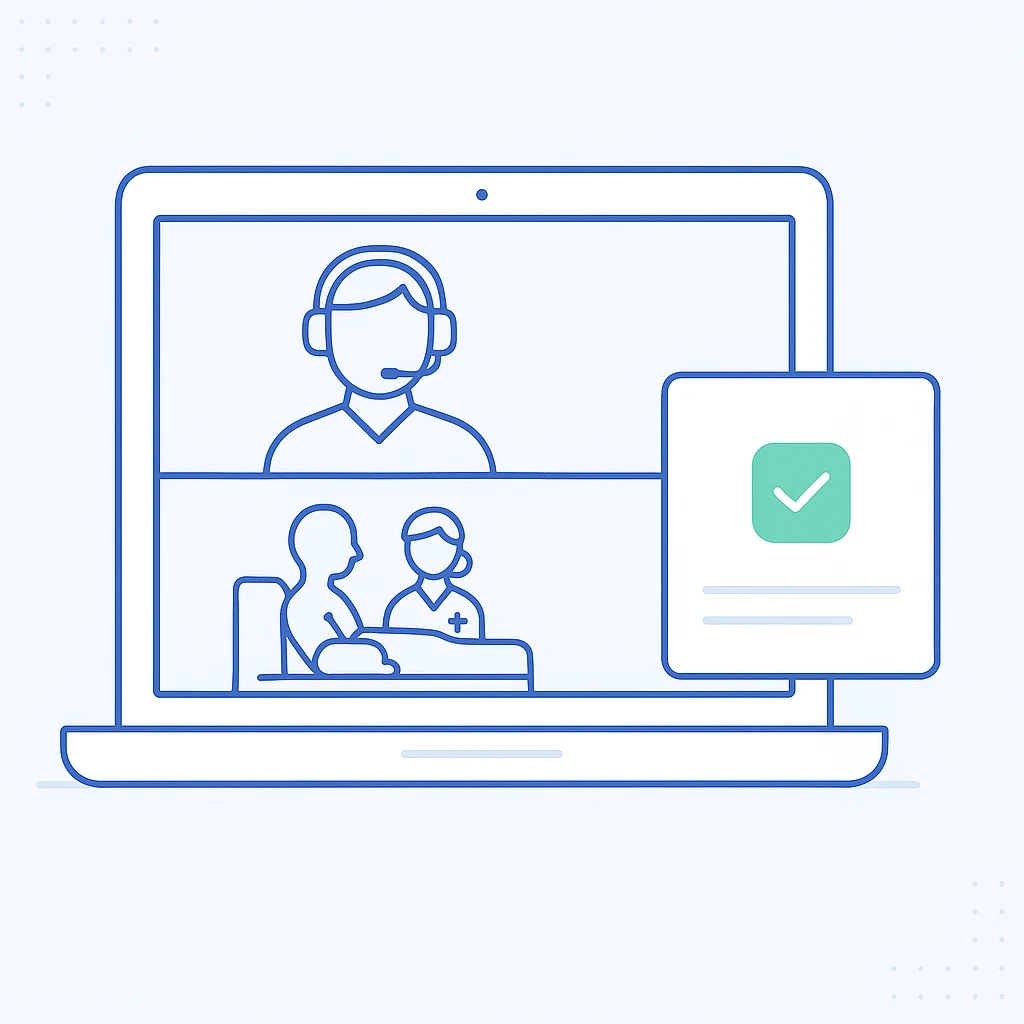
Video works for depositions with counsel in other cities and for meetings where everyone joins from their own place.
Use the quote form to give the date, the start time, the address and the language, and pick the kind of session. The price for the booked hours shows right away.
Place your order
Pay online to confirm. In the dashboard, add the case name, the room, parking and check-in details, and the names the interpreter should know.
Dispatcher runs and assigns an interpreter
Our dispatcher looks for the court-certified interpreters closest to the address first, and you get the name and credentials before the day.
The interpreter arrives at your venue
The interpreter arrives at the address and finds your attorney and client. They stay for the hours you booked.
What you receive
The interpreter's name and court credentials, sent before the day so you can pass them to a facility for clearance.
The interpreter at your office, the courthouse or the facility at the booked time, with the clearance you arranged.
Every booking confirmed in your dashboard and by email, with your notes attached.
Every file and session is covered by an NDA and sent over an encrypted connection. Clinical matters are handled in line with HIPAA.
Questions from law firms about on-site interpreters
The ones we hear most often, answered by our dispatch and project-management teams.
Can't find it here?
01Will the court provide an interpreter, or do we book our own?
In many proceedings on the record, the court appoints its own interpreter. Firms book their own interpreter for talks with the client, and for proceedings where the court lets a party bring one. Tell us the court and the proceeding when you book.
02How far ahead should we book?
At least 48 to 72 hours ahead, and earlier if you can.
03Which languages can we book for our office?
82 languages. Spanish, Mandarin, Vietnamese, Haitian Creole, Tagalog and Portuguese are the easiest to schedule. Rare languages, and addresses far from a large city, need more notice.
By language, session and organization
On-site interpretation by language, session and organization
One page per language, with the varieties we confirm at booking, the register the session needs and where that language is booked most.