Demann
Jwenn devi imedyat ou epi pase kòmand
Enter the date and start time of the call and the patient's language. The price for the time you book shows right away.
Entèpretasyon pa telefòn (OPI)Tagalòg
Medically credentialed Tagalog interpreters for calls about test results, medicines, discharge follow-up and scheduling. Get your quote in seconds, place your order, and you're all set.

Apati $92.91
Pa èdtan

Sètifye pou tribinal
Entèprèt

Konfòm ak HIPAA
Tout sesyon klinik yo

Akredite nan domèn medikal
Entèprèt sètifye CCHI ak NBCMI
Demann
Enter the date and start time of the call and the patient's language. The price for the time you book shows right away.

Matche
Our dispatcher assigns a medically credentialed interpreter with a CCHI or NBCMI certification, and you see the name before the call.
Konfime nan tablo bò ou ak pa imel

Telefòn (OPI)
At the booked time the care team and the interpreter dial in, the patient is added or dials in too, and the interpreter stays for the time you booked.
Nenpòt telefòn, pa bezwen aplikasyon ni lyen
Pri a parèt anvan ou rezève. Chak sesyon pwoteje ak yon akò konfidansyalite; sesyon klinik yo trete dapre HIPAA.
Rezève yon entèprètThe language
Nou entèprete pou randevou lopital ak ospis (espesyalman pou ansyen Filipino), reyinyon lekòl yo, ak zafè VA / depandan militè yo.
Typical Tagalòg bookings
Calls we interpret
Phone fits calls where the patient does not need to be examined. Each call is booked ahead, with the time and the language.
A nurse or doctor calls to give lab or imaging results and explain what comes next. The interpreter interprets the news as it is given, and then the patient's questions.
After discharge, the care team calls to ask how the patient is recovering and whether the instructions are clear. Add the name of the unit or the procedure to the notes.
A patient may be unsure about a dose, a refill or a side effect, and the clinic calls to go over it. The interpreter repeats each medicine name and dose as the clinic said it.
The front office calls to book or move a visit and to say what to bring. A short call like this is booked for the time it needs, like any other session.
Calls with patients
Phone is used for the calls around an appointment, such as giving test results, checking on a patient after discharge, answering a question about a medicine or setting up the next visit. Nobody needs to see the patient or a document, so a call is enough. The interpreter dials in from anywhere in the US, which helps when no interpreter for the language works near the clinic. An exam or a procedure is booked in person or by video instead.
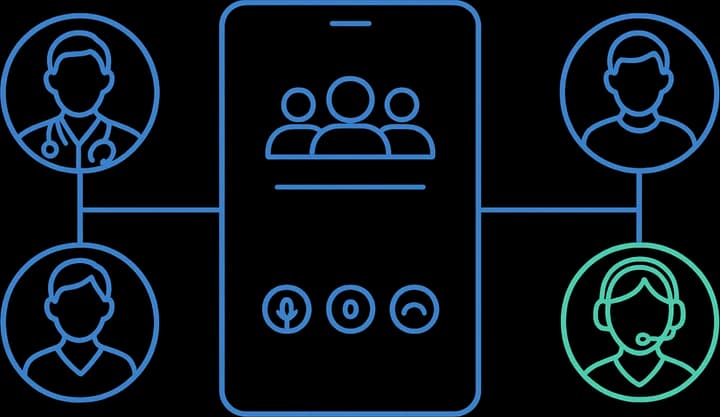
A nurse or doctor makes the call and gives the results, the instructions or the change in the plan. The patient dials in with the access code, or the interpreter adds the patient to the call once the clinic is on the line. A family member can join the call when the patient wants one there.
Nobody on the call can see the speaker, so each speaker pauses, and the interpreter interprets that part in full, in both directions, before the next one begins. Results are given exactly as the nurse or doctor gave them, without softening. The interpreter keeps the call confidential and offers no opinion on what the results mean or which medicine to take.
Giving results
A patient's question
Put the patient's phone number and the best time to call in the booking notes, and say whether the patient will dial in with the access code or should be added by the interpreter. Have the results or instructions ready before the call starts, because nothing can be shown on a screen.
Sou plas, pa videyo oswa pa telefòn
Phone works when the care team only needs to talk with the patient. An exam, a procedure or a hospital stay needs another setting.

Book an interpreter in person for an exam, a procedure, a hospital stay or any talk the patient needs to follow at close range.
Entèpretasyon sou plas pou randevou medikal
Video fits a visit where the patient is in the exam room and no interpreter for the language works nearby.
Entèpretasyon a distans pa videyo pou randevou medikalPhone fits results, follow-ups, medicine questions and scheduling, when nobody needs to see the patient.
Ki jan li fonksyone

Antre detay yo epi resevwa pri a sou plas
Tell us when the call is, how long it needs and the patient's language. The price for the booked time shows right away.

Pase kòmand ou
Pay online to confirm. The booking opens in your dashboard with a dial-in number and an access code to share, and a place for notes such as the patient's number.

Sistèm dispatch la fonksyone epi li bay yon entèprèt
Our dispatcher assigns a medically credentialed interpreter, and the name and credentials reach you before the call.

Antre nan sesyon ou
At the booked time everyone dials in from any phone. If you asked, the interpreter adds the patient once the clinic is on the line, and stays for the time you booked.
Sa ou resevwa
Chak fichye ak chak sesyon kouvri anba yon NDA epi voye sou yon koneksyon chifre. Dosye klinik yo trete an akò ak HIPAA.
Si ou bezwen tradiksyon tou
Nothing can be shown during a phone call, so records in another language are better translated before the care team needs them.
Lab reports and other records in another language, translated into English and sent to the care team before a results call.
Birth and marriage certificates, when an immigration case needs them in English.
Text messages and other legal papers about an injury, translated into English for the lawyer on the case.


 Li pa nan lis la? Nou tradui 37 kalite dokiman, depi paspò ak relve bankè jiska patant, chak ak pwòp paj li ak menm sètifikasyon an.Gade tout dokiman yo
FAQ
Sa yo nou tande pi souvan, reponn pa ekip dispatch ak jesyon pwojè nou yo.
Ou pa jwenn sa w ap chèche a?
At the booked time the clinic and the interpreter dial in to the number in your confirmation. The patient dials in with the access code, or the interpreter adds the patient's number once the clinic is on the line.
No. One booking covers English and one other language, with one interpreter, so each language needs its own booking.
Only if you ask. Clinical calls are handled in line with HIPAA, and a BAA is available for healthcare customers.
Yes. If the call turns out to need a screen, we can change the booking to video, subject to the interpreter's availability.
The price is for the time you book, and you see it before paying. Allow a little more than the call may need, because the interpreter is reserved for the whole time and unused time is not refunded.
70 languages. Spanish, Mandarin, Vietnamese, Haitian Creole, Portuguese and Tagalog are the easiest to schedule. Languages that are harder to find need more notice.
Wi. Entèprèt tagalòg ki sètifye pou tribinal epi ki gen kalifikasyon medikal yo asiyen nan zafè legal ak klinik — Sètifikasyon Entèprèt Tribinal Federal, lis tribinal eta yo, CCHI / NBCMI pou medikal. Pou anviwònman kominote, edikasyon ak antrepriz nou bay entèprèt ki resevwa fòmasyon pwofesyonèl ki matche ak sijè a.
Lòt lang
The same page for each of these languages, with that language's varieties, its register and where it is booked most.
Sèvis entèpretasyon ki gen rapò
On-site, video and phone Tagalòg interpreters for courts, hospitals, USCIS interviews, schools and workplaces, in every state.
EksploreMedically credentialed Tagalog interpreters for audio-only telehealth visits, on a dial-in number.
EksploreMedically credentialed Tagalog interpreters for planned counseling calls, from check-ins to follow-ups.
EksploreMedically credentialed Tagalog interpreters for history calls with relatives and short follow-up calls by phone.
EksploreKòmanse yon pwojè
Tell us the day, the time and the patient's language. The interpreter's name and credentials reach you before the call.
Rezo lengwis
Navige nan yon seleksyon entèprèt Tagalòg ki disponib atravè rezo Texliff la.
3 pwofil pwofesyonèl
Entèprèt
Entèprèt
Entèprèt


