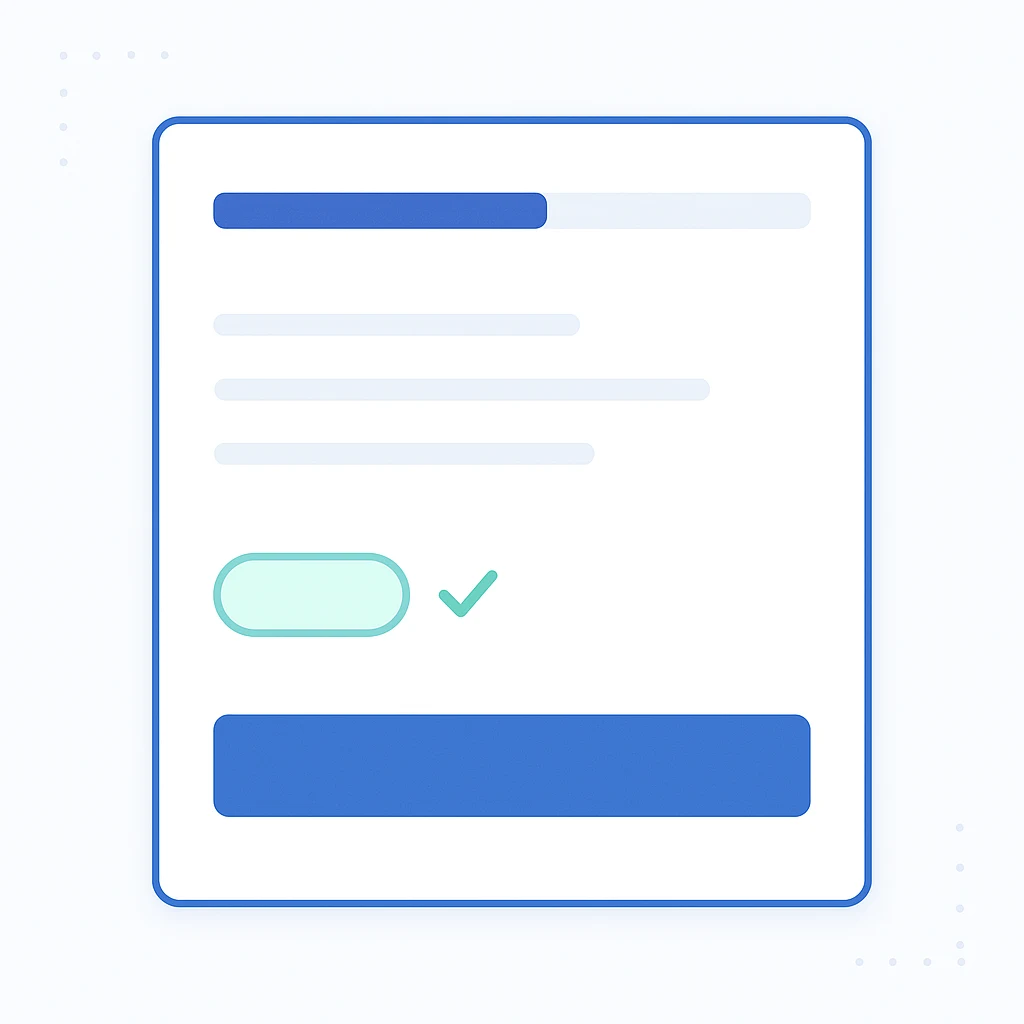
Request
Get your instant quote and place order
Enter the date, start time and the language, and pick the kind of call, such as client intake or a witness call. The price for the time you book shows right away.
Phone interpretation (OPI)Punjabi
Court-certified Punjabi interpreters for your firm's client calls, witness calls and settlement and mediation follow-ups. Get your quote in seconds, place your order, and you're all set.

Starting at $92.91
Per hour

Court-certified
Interpreters

HIPAA-aligned
All clinical sessions

Medically credentialed
CCHI and NBCMI certified interpreters
Request
Enter the date, start time and the language, and pick the kind of call, such as client intake or a witness call. The price for the time you book shows right away.

Match
Our dispatcher assigns a court-certified interpreter who dials in from wherever they work, and you see the name and credentials before the call.
Confirmed in your dashboard and by email

Phone (OPI)
At the booked time, everyone dials in from any phone, using the number and access code in your confirmation. The interpreter stays for the time you booked.
Any phone, no app or link needed
The price shows before you book. Every session is covered by an NDA; clinical sessions are handled in line with HIPAA.
Book an interpreterThe language
Sikh communities in California's Central Valley (Yuba City / Fresno), Bay Area (Fremont), NY / NJ, Vancouver-adjacent (WA), and Seattle drive most demand.
Typical Punjabi bookings
Calls law firms book
Firms book a phone interpreter for these six kinds of calls. Each card links to the page for that session by phone.

The interpreter dials in when you call a client to hear their story, give a case update or ask for a document.
Typical calls

The interpreter interprets your questions to a witness who lives in another state or cannot meet in person.
Typical calls

The interpreter dials in for conference calls on a workers' compensation case and for your calls with the injured worker.
Typical calls

The interpreter dials in so your client hears each offer in their own language, both on the call with the court and when you talk with the client.
Typical calls

After a mediation session, the interpreter dials in when you go over an open offer or the next steps with your client.
Typical calls

Where the court allows phone, the interpreter dials in for a status conference or a short appearance, and for your talks with the client around it.
Typical calls
Interpreters by phone
Phone suits the calls where nobody needs to see a document, such as intake, a case update, a scheduling question or a few follow-up questions for a witness. It also helps when the client has no video, or when no interpreter for the language works near the client. Depositions are taken in person or by video, and a mediation with exhibits is better held on video or in person.
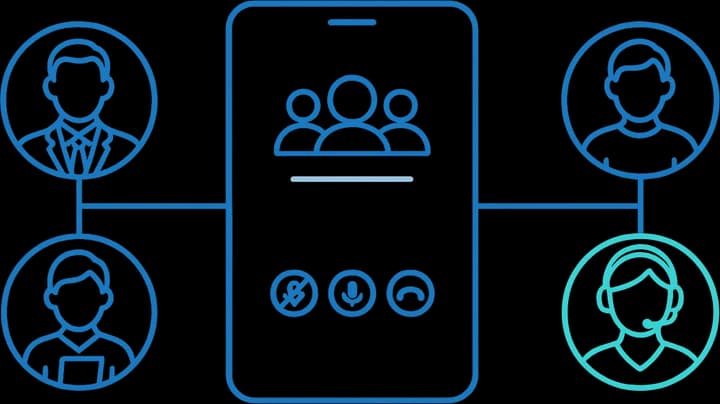
The attorney calls the client or the witness, and the interpreter joins the same call. A paralegal may dial in to note dates and documents. In a settlement call, the court and the other side's counsel are on the line as well.
On a phone call nobody can see who is about to speak, so the interpreter keeps the turns clear and the speaker pauses after each part. The interpreter interprets every part in full, in both directions, in the first person. They are neutral, keep the call confidential, and do not advise the client or explain anything of their own.
On a client call
Nothing can be shown on a phone line, so put the names, the case name and any figures the call will go through in the booking notes first. The interpreter reads the notes before the call, which helps with names and numbers. A document the client needs to refer to should be in the client's hands before the call starts.
On-site, video or phone
Phone works when nobody needs to see anything. Choose another setting when a document has to be on screen or the client has to be in the room.

Book an interpreter in person when your client has to sit in the room with you, as at a deposition or a hearing.
On-Site Interpretation for Law Firms
Video fits a meeting where you go through a document on screen with the client.
Video-Remote Interpretation for Law FirmsPhone fits client intake, status updates and witness calls where the conversation needs no documents.
How it works

Enter your details and get your instant quote
Use the quote form to give the call date, the start time and the language, and pick the kind of call. The price for the booked time shows right away.

Place your order
Pay online to confirm. The booking opens in your dashboard with a dial-in number and an access code, and you can add names and case notes there.

Dispatcher runs and assigns an interpreter
Our dispatcher assigns a court-certified interpreter, then sends you the name and credentials before the call.

Join your session
At the booked time, you and the client dial in. Once everyone is on the line, the interpreter can add a third party, and stays for the time you booked.
What you receive
Every file and session is covered by an NDA and sent over an encrypted connection. Clinical matters are handled in line with HIPAA.
If you also need translations
Nothing can be shown on a phone call, so have documents translated into English first, as certified PDFs from the same account.
Contracts, affidavits and text messages a client or witness mentions on a call, translated so you can read them in English.
Records of treatment abroad that a client describes on a call, translated so you can check the dates and diagnoses.
Financial statements and meeting minutes a client brings up on a call, translated so you can check the figures.


 Not in the list? We translate 37 document types, from passports and bank statements to patents, each with its own page and the same certification.Browse all documents
FAQ
The ones we hear most often, answered by our dispatch and project-management teams.
Can't find it here?
No. They dial the number in your confirmation from any phone and enter the access code.
Yes. The interpreter can add a third party to the call as soon as everyone has dialed in.
Every session is covered by an NDA, and connections are encrypted. We do not record calls unless you ask.
We can change the booking to a video session, subject to the interpreter's availability. For a meeting in person, place a new on-site booking.
The rate is by the time you book, and the total shows before you pay. Book a little longer than the same call would take in English, because each part is said twice and unused time is not refunded.
70 languages. Spanish, Mandarin, Vietnamese, Arabic and Haitian Creole are the easiest to schedule, and rare languages need more notice.
Yes. Court-certified and medically credentialed Punjabi interpreters are assigned to legal and clinical matters — Federal Court Interpreter Certification, state court rosters, CCHI / NBCMI for medical. For community, educational and corporate settings we assign professionally trained interpreters matched to the subject.
Other languages
The same page for each of these languages, with that language's varieties, its register and where it is booked most.
Related interpretation services
On-site, video and phone Punjabi interpreters for courts, hospitals, USCIS interviews, schools and workplaces, in every state.
ExploreCourt-certified Punjabi phone interpreters for immigration intake calls, document requests and case updates.
ExploreCourt-certified Punjabi interpreters who dial in to status calls, short appearances and conference calls.
ExploreCourt-certified Punjabi interpreters for mediation follow-up sessions and client calls by telephone.
ExploreStart a project
Tell us the date and time of the call and the language. Your confirmation lists the interpreter's name and credentials, and the dial-in number.
Linguist network
Browse selected Punjabi interpreters available through the Texliff network.
5 professional profiles
Interpreter
Interpreter
Interpreter
Interpreter
Interpreter


