Interpreters for onboarding, training and HR meetings with placed workers in different cities. Get your quote in seconds, place your order, add your meeting link, and you're all set.
Enter the date, start time, platform, the workers' language and the kind of session, such as onboarding or an HR meeting. The price for the hours you book shows right away.
Zoom, Microsoft Teams, Google Meet or the Texliff room
What to know about working with video interpreters at a staffing agency
When staffing agencies use video
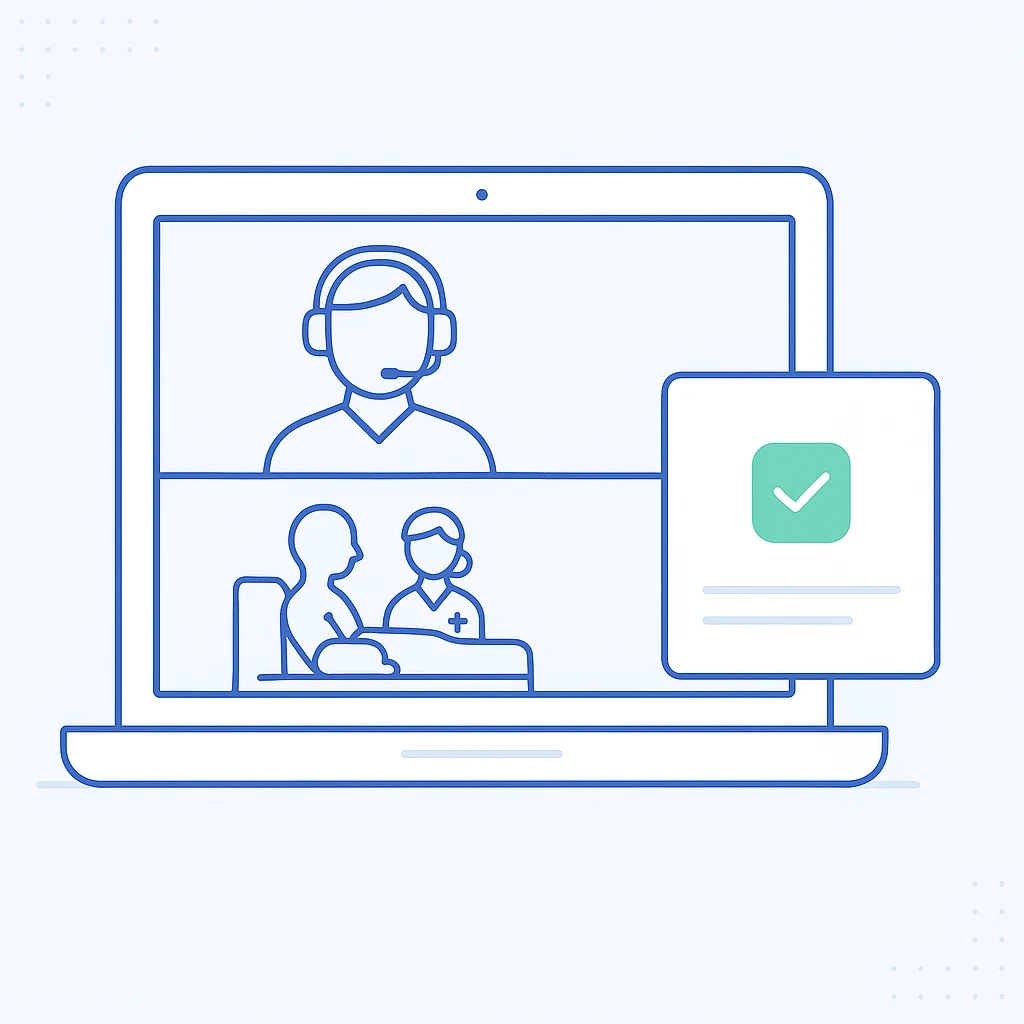
A staffing agency places workers at many client sites, so the recruiter, the worker and the client are often in different places. Video lets one orientation or HR meeting run for workers in different cities, and the interpreter joins from anywhere in the US. Video is also chosen when no interpreter for the worker's language lives near the branch. The recruiter sends the link the agency already uses.
Who takes part
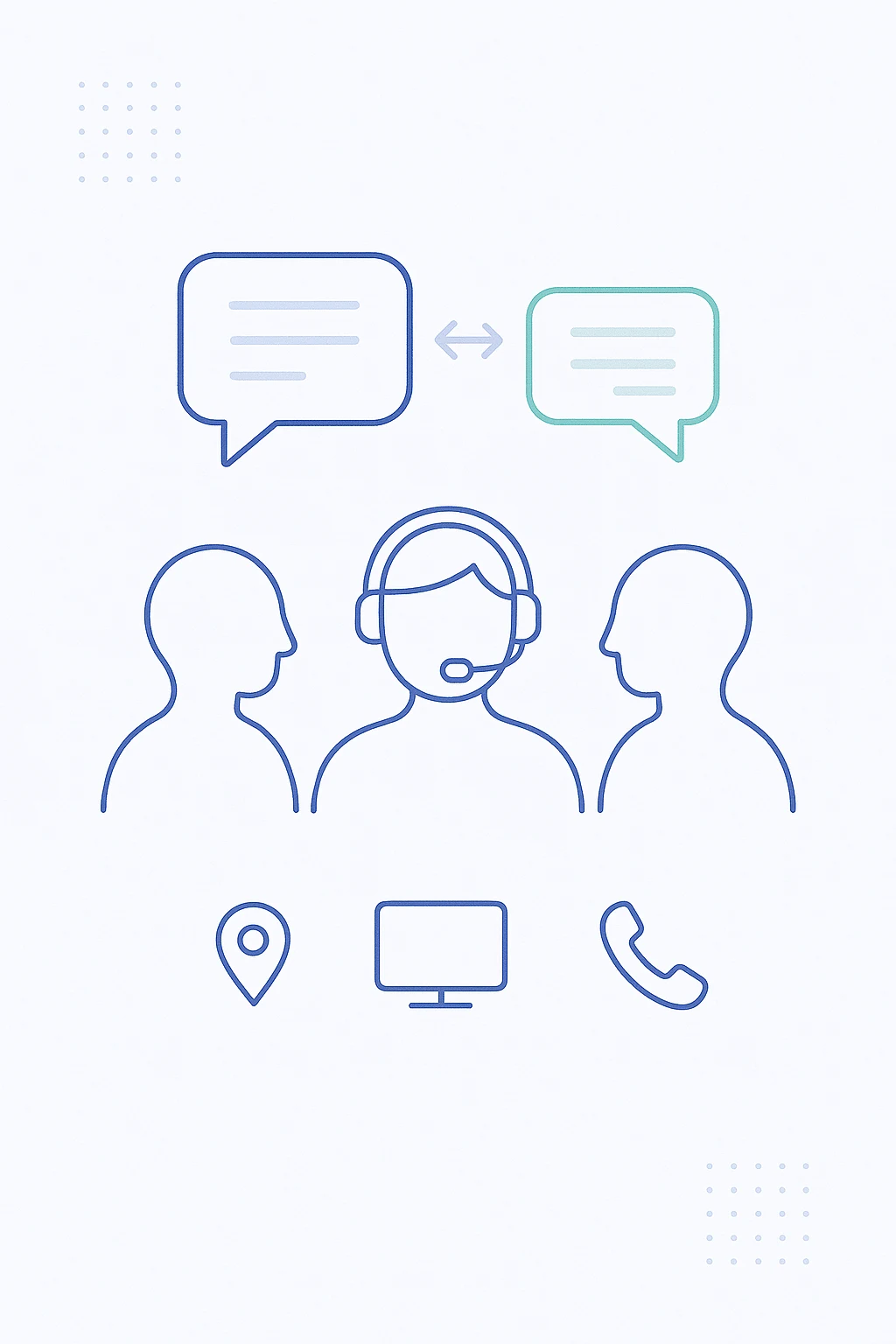
The recruiter or an onboarding staff member runs the session, and the placed worker takes part in their own language. In a training, a trainer presents to a group of workers who share a language. In an HR meeting, an HR representative leads, and the worker's supervisor may join. The interpreter is one more participant on the call.
On the call4
RecruiterRuns the session
Placed workerTakes part in their own language
TrainerPresents to a group of workers
InterpreterOne more participant on the call
RecruiterInterpreterWorker
The interpreter's role
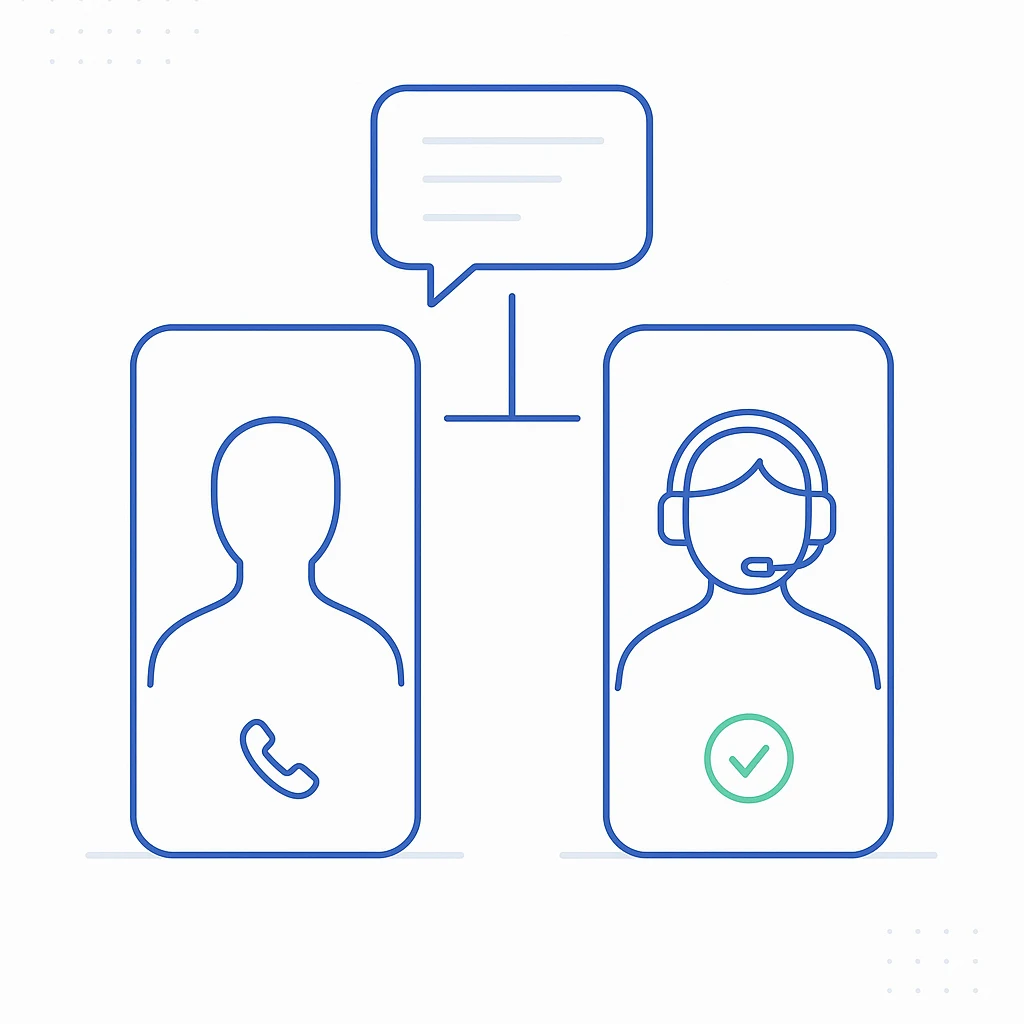
The interpreter makes the session as clear to the worker as it is to the recruiter. Everything is interpreted in full in both directions, including each policy the recruiter explains. In a training, the trainer pauses every few sentences and the interpreter interprets each part. The interpreter is neutral, so in an HR meeting they do not advise the worker or defend the agency, and what they hear stays confidential.
In an HR meeting
RecruiterInterpretedWorkerInterpreted
In a training
TrainerPauseInterpretedNext part
One language per booking
One booking has English and one other language, with one interpreter. If a group of workers speaks two other languages, book two sessions, one for each language, and both can use the same link. Each session runs longer than it would in English, because every part is said twice.
On-site, video or phone
Choosing between video, on-site and phone for staffing work
Video suits sessions where the workers and the recruiter are in different places. Another setting works better in the cases below.
On-site
Book an interpreter in person for a training at a client site, where the workers need to see the equipment.
Choose the date and start time, name the platform and the workers' language, and say what kind of session it is. The price for the booked hours shows right away.
Place your order
Pay online to confirm. In the dashboard, add the meeting link and notes such as the client site, the job title and the documents the workers will receive.
Dispatcher runs and assigns an interpreter
Our dispatcher assigns an interpreter who has interpreted this kind of meeting before and confirms the name to you.
Join your session
The interpreter joins the link as a guest at the booked time and stays for all of the booked hours.
What you receive
The interpreter's name before each session.
The link kept in the project, or a Texliff room that opens in the browser.
Every booking placed in the agency's name, with its own confirmation.
Every file and session is covered by an NDA and sent over an encrypted connection. Clinical matters are handled in line with HIPAA.
Questions from staffing agencies about video interpreters
The ones we hear most often, answered by our dispatch and project-management teams.
Can't find it here?
01Can the interpreter join a session on our client's platform?
Yes, if the client's platform lets a guest in. Add the link, or ask us to create a Texliff room link that opens in the browser with nothing to install.
02Can one booking cover several orientations in a row?
Yes, when they are in the same language. Book the whole block as one session and put the schedule in the notes, and book a second language separately.
03How far ahead should we book?
At least 48 to 72 hours ahead, and earlier if you can.
04Which languages do you interpret for staffing agencies?
82 languages. Spanish, Haitian Creole, Portuguese, Vietnamese, Arabic and Mandarin are the easiest to schedule, and rare languages such as Burmese need more notice.
By language, session and organization
Video-remote interpretation by language, session and organization
One page per language, with the varieties we confirm at booking, the register the session needs and where that language is booked most.
Video-Remote Interpretation for Staffing Agencies by language