Medically credentialed Arabic interpreters on the unit's tablet or cart, with relatives joining the same link from anywhere. Get your quote in seconds, place your order, add your meeting link, and you're all set.
Enter the visit date, start time, platform, the patient's language and the kind of visit, such as a bedside visit or a family meeting. The price for the hours you book shows right away.
Zoom, Microsoft Teams, Google Meet o la sala de Texliff
The interpreter joins the link as a guest at the booked time, interprets for the unit and any relatives on the link, and stays for the hours you booked.
Cualquier dispositivo, intérpretes de los 50 estados
El precio se muestra antes de reservar. Cada sesión está protegida por un acuerdo de confidencialidad; las sesiones clínicas se tratan conforme a HIPAA.
Para interpretación cubrimos tribunales, oficinas de asilo y entornos hospitalarios. Asignamos el dialecto — iraquí, egipcio, levantino, del Golfo, sudanés, norteafricano — según el hablante, no solo “árabe”, que es una omisión frecuente del cliente.
Typical Árabe bookings
Entrevistas de asilo y evaluaciones de temor creíble de USCIS
Audiencias preliminares (master calendar) e individuales en el tribunal de inmigración
Citas hospitalarias y de salud conductual (PTSD, OB/GYN)
Admisión en agencias de reasentamiento e inscripción a beneficios
Procesos penales federales y asuntos de seguridad nacional
Video interpreters for hospitals at the bedside, with relatives who join remotely
On video, the interpreter and some of the people in the conversation are not in the building. Where a card has a page of its own, it links to that page for video.
Bedside visits
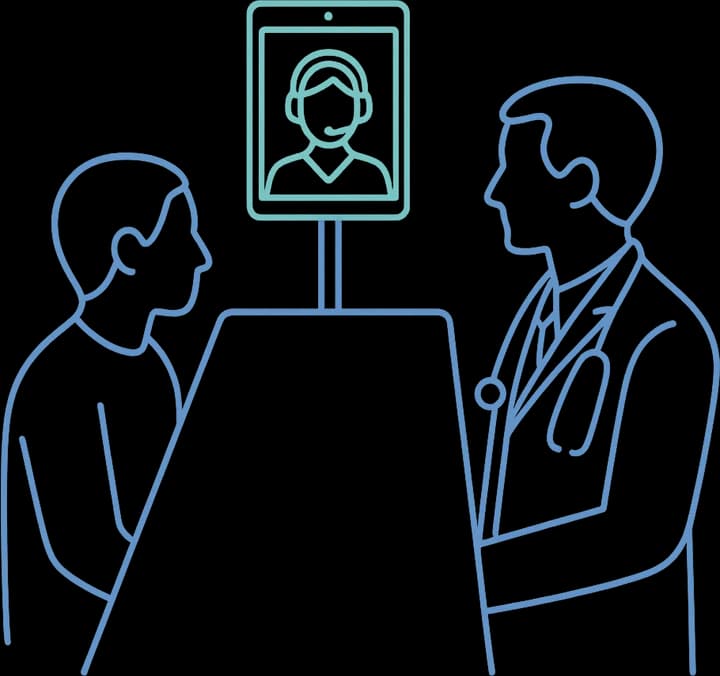
The unit joins the link on a tablet or cart, and the interpreter interprets for the doctor or nurse at the patient's bed.
What to know about video interpreters in a hospital
When video is used
Hospitals use video when no interpreter for the language works near the building, or when a relative needs to join from another city. The unit opens the meeting link on a tablet or cart at the patient's bed, and the interpreter joins as a guest from anywhere in the US. The doctors, the nurses and the patient stay together in the room, and only the interpreter is on the screen. Video is also used for telehealth follow-ups after discharge.
Who takes part
The doctor or nurse speaks with the patient in the room, and the interpreter is on the screen of the tablet or cart. A relative can open the same link from another place and listen in as family, and the unit decides who else joins. The interpreter interprets for the care team, the patient and the relative, one speaker at a time.
On the call4
Doctor or nurseIn the room with the patient
PacienteSpeaks with the care team
RelativeOpens the same link from another place
IntérpreteOn the screen of the tablet or cart
Care teamIntérpretePaciente
The interpreter's role
On the screen, the interpreter does the same work as in the room. Every part is interpreted in full, in both directions, and a relative's question is interpreted like the patient's. The doctor or nurse waits after each part, so nothing is cut short. The interpreter is neutral, gives no advice and no summary, and keeps the visit confidential.
On the tablet
DoctorPausaInterpretedPatient answersInterpreted
Joining at the bedside
Put the meeting link in the dashboard before the visit, and open it on the unit's tablet or cart a little before the booked time. The interpreter joins as a guest, so the patient and the staff stay where they are. Each part is said twice, once in each language, so a bedside visit with many questions needs more booked time than one in English.
Presencial, por video o por teléfono
Choosing between video, on-site and phone for hospital care
Video brings in an interpreter who is not near the hospital. In the cases below, a different setting works better.
Presencial
Book an interpreter in person for a long family meeting or a unit with a weak connection.
Indique los datos y reciba su cotización al instante
Enter the date, start time, the platform, the patient's language and the kind of visit. The price for the booked hours shows right away.
Haga su pedido
Pay online to confirm. The booking opens in your dashboard, where you add the meeting link and notes such as the unit and the doctor's name.
El despachador se activa y asigna un intérprete
Our dispatcher assigns a medically credentialed interpreter and confirms the name and credentials to you before the visit.
Únase a su sesión
At the booked time, the interpreter opens your link as a guest. Relatives who open the same link join the conversation, and the interpreter stays for the booked hours.
Qué recibe
The interpreter's name and credentials, confirmed ahead of the visit.
Your meeting link kept in the project, or a Texliff room link we create if the unit has none.
A confirmation in your dashboard and by email, ready to forward to the unit.
Cada archivo y cada sesión están cubiertos por un NDA y se transmiten por una conexión cifrada. Los asuntos clínicos se manejan conforme a HIPAA.
Las preguntas que escuchamos con más frecuencia, respondidas por nuestros equipos de despacho y gestión de proyectos.
¿No encuentra lo que busca?
01Can the interpreter join our hospital's video system?
Yes, on Zoom, Microsoft Teams or Google Meet. If your system cannot add a guest, we create a Texliff room link and add it to the project.
02What if a relative speaks a different language than the patient?
Each booking is for English and one other language, with one interpreter. A relative who speaks a third language needs a second booking, and both can use the same link.
03Is the video visit recorded?
No. Sessions are not recorded unless you ask, and connections are encrypted.
04How is a video visit in the hospital priced?
A video visit is priced by the hour, and you see the total before paying. Unused time is not refunded, because the interpreter is reserved for the whole booking, so book the time the visit needs.
05Can the same interpreter join every visit during a stay?
You can ask for it in the booking notes. A booking is for the service, not for a particular interpreter, so we take the request into account and assign them when they are available.
06Which languages can a hospital book by video?
70 languages. Spanish, Mandarin, Vietnamese, Arabic, Tagalog and Haitian Creole are the easiest to schedule. Rare languages such as Pashto or Burmese need more notice, and the interpreter can join from any state.
07¿Sus intérpretes de Árabe están certificados?
Sí. Para asuntos legales y clínicos se asignan intérpretes de árabe certificados para tribunales y con credenciales médicas: certificación federal, listas estatales, CCHI/NBCMI para medicina. Para comunidad, educación y empresa asignamos intérpretes profesionales capacitados y acordes a la materia.
08¿Cubren todos los dialectos de Árabe?
Distinguimos MSA, iraquí, del Golfo, egipcio, levantino (sirio / libanés / palestino / jordano), sudanés y dialectos norteafricanos (magrebíes). El árabe estándar moderno se usa para material escrito, pero rara vez suena natural en interpretación espontánea.
Otros idiomas
Otros idiomas for Hospitales
The same page for each of these languages, with that language's varieties, its register and where it is booked most.
Explore intérpretes de Árabe seleccionados, disponibles a través de la red de Texliff.
26 perfiles profesionales
Soumaia H.
Intérprete
Pares
Árabe a InglésInglés a ÁrabeInglés a FrancésÁrabe a Francés
Modos
Consecutiva
Modalidades
Teléfono, Video remoto, Presencial
Soumaia es intérprete de árabe, inglés y francés con certificación CCHI y amplia experiencia en entornos legales, de inmigración, médicos, financieros y técnicos. Con un posgrado en Ciencias Políticas, Soumaia se especializa en interpretación consecutiva en las modalidades telefónica, remota por video y presencial. Su experiencia profesional incluye encargos de alta responsabilidad para USCIS, tribunales de inmigración de la EOIR y centros médicos, con estricto apego a la confidencialidad y a los protocolos federales. Soumaia domina el árabe estándar moderno a nivel nativo y una amplia gama de dialectos regionales, entre ellos el yemení, el del Golfo, el iraquí, el levantino, el egipcio, el magrebí, el sudanés y el mauritano, lo que garantiza una comunicación precisa para clientes diversos. Además de los servicios de interpretación principales, Soumaia aporta valiosos conocimientos como agente registrado del IRS (Enrolled Agent), lo que mejora la exactitud en asuntos fiscales, de seguros y gubernamentales. Reconocida por su sensibilidad cultural y su profesionalismo, Soumaia maneja con eficacia terminología compleja en contextos empresariales, científicos, literarios y educativos. Ya sea que facilite procedimientos legales críticos o ofrezca una comunicación médica clara, Soumaia se compromete a brindar soluciones lingüísticas precisas, culturalmente apropiadas y confiables, manteniendo los más altos estándares de ética y desempeño bajo presión.
Samir ofrece servicios profesionales de traducción e interpretación en varios pares de idiomas, entre ellos árabe, español, hebreo, francés e inglés. Su experiencia abarca los modos de interpretación simultánea y consecutiva, prestados por video remoto, de forma presencial y por teléfono. Sus capacidades de traducción cubren las direcciones desde el árabe, el español latinoamericano, el español europeo, el hebreo y el francés al inglés, así como del inglés al árabe. Con una maestría en Estudios de Oriente Medio y una licenciatura en Lingüística, Samir combina una formación académica avanzada con experiencia práctica en lingüística computacional y procesamiento del lenguaje natural. Su trayectoria profesional incluye la depuración de datos lingüísticos para aplicaciones de inteligencia artificial, la impartición de cursos de psicolingüística y ciencias cognitivas, y una amplia labor de investigación sobre textos multilingües y rasgos fonéticos. Esta sólida base en teoría lingüística y tecnología respalda soluciones lingüísticas precisas y matizadas para diversas necesidades de los clientes.
Traductor de árabe y de francés con más de once años de experiencia, Abdessamad realiza traducción del inglés al árabe y traducción del inglés al francés, además de traducir del francés al árabe. Su trabajo abarca documentos legales y médicos, materiales de inmigración y certificados, y cuenta con experiencia adicional en la adaptación de contenido educativo y la revisión de materiales financieros. Su variado portafolio incluye localización de marketing, estudios de mercado y transcreación, así como videojuegos, manuales de usuario y patentes. Abdessamad también ha completado proyectos de contenido turístico y de marketing inmobiliario, ha localizado textos web y canales de video en línea, y ha coordinado grabaciones de voz. Entre otros encargos se cuentan la retrotraducción de textos religiosos, la verificación de nombres de empresas y la asesoría lingüística. Como intérprete de árabe, Abdessamad ofrece servicios de interpretación consecutiva por video, por teléfono o en persona. Su experiencia como intérprete legal y intérprete médico favorece una comunicación clara en entornos legales y de atención médica.
Romany es un lingüista altamente capacitado con 15 años de experiencia en traducción e interpretación entre árabe e inglés. Especializado en los campos jurídico, médico, de inmigración, educación, literario, científico, general y empresarial, Romany ofrece servicios de interpretación consecutiva y simultánea en modalidad presencial, por videoconferencia y por teléfono. Los servicios de traducción se ofrecen del árabe al inglés, mientras que la interpretación se presta del inglés al árabe. Romany tiene una maestría en Comunicación y una licenciatura en Inglés, además de diplomados en Relaciones Internacionales y Lingüística. Certificado como intérprete judicial e intérprete de atención médica, Romany también cuenta con credenciales federales de traductor e intérprete de seminarios. Entre sus certificaciones adicionales se incluyen capacitaciones en seguridad internacional, interpretación comunitaria y resolución de conflictos. La trayectoria profesional de Romany incluye la edición y revisión de traducciones al árabe para una organización internacional, el trabajo como intérprete judicial, la enseñanza de cursos de traducción árabe-inglés y el trabajo como analista de medios y gerente de comunicaciones. Romany es beneficiario de una beca Fulbright.
Basma es una intérprete y traductora de gran trayectoria, con 15 años de experiencia facilitando la comunicación crítica en entornos de alto riesgo. Es licenciada en Interpretación y Traducción y ofrece servicios especializados de interpretación consecutiva y simultánea en modalidad presencial, por videoconferencia y por teléfono. Basma realiza traducciones en ambas direcciones entre árabe e inglés, además de interpretación del inglés al árabe. Sus numerosas especialidades abarcan los ámbitos legal, médico, técnico, financiero, de marketing, TI/software, inmigración, educación, científico, literario, empresarial y general. Basma ha apoyado conferencias internacionales, procesos judiciales, actividades diplomáticas y operaciones corporativas, con un firme compromiso con la imparcialidad, la confidencialidad y los matices lingüísticos. También ha dirigido equipos de interpretación multilingüe y ha optimizado los flujos de trabajo de servicios lingüísticos para grandes organizaciones.
Ragaey es intérprete de árabe-inglés con 14 años de experiencia profesional, especializado en interpretación consecutiva y simultánea en modalidad presencial, por videoconferencia y por teléfono. Ragaey tiene una licenciatura en Idiomas y aporta un profundo conocimiento cultural a cada asignación, transmitiendo con exactitud el tono, el estilo y el contenido para los hablantes de árabe. Las áreas de especialización de Ragaey incluyen la interpretación legal, financiera, de marketing, de inmigración, educativa, literaria, empresarial y general. Ragaey cuenta con amplia experiencia en el ámbito judicial: ha interpretado en tribunales superiores, de distrito, de circuito, de menores y de familia, así como durante audiencias de inmigración y entrevistas de asilo de USCIS. Ragaey ha facilitado la comunicación de demandantes, acusados, testigos y personas con dominio limitado del inglés, y ha garantizado una interpretación precisa tanto en procesos presenciales como virtuales. Ragaey también tiene una comisión de Notary Public y una autorización de seguridad del Departamento de Defensa de nivel de confianza pública.
Árabe a InglésInglés a ÁrabeÁrabe a FrancésFrancés a Árabe
Modos
Consecutiva, Simultánea
Modalidades
Presencial, Video remoto, Teléfono
Charles es traductor e intérprete trilingüe que trabaja en árabe, inglés y francés. Ofrece servicios de interpretación consecutiva y simultánea en modalidad presencial, por videoconferencia y por teléfono. Sus especialidades abarcan los ámbitos legal, médico, técnico, financiero, de inmigración, educativo, científico, literario y general. Charles tiene un doctorado en Estudios de Oriente Medio y el Norte de África, una maestría en Lingüística Árabe y una licenciatura en Agricultura. Hablante nativo de árabe con un dominio profesional superior del inglés y el francés, Charles aporta amplia experiencia en contextos legales, de aplicación de la ley, de asilo y educativos. Cuenta con credenciales de intérprete judicial y ha completado el examen final de SCSI en árabe y las entrevistas de dominio oral de ALTA en árabe y francés. Su trayectoria como profesor asistente de árabe y subdirector de un programa insignia de árabe refleja una experiencia avanzada en los registros formal y coloquial del árabe, la comunicación intercultural y los materiales lingüísticos complejos.
Ibrahim es un lingüista con gran experiencia, con 35 años en traducción e interpretación, especializado en los ámbitos legal, médico, de inmigración, educativo, literario y general. Ofrece interpretación consecutiva y simultánea en modalidad presencial, por videoconferencia y por teléfono. Su trabajo de traducción abarca del árabe al inglés, mientras que sus servicios de interpretación cubren del inglés al árabe. Ibrahim tiene una licenciatura en Derecho Público y ha completado cursos adicionales en derecho administrativo, derecho de familia, derecho básico y técnicas de investigación. Su amplia experiencia en tribunales abarca juicios civiles, penales, de familia, sucesorios, de conciliación y de menores, incluidos casos federales. Ha interpretado en audiencias de inmigración, citas médicas y de salud mental, visitas a salas de emergencia, reuniones de padres y maestros, evaluaciones de educación especial y audiencias de compensación laboral. Ibrahim también ha asistido a las fuerzas del orden en el interrogatorio de testigos y ha traducido documentos para administraciones escolares, programas de servicios sociales y licencias de cuidado infantil.
Basem es un intérprete de árabe profesional con 15 años de experiencia en interpretación precisa en entornos legales, médicos, técnicos, financieros y de conferencias. Tiene una maestría en Salud Pública con enfoque en epidemiología y bioestadística, un título de medicina, y las certificaciones de Intérprete de Atención Médica Certificado (Certified Healthcare Interpreter, CHI-A) e intérprete judicial certificado del National Center for State Courts (NCSC). Su trabajo abarca la interpretación simultánea y consecutiva para tribunales, bufetes de abogados, instituciones de salud, procesos de inmigración y organizaciones internacionales. Con un sólido dominio del árabe y del inglés, fluidez en terminología especializada y un profundo conocimiento cultural, Basem ofrece una interpretación confiable y de alta calidad en situaciones delicadas y de mucha presión.
Nazha es una intérprete bilingüe de árabe e inglés especializada en entornos médicos, educativos y comunitarios en general, además de contar con más de cuatro años de experiencia en la enseñanza en el aula. Entre sus calificaciones como intérprete se incluyen la finalización de un programa de capacitación de 40 horas para intérpretes comunitarios y cursos especializados en lenguaje médico básico para intérpretes comunitarios y de atención médica. Nazha ofrece interpretación consecutiva mediante plataformas de video remoto y por teléfono, con un apoyo lingüístico preciso, culturalmente competente y confidencial. Su experiencia en educación y desarrollo curricular complementa su trabajo de interpretación y le permite comunicarse con eficacia en diversos entornos de servicio.
Farkad es un intérprete judicial registrado y lingüista que presta servicios de traducción e interpretación entre árabe e inglés. Especializado en contenido jurídico y general, Farkad ofrece interpretación consecutiva y simultánea de forma presencial, por video remoto y por teléfono. Farkad tiene una maestría en Estudios Estratégicos y una licenciatura en Derecho, complementadas con cursos de derecho internacional y capacitación avanzada en lengua inglesa. Miembro del Colegio de Abogados de Irak y miembro designado (Fellow) del Australian Centre for Defence and Strategic Studies, Farkad aporta una profunda experiencia en derecho marítimo internacional y derecho internacional humanitario. Farkad ha interpretado y traducido numerosos juicios y documentos legales, y actualmente está elaborando un diccionario jurídico de inglés a árabe. Farkad también ha sido conferencista invitado sobre geopolítica y política de Medio Oriente, y ha enseñado la lengua árabe. Investigador activo, Farkad ha publicado trabajos en inglés y en árabe sobre temas como la nuclearización en Medio Oriente, el.
Hadel es una intérprete profesional que ofrece interpretación consecutiva entre inglés y árabe de forma presencial, por video remoto y por teléfono. Se especializa en interpretación médica, general y educativa, y favorece una comunicación eficaz en entornos diversos. Hadel tiene una licenciatura en Farmacia, y su experiencia en servicios farmacéuticos le permite interpretar con precisión terminología médica compleja, formularios de consentimiento, documentos de alta e instrucciones preoperatorias y posoperatorias. Con experiencia trabajando para varios proveedores de servicios de idiomas, Hadel recopila terminología especializada y analiza materiales escritos para garantizar una transmisión exacta del mensaje. Cumple estrictamente los códigos de ética establecidos para proteger la confidencialidad de la información. Su experiencia combinada en atención médica e interpretación le permite ofrecer servicios de idiomas confiables que preservan el contenido, el contexto y el estilo del mensaje.
Omnia es una intérprete profesional de árabe al inglés con 20 años de experiencia en entornos legales, médicos, de inmigración, educativos y de servicios sociales. Ofrece interpretación consecutiva y simultánea de forma presencial, por video remoto y por teléfono. Su trabajo abarca la interpretación judicial, la interpretación médica en hospitales y clínicas, la interpretación escolar y los trámites de inmigración. Omnia cuenta con la credencial de Certified Healthcare Interpreter y ha completado una amplia capacitación en interpretación comunitaria, terminología médica, terminología legal e interpretación judicial. También cursó tres años de estudios universitarios en ciencias biológicas. Además del árabe y el inglés, Omnia habla con fluidez francés y darija (árabe marroquí). Su diversa cartera de clientes incluye agencias de servicios de idiomas, despachos jurídicos, tribunales municipales, centros médicos y distritos escolares. Continúa ampliando su experiencia mediante formación profesional permanente en interpretación judicial.
Roula es una lingüista bilingüe de árabe e inglés especializada en interpretación médica y traducción. Ofrece servicios de interpretación consecutiva de forma presencial, por video remoto y por teléfono, y facilita una comunicación clara entre proveedores médicos, pacientes y familiares. Su experiencia en atención médica incluye un conocimiento profesional de la terminología médica y de los nombres de medicamentos, respaldado por su trabajo como técnica de farmacia certificada. Roula tiene una licenciatura en ingeniería agrícola y una certificación como técnica de farmacia. Su variada trayectoria profesional combina servicios lingüísticos con experiencia técnica y en atención al cliente, lo que le permite ofrecer interpretaciones y traducciones precisas, con una sólida competencia cultural y habilidades de escucha activa.
Manar es una profesional de idiomas dedicada que ofrece servicios de interpretación del árabe al inglés y de traducción del inglés al árabe. Se especializa en contenido médico, educativo, empresarial y general, y presta interpretación consecutiva de forma presencial, por video remoto y por teléfono. Con una sólida trayectoria en interpretación de atención médica, Manar es reconocida por facilitar una comunicación clara entre profesionales médicos y pacientes de habla árabe, transmitiendo con exactitud terminología médica compleja y manteniendo una estricta confidencialidad. Su conocimiento cultural ayuda a tender puentes entre las prácticas médicas occidentales y las creencias árabes tradicionales, lo que favorece diagnósticos precisos y la adherencia al tratamiento. Además de su trabajo lingüístico, Manar tiene un título de asociado en tecnología oftálmica y experiencia como técnica oftálmica certificada y óptica. Es intérprete de atención médica calificada y especialista con licencia en apoyo entre pares, lo que aporta una perspectiva integral a sus servicios de idiomas. Manar destaca la colaboración, la adaptabilidad y el apego a la ética en cada encargo, lo que la convierte en una aliada confiable para trabajos matizados y precisos.
Asmaa es una lingüista meticulosa que ofrece servicios de traducción e interpretación del árabe al inglés. Presta interpretación consecutiva y simultánea por video remoto, de forma presencial y por teléfono, con especialización en contenido médico, general, educativo y de inmigración. Asmaa aporta una valiosa experiencia en el área de la salud a su trabajo lingüístico, pues se ha desempeñado como intérprete médica de árabe y como asistente de cuidado personal. Tiene destreza en la traducción precisa, la escucha activa y el manejo de la más estricta confidencialidad conforme a las normas de HIPAA. Su experiencia incluye la traducción de formularios médicos, formularios de consentimiento e instrucciones para pacientes, a la vez que genera confianza en poblaciones diversas mediante el respeto y la paciencia. Asmaa tiene una licenciatura en enfermería y cuenta con certificaciones como intérprete de atención médica y asistente de enfermería certificada, además de credenciales de RCP y BLS. Su formación combinada en el ámbito médico y lingüístico favorece una comunicación clara y precisa en entornos de atención médica y comunitarios.
Jaber es un lingüista árabe-inglés con más de dos décadas de experiencia en traducción, interpretación, edición y asesoría cultural en los ámbitos legal, médico, de inmigración y general. Ofrece servicios de interpretación consecutiva y simultánea a través de plataformas de video remoto y teléfono, así como traducción de inglés a árabe. Jaber ha realizado interpretaciones de alta fidelidad para tribunales federales de inmigración, procesos judiciales estatales y asuntos legales complejos, manteniendo una estricta neutralidad y preservando la intención y el tono originales. Su trabajo ha apoyado la recopilación de inteligencia, los esfuerzos antiterroristas y la colaboración entre varias agencias en entornos de información sensible compartimentada. Jaber tiene una licenciatura en Letras con especialización en inglés y se ha desempeñado como asesor cultural y especialista en idiomas en apoyo de operaciones militares de Estados Unidos. Su amplia trayectoria incluye la traducción de documentos legales sensibles, la asistencia a analistas con informes en idiomas extranjeros y el desarrollo de planes de estudio en dos idiomas.
Nidal es un lingüista bilingüe con más de 40 años de experiencia en superar barreras de comunicación en el comercio internacional y las negociaciones corporativas. Ofrece interpretación consecutiva y simultáneadel árabe al inglés de forma presencial, por videollamada y por teléfono, además de traducción del inglés al árabe. Sus especialidades abarcan los ámbitos legal, médico, financiero, de marketing, de inmigración, educativo y empresarial. Nidal tiene una licenciatura en administración de empresas y completó dos años de estudios de posgrado. Domina el árabe estándar moderno y varios dialectos regionales, entre ellos las variedades egipcia, iraquí, levantina, del Golfo y norteafricana, lo que le permite manejar con precisión y profesionalismo matices lingüísticos y culturales complejos. Nidal completó un programa de capacitación de 60 horas para intérpretes de atención médica y tiene estatus activo en un registro estatal de intérpretes de atención médica. Aprobó el examen escrito CoreCHI de la Certification Commission for Healthcare Interpreters y está a la espera de los resultados del examen oral CHI. Nidal es.
Gada es una lingüista altamente capacitada con 25 años de experiencia en servicios de traducción e interpretación entre árabe e inglés. Ofrece interpretación consecutiva y simultánea de forma presencial, por videollamada y por teléfono, y atiende a clientes en contextos legales, médicos, financieros, de marketing, técnicos, de TI/software, científicos, literarios, educativos, de inmigración y empresariales en general. Su destacada trayectoria incluye su labor como lingüista e intérprete de árabe en procedimientos judiciales de juicio, donde los jueces han reconocido su profesionalismo, discreción y precisión. También ha apoyado operaciones del Departamento de Defensa de EE. UU. como lingüista contratista, traduciendo documentos sensibles con estricta confidencialidad. Además, cuenta con amplia experiencia interpretando para instituciones educativas, facilitando la comunicación entre educadores y familias de habla árabe durante reuniones académicas, evaluaciones y conferencias con padres.
Jay trabaja como intérprete de árabe en procedimientos del inglés al árabe en tribunales, hospitales y escuelas. Utiliza la interpretación consecutiva en audiencias, declaraciones juradas y visitas médicas, mientras que la interpretación simultánea apoya entornos judiciales y educativos de ritmo acelerado. Atiende las asignaciones de forma presencial, por teléfono o por video, según el procedimiento. Domina una amplia gama de dialectos del árabe, entre ellos el egipcio, el iraquí y el sirio. Jay es intérprete de árabe con licencia y además cuenta con certificación de intérprete, y aporta décadas de experiencia en tribunales a casos civiles, penales y de familia. Su trayectoria incluye también supervisión en los tribunales, conciliación de pagos y correspondencia, lo que le da una familiaridad práctica con los procedimientos y la terminología judiciales. En el trabajo escrito, se encarga de la traducción del árabe al inglés de contenido relacionado con los tribunales. Este trabajo de traducción de documentos se apoya en los mismos conocimientos lingüísticos y en la comprensión de los procedimientos que sustentan sus asignaciones orales.
Rana es intérprete de árabe con más de siete años de experiencia en facilitar la comunicación consecutiva en ambos sentidos entre el árabe y el inglés. Por teléfono y por video, Rana atiende citas médicas, consultas legales y asuntos de inmigración que requieren claridad, neutralidad y terminología cuidadosa. Como intérprete legal, Rana cuenta con un sólido dominio del árabe estándar moderno y del árabe levantino, además de comprensión receptiva de los dialectos del Golfo y de Egipto. Su experiencia con contenido delicado, técnico y de misión crítica respalda una comunicación precisa en entornos de alta presión. Rana también ofrece traducción del árabe al inglés y traducción del inglés al árabe de documentos legales, material médico y contenido técnico. Este trabajo de traducción de documentos se ve reforzado por su experiencia en transcripción de audio en árabe, revisión y control de calidad. Rana revisa la redacción, el tono y la terminología para garantizar la exactitud lingüística, la coherencia y la pertinencia cultural.
Mohamed se encarga de la traducción multilingüe de contenido digital, técnico y legal. Como traductor de árabe, ofrece traducción de inglés a árabe y traduce del español al árabe, así como del árabe al español. Su trabajo incluye localización de videojuegos, contenido de sitios web y subtítulos, además de materiales automotrices y mecánicos. También adapta documentos legales y gestiona recursos terminológicos, guías de estilo y proyectos multilingües. El control de calidad de juegos y plataformas de e-learning es otra parte distintiva de su experiencia, respaldada por la maquetación de documentos y las pruebas de software. Como intérprete de español con el árabe como idioma de destino, Mohamed utiliza el modo consecutivo en asignaciones presenciales. También trabaja como intérprete de árabe por video y por teléfono, y facilita la comunicación en entornos legales, técnicos y empresariales.
Adel trabaja como intérprete de árabe y traslada del inglés al árabe con ocho años de experiencia en asuntos legales, médicos y de inmigración. Como intérprete legal, atiende procedimientos penales, civiles y de tribunales de familia mediante interpretación consecutiva y simultánea, conservando el tono, el ritmo y la intención de cada hablante. Su trabajo en tribunales de inmigración incluye audiencias que exigen terminología jurídica precisa y la traducción a la vista cuidadosa de documentos. Adel también se desempeña como intérprete médico en encuentros hospitalarios, apoyando una comunicación clara durante citas y otras interacciones de atención médica. Ofrece servicios de interpretación de forma presencial y por video o teléfono, adaptando su desempeño al entorno y evitando cambios, omisiones o adiciones. Su experiencia en tribunales y hospitales respalda una comunicación precisa en situaciones complejas y de alta exigencia.
Khadija es una intérprete de árabe con 12 años de experiencia a tiempo completo trabajando entre inglés y árabe en ambas direcciones. Ofrece servicios de interpretación consecutiva en persona y por video o teléfono, y adapta su forma de interpretar a las necesidades de cada encargo. Como intérprete médica certificada, acompaña citas en clínicas médicas y de salud mental, donde la comunicación clara es especialmente importante para hablar de síntomas, tratamiento y atención continua. Khadija también trabaja como intérprete legal, facilitando la comunicación en asuntos legales que exigen especial atención a la terminología y al contexto. Su experiencia más amplia incluye citas con agencias de servicios sociales y otros entornos generales. Con dominio del árabe y competencia en inglés, aporta una amplia experiencia práctica a conversaciones que involucran información sensible, preguntas detalladas y decisiones importantes.
Como intérprete de árabe que trabaja del árabe al inglés, Ali apoya consultas médicas y dentales mediante interpretación consecutiva y simultánea. De forma presencial, Ali transmite con exactitud los diagnósticos y las opciones de tratamiento, y hace más comprensible la terminología compleja de la atención médica. Durante las citas por video, maneja conversaciones delicadas con sensibilidad cultural y diplomacia profesional. Las asignaciones por teléfono pueden abarcar planes de tratamiento dental e indicaciones posteriores a la atención, lo que ayuda a garantizar que las instrucciones se comuniquen con claridad. Este intérprete médico adapta su forma de interpretar al ritmo y la complejidad de cada consulta, conservando los detalles esenciales y promoviendo la comprensión y la tranquilidad. Los servicios de interpretación de Ali se centran en la comunicación precisa durante toda la atención, desde el diagnóstico inicial hasta las indicaciones de seguimiento. Su familiaridad con la jerga médica y los procedimientos dentales le permite transmitir información especializada en un inglés claro, sin perder el significado ni el tono del árabe original.
Marian es una intérprete de árabe con 11 años de experiencia interpretando del inglés al árabe en consultas médicas, procedimientos judiciales y entrevistas de inmigración. Trabaja de forma presencial y por video en visitas de emergencia, tratamientos especializados, declaraciones juradas y audiencias. Por teléfono, interpreta conversaciones médicas y jurídicas que requieren acceso remoto. Su experiencia incluye terminología compleja, requisitos de confidencialidad y comunicación culturalmente sensible durante entrevistas de USCIS. La capacitación en terminología médica y jurídica fortalece su labor como intérprete médica y jurídica. Marian también realiza traducciones del árabe al inglés de documentos jurídicos, médicos, comerciales y oficiales. Su traducción de documentos preserva el significado y la terminología del material de origen, incluida la traducción jurídica detallada y la traducción médica.